
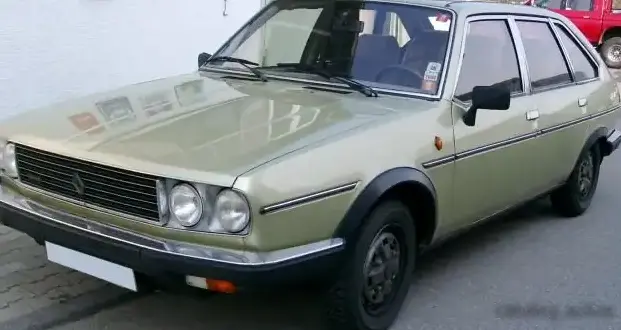
The Renault 30 (127) 2.1 Turbo-D, produced between 1982 and 1986, represented a unique offering within the Renault 30 range. This variant, designated by the engine code J8S, combined a 2.1-liter turbocharged diesel engine with an automatic transmission, a relatively uncommon pairing in the early 1980s, particularly in Europe. The Renault 30 itself was a large family car intended to compete with models like the Peugeot 505 and Ford Granada, offering a spacious interior and a focus on comfort. The 2.1 Turbo-D aimed to provide a blend of performance and fuel economy, appealing to drivers covering long distances.
Technical Specifications
| Brand | Renault |
| Model | 30 (127) |
| Type (Engine) | 2.1 Turbo-D (1270) (86 Hp) |
| Start of production | 1982 |
| End of production | 1986 |
| Powertrain Architecture | Internal Combustion engine |
| Body type | Hatchback |
| Seats | 5 |
| Doors | 5 |
| Fuel consumption (urban) | 8.4 l/100 km (28 US mpg, 33.6 UK mpg, 11.9 km/l) |
| Fuel consumption (extra urban) | 5.6 l/100 km (42 US mpg, 50.4 UK mpg, 17.9 km/l) |
| Fuel Type | Diesel |
| Acceleration 0 – 100 km/h | 17.0 sec |
| Acceleration 0 – 62 mph | 17.0 sec |
| Acceleration 0 – 60 mph | 16.2 sec |
| Maximum speed | 160 km/h (99.42 mph) |
| Power | 86 Hp |
| Engine Model/Code | J8S |
| Engine aspiration | Turbocharger |
| Engine oil capacity | 6.3 l (6.66 US qt, 5.54 UK qt) |
| Coolant capacity | 7.6 l (8.03 US qt, 6.69 UK qt) |
| Fuel tank capacity | 67 l (17.7 US gal, 14.74 UK gal) |
Powertrain & Engine Architecture
The heart of the Renault 30 2.1 Turbo-D was the J8S engine, a 2,068cc inline-four cylinder diesel. This engine featured a turbocharger, a relatively advanced feature for a diesel engine of the time, designed to boost power and improve responsiveness. The turbocharger increased the air intake pressure, allowing more fuel to be burned and thus increasing output. The engine utilized indirect injection, a common diesel technology in the early 1980s, where fuel was injected into the pre-chamber before entering the main combustion chamber. This system contributed to quieter operation and smoother combustion compared to direct injection diesels. The automatic transmission was a three-speed unit, chosen to provide ease of driving, particularly in urban environments. However, it was not known for its particularly quick shifts or sporty feel.
Driving Characteristics
The 86 horsepower output of the 2.1 Turbo-D, coupled with the three-speed automatic transmission, resulted in a driving experience focused on relaxed cruising rather than spirited performance. Acceleration was noticeably slower than the gasoline-powered Renault 30 variants, with a 0-60 mph time of around 16.2 seconds. The automatic transmission, while convenient, contributed to this lack of urgency. The gear ratios were optimized for fuel efficiency and comfortable highway driving, meaning the engine often felt strained during hard acceleration. Compared to the manual transmission versions of the 2.1 Turbo-D, the automatic suffered a more significant performance penalty. The manual offered a more engaging driving experience and slightly quicker acceleration. However, the automatic provided a smoother, less demanding ride, particularly for drivers unfamiliar with diesel engines or manual transmissions.
Equipment & Trim Levels
The Renault 30 2.1 Turbo-D automatic typically occupied a mid-range position within the Renault 30 lineup. Standard equipment included power steering, central locking, and cloth upholstery. The interior was generally well-appointed for its time, offering a comfortable and spacious cabin. Optional extras included a sunroof, upgraded audio systems, and leather upholstery. The dashboard layout was functional and straightforward, with clearly labeled controls. The automatic transmission selector was column-mounted, a common feature in American cars of the era, but less so in European vehicles. The trim level often dictated the exterior detailing, with chrome accents and higher-quality paint finishes available on higher-spec models.
Chassis & Braking
The Renault 30 featured independent suspension all around, utilizing MacPherson struts at the front and a twist-beam axle at the rear. This setup provided a comfortable ride, absorbing bumps and imperfections in the road surface effectively. The braking system consisted of disc brakes at the front and drum brakes at the rear. While adequate for normal driving conditions, the drum brakes at the rear were less effective than disc brakes, particularly under heavy braking. A stabilizer bar was fitted to the front suspension to reduce body roll during cornering. The steering was power-assisted, making it relatively easy to maneuver the large Renault 30 in tight spaces.
Market Reception & Comparison
The Renault 30 2.1 Turbo-D automatic received mixed reviews from automotive critics. While the fuel economy was praised – achieving around 42 mpg on the highway – the performance was often criticized as being sluggish. The automatic transmission was seen as a compromise, sacrificing performance for convenience. Compared to the gasoline-powered Renault 30 variants, the diesel offered significantly better fuel economy but lacked the same level of refinement and responsiveness. Against competitors like the Peugeot 505 and Ford Granada, the Renault 30 2.1 Turbo-D offered a competitive package in terms of space and comfort, but its performance was generally considered to be inferior. The diesel engine, however, proved to be durable and reliable, making it a popular choice for drivers covering long distances.
Legacy
The Renault 30 2.1 Turbo-D, while not a performance icon, holds a place in automotive history as an early example of a turbocharged diesel engine paired with an automatic transmission. The J8S engine proved to be remarkably robust, and many examples are still on the road today, albeit often with high mileage. In the used car market, these vehicles are sought after by enthusiasts and collectors who appreciate their unique character and relative simplicity. Maintenance can be straightforward, although sourcing parts can sometimes be challenging due to the age of the vehicle. The Renault 30 2.1 Turbo-D represents a snapshot of automotive engineering in the early 1980s, a time when manufacturers were beginning to explore the potential of diesel technology and automatic transmissions in larger family cars.
