
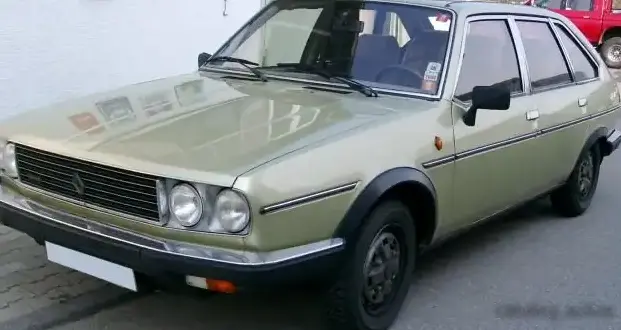
The Renault 30 (127), specifically the 2.6 (1273) variant producing 125 horsepower, was a short-lived but notable iteration of Renault’s innovative supermini. Produced between 1976 and 1978, this model represented a significant step up in performance and refinement for the 127 range, which was originally launched in 1973. The 30 (127) aimed to bridge the gap between the basic, economical 127 models and larger family cars, offering a more sophisticated driving experience within a compact package. It was a key part of Renault’s strategy to offer a diverse range of vehicles appealing to a broad customer base.
Technical Specifications
| Brand | Renault |
| Model | 30 (127) |
| Generation | 30 (127) |
| Type (Engine) | 2.6 (1273) (125 Hp) |
| Start of production | 1976 |
| End of production | 1978 |
| Powertrain Architecture | Internal Combustion engine |
| Body type | Hatchback |
| Seats | 5 |
| Doors | 5 |
| Fuel Type | Petrol (Gasoline) |
| Acceleration 0 – 100 km/h | 10.6 sec |
| Acceleration 0 – 62 mph | 10.6 sec |
| Acceleration 0 – 60 mph | 10.1 sec |
| Maximum speed | 183 km/h (113.71 mph) |
| Power | 125 Hp |
| Engine Model/Code | Z7V |
| Engine aspiration | Naturally aspirated engine |
| Engine oil capacity | 5.5 l (5.81 US qt | 4.84 UK qt) |
| Coolant capacity | 9.8 l (10.36 US qt | 8.62 UK qt) |
| Fuel tank capacity | 67 l (17.7 US gal | 14.74 UK gal) |
Powertrain & Engine Architecture
The heart of the Renault 30 (127) 2.6 was the Z7V engine, a 1273cc inline-four cylinder unit. This engine was a significant upgrade from the smaller displacement engines available in the standard 127. It featured a single overhead camshaft (SOHC) valvetrain and utilized a two-barrel Weber carburetor for fuel delivery. The engine’s design prioritized drivability and a relatively flat torque curve, rather than outright peak power. While 125 horsepower was respectable for its displacement and the era, it wasn’t a particularly high-revving engine, focusing instead on providing usable power across a wider RPM range. The engine was paired with a four-speed manual transmission, although an automatic transmission was also offered, albeit less common. The automatic, a three-speed unit, was geared for comfort and ease of use, sacrificing some performance in the process.
Driving Characteristics
The 125 hp Renault 30 (127) offered a noticeable performance improvement over the base models. The 0-60 mph time of around 10.1 seconds was quick for a small hatchback in the 1970s. The car felt lively and responsive, particularly in the mid-range. The four-speed manual transmission allowed drivers to keep the engine in its sweet spot, maximizing acceleration. The automatic transmission, while convenient, dulled the driving experience somewhat, resulting in slower acceleration and a less engaging feel. Handling was generally good, thanks to the 127’s relatively lightweight construction and front-wheel-drive layout. However, the suspension was tuned for comfort rather than sporty handling, resulting in some body roll during cornering. The steering was light and precise, making the car easy to maneuver in urban environments.
Equipment & Trim Levels
The Renault 30 (127) 2.6 was positioned as the premium trim level within the 127 range. Standard equipment included upgraded interior trim, often featuring cloth upholstery with a more refined pattern than the base models. A more comprehensive instrument cluster, including a tachometer, was also standard. Exterior features included chrome trim around the windows and on the bumpers, and often, upgraded wheel covers. Optional extras included a sunroof, a radio, and upgraded sound system. The interior was relatively spacious for a car of its size, offering comfortable seating for five adults. The hatchback configuration provided good cargo capacity, making the 30 (127) a practical choice for families.
Chassis & Braking
The Renault 30 (127) utilized a MacPherson strut front suspension and a trailing arm rear suspension. The suspension setup was designed to provide a comfortable ride, absorbing bumps and imperfections in the road surface effectively. Braking was initially provided by drum brakes on all four wheels, but later models were upgraded with front disc brakes, offering improved stopping power. The braking system was adequate for the car’s performance, but lacked the sophistication of more modern systems. Steering was rack and pinion, providing precise and responsive control. The car’s relatively lightweight construction contributed to its nimble handling characteristics.
Market Reception & Comparison
The Renault 30 (127) 2.6 was generally well-received by automotive critics. It was praised for its lively performance, comfortable ride, and practical hatchback design. However, some critics noted that the car’s styling was somewhat bland and that the interior, while functional, lacked the visual appeal of some of its competitors. Compared to other small hatchbacks of the era, such as the Volkswagen Golf and the Ford Fiesta, the 30 (127) offered a unique combination of performance and practicality. The 1.8L automatic version, while offering convenience, was often criticized for its slower acceleration and reduced fuel economy compared to the manual transmission models. Reliability was generally good, although the carburetor required periodic adjustment to maintain optimal performance.
Legacy
The Renault 30 (127) 2.6, despite its short production run, remains a fondly remembered car among enthusiasts. The Z7V engine, while not a high-performance unit, proved to be durable and relatively easy to maintain. Today, well-maintained examples of the 30 (127) are becoming increasingly collectible. The car represents a significant chapter in Renault’s history, showcasing the company’s commitment to innovation and its ability to create practical and enjoyable vehicles. The 127 platform itself was influential, paving the way for future Renault models. The 2.6 variant, with its increased power and refined features, stands out as a particularly desirable version of this iconic supermini. Finding parts can be challenging, but a dedicated community of owners and enthusiasts helps to keep these cars on the road.
