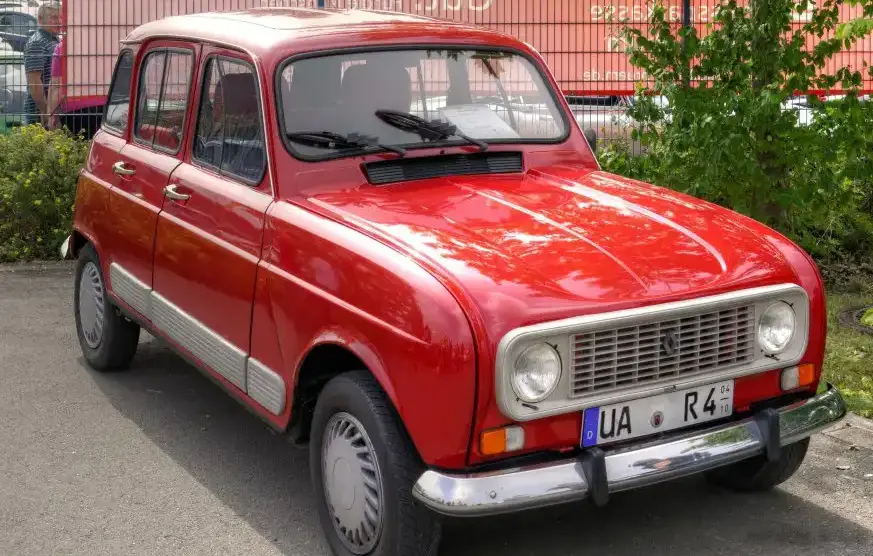
The Renault 4 0.8, specifically the 1123 variant producing 29 horsepower, was a mainstay of the Renault 4 lineup from 1983 to 1988. This model represented the entry-level offering within the fourth generation (often referred to as the ‘Parisienne’ generation) of the iconic Renault 4, a vehicle renowned for its simplicity, affordability, and practicality. The ‘4’ as it was affectionately known, was a hugely popular car in Europe, particularly in France, and played a significant role in motorizing post-war Europe. The 1123 model, with its smaller engine, was aimed at buyers prioritizing economy and ease of use over outright performance.
Technical Specifications
| Brand | Renault |
| Model | 4 |
| Generation | 4 |
| Type (Engine) | 0.8 (1123) (29 Hp) |
| Start of Production | 1983 |
| End of Production | 1988 |
| Powertrain Architecture | Internal Combustion Engine |
| Body Type | Hatchback |
| Fuel Type | Petrol (Gasoline) |
| Power | 29 Hp |
| Engine Model/Code | B1B |
| Engine Aspiration | Naturally Aspirated |
| Engine Oil Capacity | 2.8 l (2.96 US qt | 2.46 UK qt) |
| Coolant Capacity | 5.5 l (5.81 US qt | 4.84 UK qt) |
| Fuel Tank Capacity | 34 l (8.98 US gal | 7.48 UK gal) |
Powertrain & Engine Architecture
The Renault 4 0.8 (1123) was powered by the B1B engine, a 781cc (47.6 cubic inch) inline-four cylinder petrol engine. This engine was a water-cooled, naturally aspirated unit featuring a single overhead valve (OHV) configuration. The B1B engine utilized a Solex carburetor for fuel delivery, a common setup for vehicles of this era prioritizing simplicity and cost-effectiveness. The engine’s modest output of 29 horsepower at around 4,500 rpm and 56 lb-ft of torque at 3,000 rpm was achieved through a relatively low compression ratio, contributing to its ability to run on lower octane fuels. The engine was mated to a four-speed manual transmission, as an automatic transmission was not offered on this specific variant. The engine’s design emphasized durability and ease of maintenance, reflecting the Renault 4’s overall philosophy as a practical and reliable vehicle.
Driving Characteristics
The driving experience in the Renault 4 0.8 was characterized by its unhurried pace. With only 29 horsepower propelling a vehicle weighing around 1,650 lbs, acceleration was modest. The four-speed manual transmission required frequent shifting to maintain momentum, particularly when tackling hills or overtaking. However, the engine proved to be surprisingly tractable, offering reasonable torque at low speeds. The gear ratios were optimized for economy rather than performance, resulting in a top speed of approximately 75 mph. Compared to the slightly more powerful 1.1-liter versions of the Renault 4, the 0.8 model felt noticeably slower, but it offered improved fuel economy and a lighter feel in city driving. The suspension, while simple, provided a comfortable ride on most road surfaces, absorbing bumps and imperfections effectively.
Equipment & Trim Levels
The Renault 4 0.8 (1123) represented the base trim level of the fourth-generation Renault 4. As such, it was equipped with a relatively sparse but functional set of features. Standard equipment typically included cloth upholstery, vinyl floor covering, and basic instrumentation consisting of a speedometer and fuel gauge. The dashboard was constructed from durable plastic and featured minimal ornamentation. Optional extras were limited but could include a radio, heater, and upgraded seat upholstery. The exterior featured basic chrome trim and steel wheels with hubcaps. The focus was on providing a no-frills, affordable mode of transportation. The interior space was surprisingly generous for a car of its size, offering comfortable seating for four adults.
Chassis & Braking
The Renault 4 featured a monocoque chassis with independent front suspension utilizing torsion bars and a trailing arm rear suspension. This suspension setup provided a good balance between ride comfort and handling. The steering was a worm-and-roller system, offering relatively light steering effort. Braking was accomplished via drum brakes on all four wheels, which were adequate for the vehicle’s performance capabilities. The braking system was mechanically operated, lacking power assistance. The relatively light weight of the vehicle helped to compensate for the limitations of the drum brake system. The 0.8 model did not feature any significant chassis or braking upgrades compared to other Renault 4 variants.
Market Reception & Comparison
The Renault 4 0.8 (1123) was well-received in its target market – buyers seeking an economical and reliable vehicle for everyday transportation. Critics praised its fuel efficiency, simplicity, and durability. However, its lack of power and basic equipment levels were also noted. Compared to the 1.1-liter Renault 4, the 0.8 model offered significantly better fuel economy (around 45-50 mpg) but at the expense of performance. The 1.1-liter version was favored by those who frequently drove on highways or carried passengers and luggage. The 0.8 model was particularly popular in urban areas where its nimble handling and low running costs were highly valued. It competed with other small, affordable cars of the era, such as the Citroën 2CV and the Fiat 126.
Legacy
The Renault 4 0.8 (1123) powertrain, while not known for its high performance, proved to be remarkably durable and reliable. Many examples of this model are still on the road today, testament to its robust construction and simple design. The B1B engine is relatively easy to maintain and repair, and spare parts are still readily available. In the used car market, the Renault 4 0.8 is valued for its affordability, simplicity, and nostalgic appeal. It has become a popular choice among classic car enthusiasts and collectors. The Renault 4, in all its variants, remains a beloved icon of French automotive history, representing a bygone era of practical and affordable motoring. The 0.8 model, while the least powerful, holds a special place as the most accessible entry point into the world of the Renault 4.