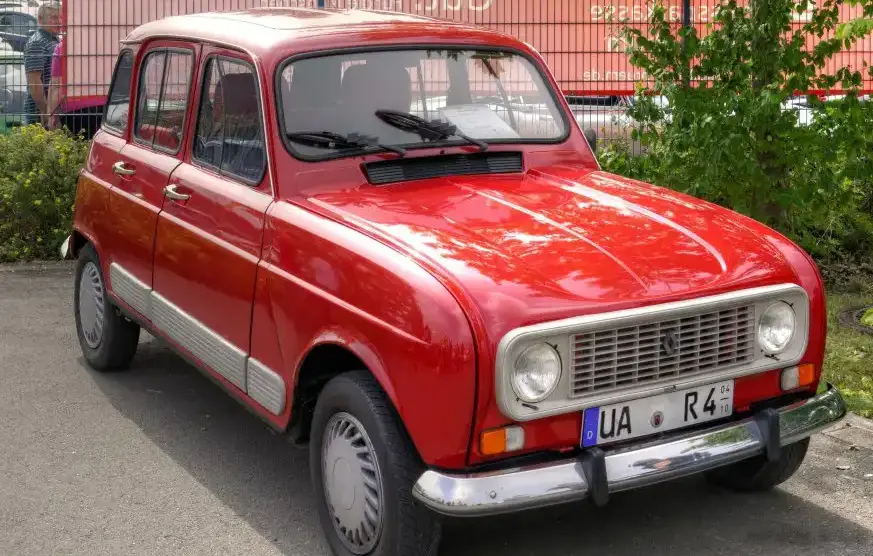
The Renault 4 1.0, producing 34 horsepower, was a mainstay of the Renault 4 lineup from 1986 to 1991. Positioned as the entry-level variant, it offered affordable transportation within the broader Renault 4 range, which spanned various engine sizes and trim levels. This model represented a continuation of the original Renault 4’s ethos – a practical, economical, and robust vehicle designed for everyday use. It was primarily sold in European markets, where it competed with other small, budget-friendly hatchbacks like the Citroën 2CV and Fiat 126. The 1.0L engine was introduced to offer a slightly more refined driving experience compared to the earlier, smaller displacement engines, while still maintaining the Renault 4’s core values.
Technical Specifications
| Brand | Renault |
| Model | 4 |
| Generation | 4 |
| Type (Engine) | 1.0 (34 Hp) |
| Start of production | 1986 |
| End of production | 1991 |
| Powertrain Architecture | Internal Combustion engine |
| Body type | Hatchback |
| Seats | 5 |
| Doors | 5 |
| Fuel consumption (urban) | 7.1 l/100 km (33.1 US mpg, 39.8 UK mpg, 14.1 km/l) |
| Fuel consumption (extra urban) | 6 l/100 km (39.2 US mpg, 47.1 UK mpg, 16.7 km/l) |
| Fuel Type | Petrol (Gasoline) |
| Maximum speed | 118 km/h (73.32 mph) |
| Weight-to-power ratio | 20.4 kg/Hp (48.9 Hp/tonne) |
| Weight-to-torque ratio | 10.9 kg/Nm (92.1 Nm/tonne) |
| Power | 34 Hp @ 5000 rpm |
| Power per litre | 35.6 Hp/l |
| Torque | 64 Nm @ 2500 rpm (47.2 lb.-ft. @ 2500 rpm) |
| Engine layout | Front, Longitudinal |
| Engine Model/Code | Bloc C 688 |
| Engine displacement | 956 cm3 (58.34 cu. in.) |
| Number of cylinders | 4 |
| Engine configuration | Inline |
| Cylinder Bore | 65 mm (2.56 in.) |
| Piston Stroke | 72 mm (2.83 in.) |
| Compression ratio | 8.3:1 |
| Number of valves per cylinder | 2 |
| Fuel injection system | Carburettor |
| Engine aspiration | Naturally aspirated |
| Kerb Weight | 695 kg (1532.21 lbs.) |
| Max. weight | 1030 kg (2270.76 lbs.) |
| Max load | 335 kg (738.55 lbs.) |
| Trunk (boot) space – minimum | 255 l (9.01 cu. ft.) |
| Trunk (boot) space – maximum | 950 l (33.55 cu. ft.) |
| Fuel tank capacity | 34 l (8.98 US gal | 7.48 UK gal) |
| Length | 3670 mm (144.49 in.) |
| Width | 1485 mm (58.46 in.) |
| Height | 1550 mm (61.02 in.) |
| Wheelbase | 2450 mm (96.46 in.) |
| Front track | 1280 mm (50.39 in.) |
| Rear track | 1245 mm (49.02 in.) |
| Drivetrain Architecture | Front wheel drive, Internal Combustion engine |
| Number of gears | 4 |
| Gearbox type | Manual transmission |
| Front suspension | Torsion |
| Rear suspension | Torsion |
| Front brakes | Drum |
| Rear brakes | Drum |
| Assisting systems | None |
| Tires size | 135/80 R13 |
Powertrain & Engine Architecture
The Renault 4 1.0 utilized the “Bloc C 688” engine, a 956cc inline-four cylinder engine. This engine was a naturally aspirated unit, relying on a single carburetor for fuel delivery. The engine featured a relatively low 8.3:1 compression ratio, contributing to its ability to run on lower octane fuels, which was important in many of its target markets. The engine’s valvetrain employed two valves per cylinder (SOHC), a common configuration for engines of this era. The 1.0L engine was paired with a four-speed manual transmission, which was the standard offering for this variant. The longitudinal engine placement, a characteristic of the Renault 4, contributed to its compact design and efficient use of space. While not a powerhouse, the engine was known for its durability and relative simplicity, making it relatively easy to maintain.
Driving Characteristics
The 34 horsepower and 47.2 lb-ft of torque produced by the 1.0L engine resulted in modest, but adequate, performance. Acceleration was slow by modern standards, and overtaking required careful planning. The four-speed manual transmission was geared to prioritize fuel economy over outright speed. The gear ratios were relatively tall, meaning the engine didn’t rev particularly high at highway speeds. Compared to the later, more powerful Renault 4 models, the 1.0L felt noticeably slower, especially when fully loaded. However, its lighter weight compared to some of the larger-engined variants meant it was still reasonably nimble in city driving. The driving experience was characterized by its simplicity and forgiving nature, making it an easy car to learn to drive in.
Equipment & Trim Levels
The Renault 4 1.0 was typically offered with a fairly basic level of equipment. Standard features generally included cloth upholstery, vinyl floor covering, and basic instrumentation – speedometer, fuel gauge, and temperature gauge. Power steering, a feature becoming more common in other vehicles of the time, was not typically offered on this base model. Optional extras included a radio, upgraded seat upholstery, and occasionally, a sunroof. The interior was functional and designed for durability rather than luxury. The dashboard layout was simple and straightforward, with all controls within easy reach of the driver.
Chassis & Braking
The Renault 4 featured a torsion bar suspension system at both the front and rear, a design choice that contributed to its ride comfort and robustness. The front suspension utilized independent torsion bars, while the rear employed a trailing arm torsion bar setup. Braking was handled by drum brakes on all four wheels, which was typical for vehicles in this price range during the 1980s. Anti-lock braking systems (ABS) were not available on the 1.0L model. The steering was a recirculating ball system, providing a relatively direct feel, although it required some effort at low speeds. The 135/80 R13 tires were chosen for their balance of affordability, durability, and grip.
Market Reception & Comparison
The Renault 4 1.0 was generally well-received as an affordable and reliable means of transportation. Critics praised its fuel economy and practicality, but noted its lack of power and basic interior. Compared to other trims in the Renault 4 lineup, such as those equipped with the 1.1L or 1.4L engines, the 1.0L offered lower running costs but at the expense of performance. It was often seen as an ideal first car or a practical vehicle for urban commuting. Its simplicity also meant lower maintenance costs compared to more complex vehicles. Fuel economy figures of around 33-40 mpg were considered excellent for the time.
Legacy
The Renault 4 1.0, while not the most powerful or luxurious version of the Renault 4, remains a popular classic car today. Its simple mechanicals and robust construction contribute to its long-term reliability. Parts availability is generally good, and the engine is relatively easy to repair. In the used car market, these models are often sought after by enthusiasts looking for a classic French car that is affordable to own and maintain. The 1.0L engine, while modest in its output, proved to be a durable and dependable unit, contributing to the Renault 4’s enduring reputation as a practical and reliable vehicle. It represents a significant piece of automotive history, embodying the spirit of affordable and accessible transportation.