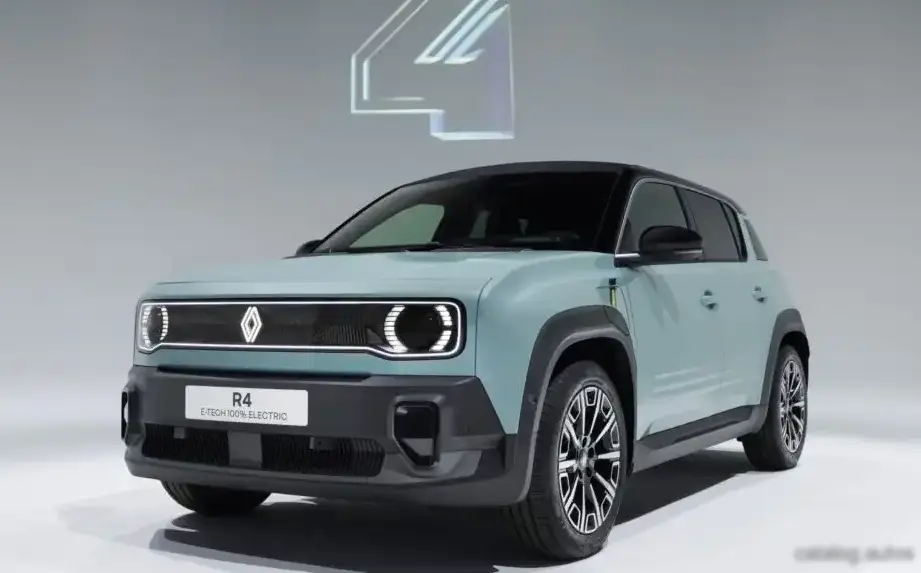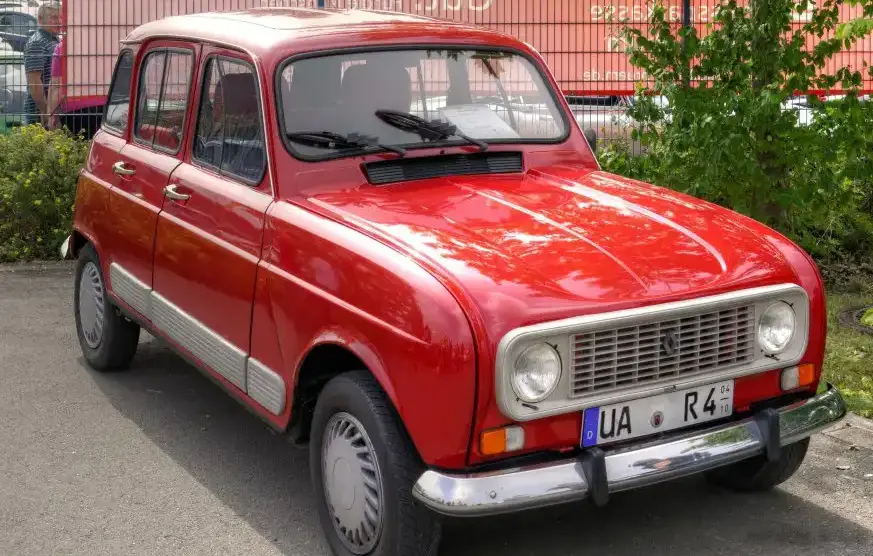
The Renault 4 1.1, producing 34 horsepower, was a mainstay of the Renault 4 lineup from 1978 to 1991. Representing an entry-level offering within the broader Renault 4 range, it provided affordable and practical transportation for a wide demographic. The Renault 4, overall, was a significant vehicle in European automotive history, known for its simple design, durability, and versatility. This 1.1-liter variant played a crucial role in maintaining the model’s popularity during a period of increasing competition from newer, more modern hatchbacks. It was positioned as the most economical option, appealing to buyers prioritizing fuel efficiency and low running costs over outright performance.
Technical Specifications
| Brand | Renault |
| Model | 4 |
| Generation | 4 |
| Type (Engine) | 1.1 (34 Hp) |
| Start of production | 1978 year |
| End of production | 1991 year |
| Powertrain Architecture | Internal Combustion engine |
| Body type | Hatchback |
| Seats | 5 |
| Doors | 5 |
| Fuel consumption (economy) – urban | 6.3 l/100 km (37.3 US mpg, 44.8 UK mpg, 15.9 km/l) |
| Fuel consumption (economy) – extra urban | 5.4 l/100 km (43.6 US mpg, 52.3 UK mpg, 18.5 km/l) |
| Fuel Type | Petrol (Gasoline) |
| Maximum speed | 120 km/h (74.56 mph) |
| Weight-to-power ratio | 21.2 kg/Hp (47.2 Hp/tonne) |
| Weight-to-torque ratio | 9.7 kg/Nm (102.8 Nm/tonne) |
| Power | 34 Hp @ 4000 rpm |
| Power per litre | 30.7 Hp/l |
| Torque | 74 Nm @ 2500 rpm (54.58 lb.-ft. @ 2500 rpm) |
| Engine layout | Front, Longitudinal |
| Engine Model/Code | 688-12 |
| Engine displacement | 1108 cm3 (67.61 cu. in.) |
| Number of cylinders | 4 |
| Engine configuration | Inline |
| Cylinder Bore | 70 mm (2.76 in.) |
| Piston Stroke | 72 mm (2.83 in.) |
| Compression ratio | 9.5:1 |
| Number of valves per cylinder | 2 |
| Fuel injection system | Carburettor |
| Engine aspiration | Naturally aspirated engine |
| Engine oil capacity | 3.3 l (3.49 US qt | 2.9 UK qt) |
| Coolant | 6.3 l (6.66 US qt | 5.54 UK qt) |
| Kerb Weight | 720 kg (1587.33 lbs.) |
| Max. weight | 1050 kg (2314.85 lbs.) |
| Max load | 330 kg (727.53 lbs.) |
| Trunk (boot) space – minimum | 255 l (9.01 cu. ft.) |
| Trunk (boot) space – maximum | 950 l (33.55 cu. ft.) |
| Fuel tank capacity | 34 l (8.98 US gal | 7.48 UK gal) |
| Length | 3670 mm (144.49 in.) |
| Width | 1485 mm (58.46 in.) |
| Height | 1550 mm (61.02 in.) |
| Wheelbase | 2450 mm (96.46 in.) |
| Front track | 1280 mm (50.39 in.) |
| Rear (Back) track | 1245 mm (49.02 in.) |
| Drivetrain Architecture | The Internal combustion engine (ICE) drives the front wheels of the vehicle. |
| Drive wheel | Front wheel drive |
| Number of gears and type of gearbox | 4 gears, manual transmission |
| Front suspension | Torsion |
| Rear suspension | Torsion |
| Front brakes | Drum |
| Rear brakes | Drum |
| Steering type | Steering rack and pinion |
| Tires size | 135/80 R13 |
Powertrain & Engine Architecture
The Renault 4 1.1 utilized the 688-12 engine, a 1108cc inline-four cylinder engine. This engine was characterized by its simplicity and robustness. It featured a carbureted fuel system, a common feature for vehicles of this era, providing adequate fuel delivery for its modest power output. The engine employed a two-valve per cylinder configuration, contributing to its straightforward design. The engine was mounted longitudinally in the front of the vehicle, driving the front wheels. The four-speed manual transmission was a standard feature, chosen for its cost-effectiveness and reliability. This transmission was not known for its sporty feel, with relatively wide gear ratios geared towards fuel economy rather than acceleration.
Driving Characteristics
The 1.1-liter Renault 4 offered modest performance. With only 34 horsepower, acceleration was leisurely, and overtaking required careful planning. The car was best suited for urban driving and shorter journeys. The four-speed manual transmission, while durable, had a noticeable gap between gears, impacting responsiveness. Compared to the later 1.4-liter versions, the 1.1 felt significantly underpowered, especially when carrying a full load of passengers or cargo. However, the light weight of the vehicle (around 720 kg) helped to mitigate the lack of power to some extent. The torsion bar suspension provided a reasonably comfortable ride, absorbing bumps and imperfections in the road surface effectively.
Equipment & Trim Levels
The Renault 4 1.1 was typically offered with a basic level of equipment. Standard features included cloth upholstery, a simple dashboard layout with basic instrumentation (speedometer, fuel gauge), and manually operated windows and door locks. Options were limited but could include a radio, upgraded seat covers, and occasionally, a sunroof. The interior was functional and utilitarian, prioritizing practicality over luxury. The trim level was generally consistent across the 1.1 models, with minimal variations in interior appointments.
Chassis & Braking
The Renault 4 featured a simple but effective chassis design. It utilized a front torsion bar suspension and a rear torsion bar suspension, providing a comfortable ride and reasonable handling characteristics for its time. Braking was accomplished via drum brakes on all four wheels, which were adequate for the vehicle’s weight and performance. Steering was via a rack and pinion system, offering reasonably precise control. The 135/80 R13 tires were chosen for their durability and affordability, rather than outright grip.
Market Reception & Comparison
The Renault 4 1.1 was well-received as an affordable and reliable mode of transportation. Critics praised its fuel efficiency and low running costs, making it an attractive option for budget-conscious buyers. However, its lack of power and basic equipment levels were often noted. Compared to the higher-specification Renault 4 models, such as the 1.4-liter versions, the 1.1 offered significantly less performance but at a lower purchase price. It competed with other small, economical hatchbacks of the era, such as the Citroën 2CV and the Fiat 127.
Legacy
The Renault 4 1.1, while not the most powerful or luxurious version of the Renault 4, remains a popular classic car among enthusiasts. Its simple mechanical design makes it relatively easy to maintain and repair. The 688-12 engine is known for its durability, and parts availability is generally good. In the used car market, well-maintained examples of the Renault 4 1.1 are sought after by collectors and those looking for a charming and affordable classic car. The model’s enduring appeal lies in its simplicity, practicality, and the nostalgic connection it evokes for many drivers.