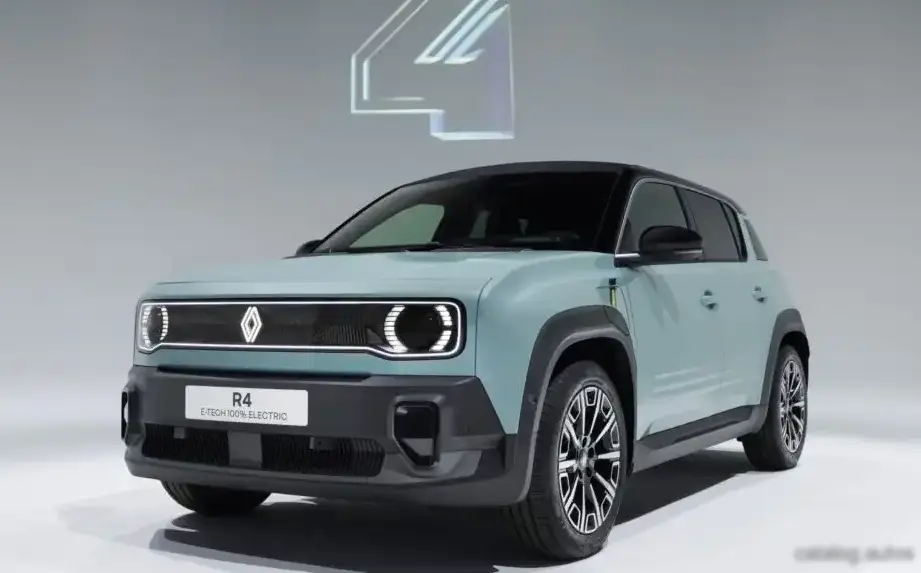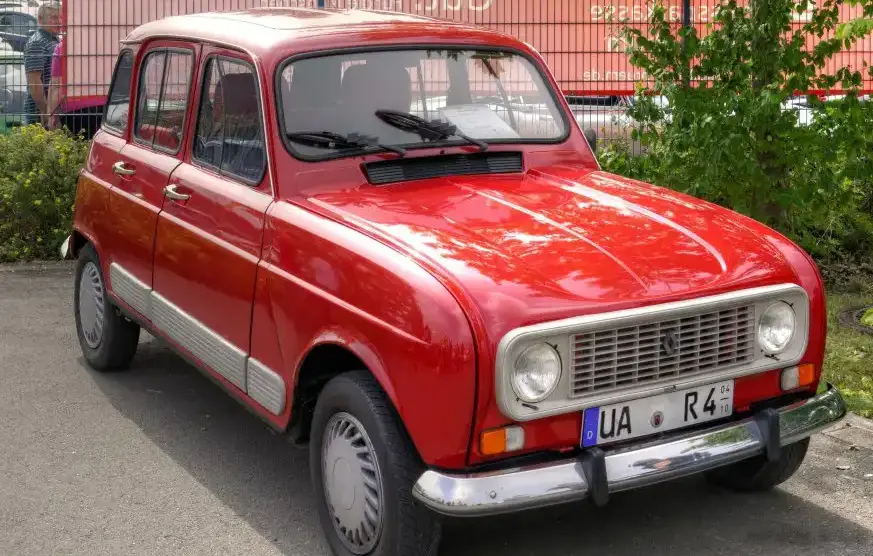
The Renault 4 1.1, produced between 1986 and 1990, represents a late-stage evolution of the iconic Renault 4, a vehicle that fundamentally altered personal transportation in Europe. This variant, powered by the C1E 714 engine, offered a more economical and accessible entry point into the Renault 4 range, particularly as the model neared the end of its remarkably long production run. While not the most powerful or dynamically engaging version, the 1.1-liter model played a crucial role in maintaining the 4’s popularity as a practical and affordable family car, especially in markets where fuel efficiency and low running costs were paramount. It was part of the fourth generation of the Renault 4, building upon the original’s simple, robust design with incremental improvements over the decades.
Technical Specifications
| Brand | Renault |
| Model | 4 |
| Generation | 4 |
| Type (Engine) | 1.1 (44 Hp) |
| Start of production | 1986 |
| End of production | 1990 |
| Powertrain Architecture | Internal Combustion engine |
| Body type | Hatchback |
| Fuel Type | Petrol (Gasoline) |
| Power | 44 Hp |
| Engine Model/Code | C1E 714 |
| Engine aspiration | Naturally aspirated engine |
| Fuel tank capacity | 34 l / 8.98 US gal / 7.48 UK gal |
Powertrain & Engine Architecture
The heart of the Renault 4 1.1 is the C1E 714 engine, a 1.1-liter (1108 cc) inline-four cylinder petrol engine. This engine is a naturally aspirated unit, meaning it doesn’t employ a turbocharger or supercharger. It features a relatively simple overhead valve (OHV) valvetrain with two valves per cylinder. The C1E engine family was known for its durability and ease of maintenance, characteristics that contributed significantly to the Renault 4’s longevity. Fuel delivery is managed by a single, down-draft carburetor, a technology common for the era. While not as precise as fuel injection, the carburetor provided reliable operation and contributed to the engine’s simplicity. The engine produces 44 horsepower (33 kW) at 5000 rpm and approximately 65 lb-ft (88 Nm) of torque at 3000 rpm. This modest output is delivered to the front wheels through a four-speed manual transmission, although a three-speed automatic transmission was also offered, albeit less commonly. The automatic transmission was a Jatco-sourced unit, known for its robustness but also for its relatively slow shift times and tendency to reduce fuel economy.
Driving Characteristics
The Renault 4 1.1, particularly in automatic guise, was never intended to be a performance car. Acceleration is best described as leisurely, with a 0-60 mph time estimated to be well over 15 seconds. The engine’s peak torque is relatively low, meaning that drivers often need to downshift to maintain momentum when climbing hills or overtaking. The four-speed manual transmission allows for a bit more control and responsiveness, enabling drivers to extract slightly more performance from the engine. However, even with the manual, the 4 1.1 is best suited for urban driving and shorter journeys. The suspension, consisting of independent front suspension with torsion bars and a trailing arm rear suspension, provides a comfortable ride, absorbing bumps and imperfections in the road reasonably well. Steering is light and easy, making it maneuverable in tight spaces. The automatic transmission, while convenient, further diminishes the driving experience, resulting in noticeable ‘hunting’ for gears and a less direct connection between the engine and the wheels.
Equipment & Trim Levels
The Renault 4 1.1 typically occupied the entry-level position in the Renault 4 lineup during its production years. As such, it came equipped with a relatively basic set of features. Standard equipment generally included cloth upholstery, vinyl floor covering, and basic instrumentation consisting of a speedometer, fuel gauge, and temperature gauge. The dashboard design was functional and utilitarian, reflecting the car’s overall focus on practicality. Optional extras were available, such as a radio, heated rear window, and upgraded upholstery. Higher trim levels, such as the ‘Savane’ or ‘Siègle’ models, offered more luxurious appointments, including more comfortable seats, additional chrome trim, and upgraded interior materials. However, the 1.1-liter version was primarily aimed at buyers seeking an affordable and reliable means of transportation, and therefore rarely featured these more extravagant options.
Chassis & Braking
The Renault 4’s chassis is a monocoque construction, providing a good balance of strength and lightness. The front suspension utilizes independent torsion bar springs, offering a comfortable ride and predictable handling. The rear suspension employs a trailing arm setup, which is simple and robust. Braking on the Renault 4 1.1 typically consisted of drum brakes on all four wheels. While adequate for the car’s performance capabilities, the drum brakes lacked the stopping power and fade resistance of disc brakes. Later models, and some higher trim levels, were equipped with front disc brakes, offering improved stopping performance. The steering is a rack and pinion system, providing light and precise control. The car’s relatively light weight (around 1,700 lbs / 770 kg) helps to offset the modest engine output and contributes to its nimble handling.
Market Reception & Comparison
The Renault 4 1.1 was generally well-received as an affordable and practical city car. Critics praised its fuel efficiency, reliability, and ease of maintenance. However, it was also criticized for its lack of performance and its somewhat dated design. Compared to other trims in the Renault 4 lineup, such as the 1.4-liter models, the 1.1 offered significantly less power and acceleration. However, it also offered better fuel economy and lower running costs. In comparison to competitors like the Citroën 2CV and the Fiat 126, the Renault 4 1.1 offered a more modern and comfortable driving experience, although it lacked the unique character of the 2CV. The automatic transmission version, while convenient, was often seen as a detriment to performance and fuel economy, making the manual transmission the preferred choice for most buyers.
Legacy
The Renault 4 1.1, while not the most sought-after version of the Renault 4, remains a popular choice among classic car enthusiasts and collectors. The C1E engine is known for its durability and relative simplicity, making it relatively easy to maintain and repair. Parts availability is generally good, although some components may be becoming increasingly scarce. In the used car market, the Renault 4 1.1 typically commands lower prices than higher-spec models, making it an accessible entry point into the world of classic French motoring. Its enduring appeal lies in its simplicity, reliability, and the nostalgic connection it evokes to a bygone era of automotive design. The Renault 4, in all its variants, remains a testament to the power of clever engineering and a focus on practicality, and the 1.1-liter model played a vital role in cementing its place in automotive history.