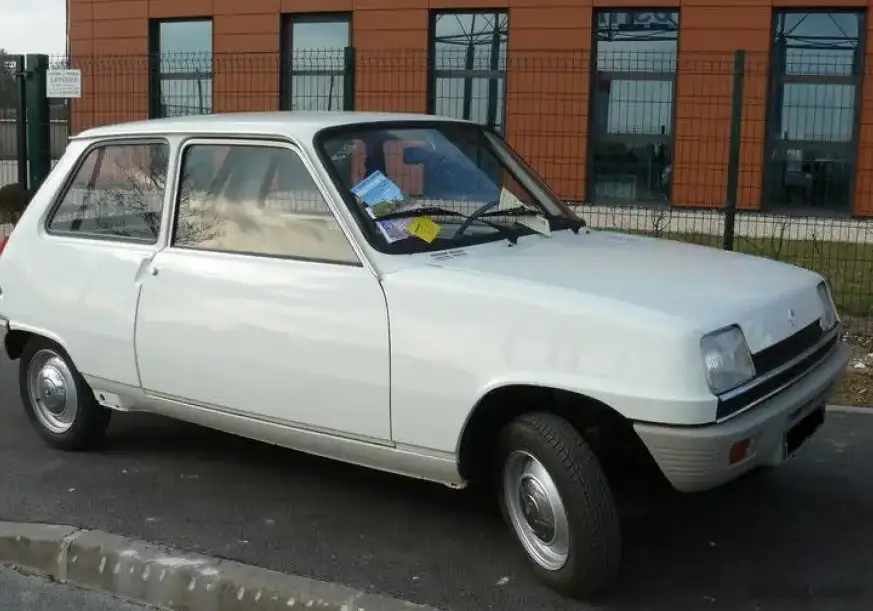
The Renault 5 1.6 D, producing 55 horsepower, was a variant of the popular Renault 5 supermini produced between 1979 and 1985. Positioned as the diesel-powered entry within the broader Renault 5 range, it offered fuel economy as its primary appeal, catering to buyers seeking a practical and economical city car. This model falls within the first generation of the Renault 5 (R5), known internally as the B120 series, and played a significant role in establishing the Renault 5 as a mainstay in the European automotive market. It represented Renault’s attempt to offer a diesel option in a segment largely dominated by petrol engines.
Technical Specifications
| Brand | Renault |
| Model | 5 |
| Generation | 5 |
| Type (Engine) | 1.6 D (55 Hp) |
| Start of production | 1979 |
| End of production | 1985 |
| Powertrain Architecture | Internal Combustion engine |
| Body type | Hatchback |
| Seats | 5 |
| Doors | 3 |
| Fuel consumption (urban) | 5.7 l/100 km (41.3 US mpg, 49.6 UK mpg, 17.5 km/l) |
| Fuel consumption (extra urban) | 3.9 l/100 km (60.3 US mpg, 72.4 UK mpg, 25.6 km/l) |
| Fuel consumption (combined) | 5.7 l/100 km (41.3 US mpg, 49.6 UK mpg, 17.5 km/l) |
| Fuel Type | Diesel |
| Acceleration 0 – 100 km/h | 16.5 sec |
| Acceleration 0 – 62 mph | 16.5 sec |
| Acceleration 0 – 60 mph | 15.7 sec |
| Maximum speed | 150 km/h (93.21 mph) |
| Weight-to-power ratio | 14.5 kg/Hp |
| Weight-to-torque ratio | 7.8 kg/Nm |
| Power | 55 Hp @ 4800 rpm |
| Power per litre | 34.5 Hp/l |
| Torque | 102 Nm @ 2250 rpm (75.23 lb.-ft. @ 2250 rpm) |
| Engine layout | Front, Transverse |
| Engine Model/Code | F8M 720, F8M 730 |
| Engine displacement | 1595 cm3 (97.33 cu. in.) |
| Number of cylinders | 4 |
| Engine configuration | Inline |
| Cylinder Bore | 78 mm (3.07 in.) |
| Piston Stroke | 83.5 mm (3.29 in.) |
| Compression ratio | 22.5:1 |
| Number of valves per cylinder | 2 |
| Fuel injection system | Precombustion chamber injection |
| Engine aspiration | Naturally aspirated |
| Kerb Weight | 795 kg (1752.67 lbs.) |
| Max. weight | 1215 kg (2678.62 lbs.) |
| Max load | 420 kg (925.94 lbs.) |
| Trunk (boot) space – minimum | 235 l (8.3 cu. ft.) |
| Trunk (boot) space – maximum | 955 l (33.73 cu. ft.) |
| Fuel tank capacity | 43 l (11.36 US gal | 9.46 UK gal) |
| Length | 3590 mm (141.34 in.) |
| Width | 1565 mm (61.61 in.) |
| Height | 1385 mm (54.53 in.) |
| Wheelbase | 2410 mm (94.88 in.) |
| Front track | 1330 mm (52.36 in.) |
| Rear (Back) track | 1290 mm (50.79 in.) |
| Drivetrain Architecture | The Internal combustion engine (ICE) drives the front wheels of the vehicle. |
| Drive wheel | Front wheel drive |
| Number of gears and type of gearbox | 5 gears, manual transmission |
| Front suspension | Coil spring |
| Rear suspension | Coil spring |
| Front brakes | Disc |
| Rear brakes | Drum |
| Assisting systems | ABS (Anti-lock braking system) |
| Tires size | 155/70 R13 |
| Wheel rims size | 13 |
Powertrain & Engine Architecture
The Renault 5 1.6 D was powered by the F8M engine family, specifically the F8M 720 or F8M 730 variants. This was a 1.6-liter inline-four cylinder diesel engine. Unlike many contemporary diesel engines that employed direct injection, the F8M utilized a precombustion chamber injection system. This system involved injecting fuel into a small chamber connected to the main cylinder, where it was partially combusted before igniting the main charge. This design contributed to quieter operation and reduced engine knock, but generally resulted in lower power output compared to direct injection systems. The engine featured a two-valve per cylinder configuration and a relatively high compression ratio of 22.5:1, typical for diesel engines of the era. The engine’s 55 horsepower output was delivered at 4800 rpm, with a torque figure of 102 Nm (75.23 lb-ft) available at 2250 rpm. The engine was transversely mounted in the front of the vehicle, driving the front wheels. The transmission was a standard five-speed manual gearbox.
Driving Characteristics
The 1.6 D variant of the Renault 5 offered a distinctly different driving experience compared to its petrol-powered siblings. The lower horsepower and torque figures resulted in noticeably slower acceleration – approximately 16.5 seconds to reach 62 mph. However, the diesel engine’s torque characteristics provided reasonable pulling power at lower engine speeds, making it suitable for urban driving and carrying loads. The five-speed manual transmission was geared to maximize fuel efficiency, with relatively long gear ratios. Compared to the more spirited Renault 5 TL or Gordini models, the 1.6 D prioritized economy over performance. The handling was typical of the Renault 5 – nimble and responsive – but the added weight of the diesel engine and its components slightly diminished the car’s overall agility.
Equipment & Trim Levels
The Renault 5 1.6 D was generally positioned as a basic, no-frills model. Standard equipment typically included cloth upholstery, a basic dashboard layout, and manual windows and door locks. While not lavishly equipped, it did offer the essentials for comfortable transportation. Optional extras, depending on the market and year, could include a sunroof, upgraded stereo systems, and improved interior trim. The interior was functional and designed for durability rather than luxury. The exterior trim was generally minimal, with black plastic bumpers and steel wheels being common features.
Chassis & Braking
The Renault 5 1.6 D utilized a simple yet effective chassis design. Front suspension consisted of coil springs and independent wishbones, while the rear suspension employed a torsion beam setup with coil springs. The braking system featured disc brakes on the front wheels and drum brakes on the rear. ABS (Anti-lock Braking System) was not standard equipment on all models, and its availability varied depending on the year and market. The suspension was tuned for comfort and ride quality, prioritizing a smooth ride over sporty handling. The relatively lightweight construction of the Renault 5 helped to offset the weight of the diesel engine, contributing to reasonable handling characteristics.
Market Reception & Comparison
The Renault 5 1.6 D was well-received in markets where diesel fuel was readily available and affordable, particularly in Europe. Critics praised its exceptional fuel economy, making it an attractive option for budget-conscious buyers and those covering long distances. However, the limited power output and relatively slow acceleration were often cited as drawbacks. Compared to the petrol-powered Renault 5 models, the 1.6 D offered significantly better fuel economy but sacrificed performance. Compared to other diesel-powered small cars of the era, such as the Peugeot 205 D, the Renault 5 1.6 D offered a competitive combination of fuel efficiency, practicality, and affordability.
Legacy
The Renault 5 1.6 D, while not the most powerful or glamorous variant of the Renault 5, remains a popular classic car among enthusiasts. The F8M diesel engine, while not known for its longevity, is generally considered reliable with proper maintenance. Today, well-maintained examples of the Renault 5 1.6 D are sought after by collectors and those seeking a nostalgic driving experience. Its enduring appeal lies in its simplicity, fuel efficiency, and the iconic status of the Renault 5 as a whole. The 1.6 D represents a significant chapter in the Renault 5’s history, demonstrating the brand’s commitment to offering practical and economical transportation options to a wide range of buyers.