
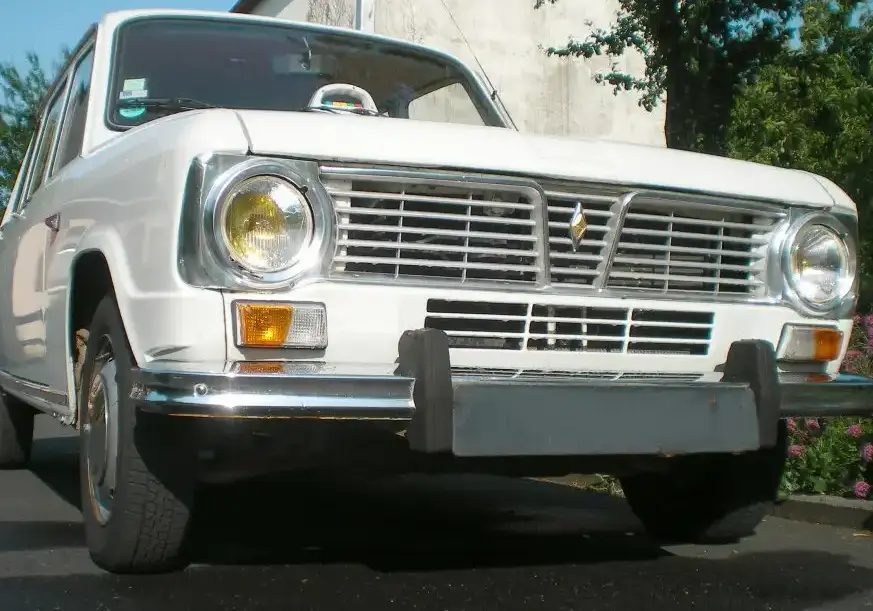
The Renault 6 1.1, producing 45 horsepower, was a mainstay of the Renault lineup from 1970 to 1986. Positioned as the entry-level variant of the Renault 6 range, it offered affordable transportation within the compact hatchback segment, primarily targeting budget-conscious buyers in Europe. This model played a significant role in democratizing car ownership, offering a practical and relatively spacious vehicle at a competitive price point. It was part of the first generation of the Renault 6 (R1170), known for its distinctive styling and innovative features for its time.
Technical Specifications
| Brand | Renault |
| Model | 6 |
| Generation | 6 |
| Type (Engine) | 1.1 (45 Hp) |
| Start of production | 1970 |
| End of production | 1986 |
| Powertrain Architecture | Internal Combustion engine |
| Body type | Hatchback |
| Seats | 5 |
| Doors | 5 |
| Fuel consumption (combined) | 8 l/100 km (29.4 US mpg, 35.3 UK mpg, 12.5 km/l) |
| Fuel Type | Petrol (Gasoline) |
| Maximum speed | 128 km/h (79.54 mph) |
| Weight-to-power ratio | 18.2 kg/Hp (54.9 Hp/tonne) |
| Weight-to-torque ratio | 10.6 kg/Nm (93.9 Nm/tonne) |
| Power | 45 Hp @ 5000 rpm |
| Power per litre | 40.6 Hp/l |
| Torque | 77 Nm @ 2500 rpm (56.79 lb.-ft. @ 2500 rpm) |
| Engine layout | Rear, Transverse |
| Engine Model/Code | 688-10 |
| Engine displacement | 1108 cm3 (67.61 cu. in.) |
| Number of cylinders | 4 |
| Engine configuration | Inline |
| Cylinder Bore | 70 mm (2.76 in.) |
| Piston Stroke | 72 mm (2.83 in.) |
| Compression ratio | 8.3:1 |
| Number of valves per cylinder | 2 |
| Fuel injection system | Carburettor |
| Engine aspiration | Naturally aspirated engine |
| Valvetrain | OHV |
| Engine oil capacity | 3.3 l (3.49 US qt | 2.9 UK qt) |
| Coolant | 6.3 l (6.66 US qt | 5.54 UK qt) |
| Kerb Weight | 820 kg (1807.79 lbs.) |
| Max. weight | 1220 kg (2689.64 lbs.) |
| Max load | 400 kg (881.85 lbs.) |
| Trunk (boot) space – minimum | 285 l (10.06 cu. ft.) |
| Trunk (boot) space – maximum | 1250 l (44.14 cu. ft.) |
| Fuel tank capacity | 39 l (10.3 US gal | 8.58 UK gal) |
| Max. roof load | 60 kg (132.28 lbs.) |
| Permitted trailer load with brakes (12%) | 750 kg (1653.47 lbs.) |
| Permitted trailer load without brakes | 410 kg (903.9 lbs.) |
| Length | 3850 mm (151.57 in.) |
| Height | 1475 mm (58.07 in.) |
| Wheelbase | 2401 mm (94.53 in.) |
| Rear (Back) track | 1244 mm (48.98 in.) |
| Front overhang | 627 mm (24.69 in.) |
| Rear overhang | 822 mm (32.36 in.) |
| Minimum turning circle (turning diameter) | 9.9 m (32.48 ft.) |
| Drivetrain Architecture | The Internal combustion engine (ICE) drives the rear wheels of the vehicle. |
| Drive wheel | Rear wheel drive |
| Number of gears and type of gearbox | 4 gears, manual transmission |
| Front suspension | Spring Strut |
| Rear suspension | Leaf spring |
| Front brakes | Disc |
| Rear brakes | Drum |
| Steering type | Steering rack and pinion |
Powertrain & Engine Architecture
The Renault 6 1.1 was powered by the 688-10 engine, a 1108cc inline-four cylinder petrol engine. This engine utilized an overhead valve (OHV) valvetrain and a single carburetor for fuel delivery. The engine’s design prioritized simplicity and durability over outright performance. The transverse rear-engine layout was a defining characteristic of the Renault 6, contributing to its unique handling characteristics. The four-speed manual transmission was the only gearbox option available with this engine, providing a straightforward driving experience. The engine produced 45 horsepower at 5000 rpm and 77 Nm (56.79 lb-ft) of torque at 2500 rpm. This configuration was known for its reliability, but its modest power output meant it wasn’t designed for rapid acceleration or high-speed cruising.
Driving Characteristics
The 1.1-liter engine and manual transmission combination in the Renault 6 delivered a utilitarian driving experience. Acceleration was modest, and the car felt most comfortable at lower speeds. The rear-engine layout provided decent traction, but also contributed to noticeable understeer when pushed hard. The four-speed gearbox offered relatively wide gear ratios, requiring frequent shifting to maintain optimal engine speed. Compared to the more powerful Renault 6 TL models, the 1.1 offered significantly less performance, but it was more fuel-efficient and easier to drive in urban environments. The manual transmission provided a more engaging driving experience than the later automatic options found in other Renault models.
Equipment & Trim Levels
The Renault 6 1.1 was typically equipped with basic amenities. Standard features included cloth upholstery, a simple dashboard layout, and basic instrumentation. Options were limited, but could include a radio, upgraded seat fabrics, and occasionally, a sunroof. The interior was designed for practicality and durability, with hard-wearing materials used throughout. The trim level was generally considered the base model, focusing on affordability and essential functionality. The emphasis was on providing a functional and reliable vehicle rather than luxury or advanced features.
Chassis & Braking
The Renault 6 1.1 featured a relatively simple chassis design. The front suspension utilized a spring strut setup, while the rear suspension employed leaf springs. This configuration provided a comfortable ride, but didn’t offer particularly sporty handling. The braking system consisted of disc brakes on the front wheels and drum brakes on the rear. This setup was adequate for the car’s weight and performance, but lacked the stopping power of more modern braking systems. The car’s relatively light weight (820 kg / 1807.79 lbs) helped to offset the limitations of the braking system.
Market Reception & Comparison
The Renault 6 1.1 was generally well-received as an affordable and practical family car. Critics praised its spacious interior, fuel efficiency, and reliability. However, the engine’s modest power output was often criticized. Compared to other cars in its class, such as the Peugeot 104 or the Fiat 127, the Renault 6 offered a unique combination of rear-engine layout and hatchback practicality. The 1.1-liter engine provided better fuel economy than the larger engine options, making it a popular choice for urban commuters. Its simplicity also translated to lower maintenance costs, further enhancing its appeal to budget-conscious buyers.
Legacy
The Renault 6 1.1, while not known for its performance, has earned a reputation for its durability and reliability. Many examples are still on the road today, testament to the quality of its construction. In the used car market, these models are often sought after by enthusiasts and collectors who appreciate their simplicity and classic styling. The 688-10 engine is known for its longevity, and with proper maintenance, can provide many years of reliable service. The Renault 6 1.1 remains a significant piece of automotive history, representing a pivotal moment in the development of affordable and practical family cars in Europe.
