
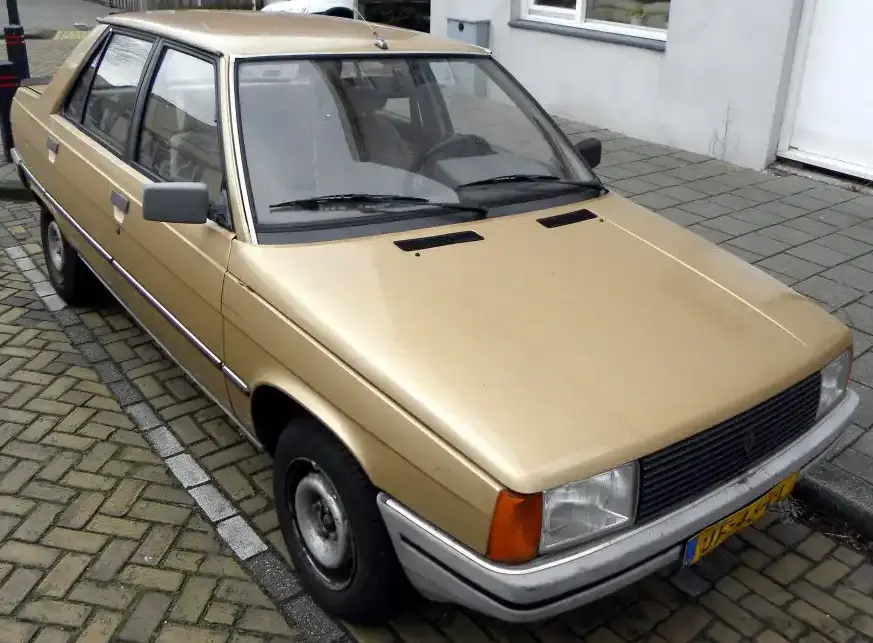
The Renault 9 (L42) 1.4 (L423) Automatic, produced between 1981 and 1985, represented a significant step forward for Renault in the small family car segment. Part of the L42 generation, this variant offered a comfortable and economical option for buyers seeking an automatic transmission in a traditionally manual-shift market. It was positioned as the entry-level automatic trim, offering a more accessible price point compared to higher-specification models. The Renault 9 aimed to provide a modern alternative to competitors like the Peugeot 205 and Citroën Visa, focusing on practicality and affordability.
Technical Specifications
| Brand | Renault |
| Model | 9 |
| Generation | 9 (L42) |
| Type (Engine) | 1.4 (L423) (68 Hp) Automatic |
| Start of production | 1981 |
| End of production | 1985 |
| Powertrain Architecture | Internal Combustion engine |
| Body type | Sedan |
| Seats | 5 |
| Doors | 4 |
| Fuel Type | Petrol (Gasoline) |
| Power | 68 Hp |
| Engine Model/Code | C2J 718, C2J 757 |
| Engine aspiration | Naturally aspirated engine |
| Engine oil capacity | 3.25 l / 3.43 US qt / 2.86 UK qt |
| Coolant capacity | 6 l / 6.34 US qt / 5.28 UK qt |
| Fuel tank capacity | 47 l / 12.42 US gal / 10.34 UK gal |
Powertrain & Engine Architecture
The Renault 9 1.4 Automatic was powered by the C2J engine, specifically the 718 or 757 variants. This 1.4-liter (1397 cc) inline-four cylinder engine was a relatively simple design, featuring a single overhead camshaft (SOHC) and two valves per cylinder. The engine utilized a Solex carburetor for fuel delivery, a common practice for the time, prioritizing simplicity and cost-effectiveness over the more advanced fuel injection systems. The C2J engine was known for its durability, though its performance was modest. The automatic transmission was a three-speed unit, sourced from Renault’s own production. This transmission was a traditional hydraulic automatic, offering smooth, if not particularly quick, gear changes. It was designed for comfort and ease of use, rather than sporty performance.
Driving Characteristics
The 1.4-liter engine paired with the three-speed automatic transmission resulted in a driving experience focused on comfort and economy. Acceleration was leisurely, with 0 to 60 mph times estimated around 14-16 seconds. The automatic transmission’s gear ratios were optimized for fuel efficiency and smooth cruising, rather than rapid acceleration. Compared to the manual transmission versions of the Renault 9 1.4, the automatic suffered a noticeable performance penalty. The manual offered quicker acceleration and a more engaging driving experience. However, the automatic provided a significant convenience advantage, particularly in urban driving conditions. The steering was light and easy, making the car maneuverable in city streets, but lacked the precision of some competitors. The suspension provided a comfortable ride, absorbing bumps and imperfections in the road reasonably well.
Equipment & Trim Levels
The Renault 9 1.4 Automatic typically came with a fairly basic level of equipment, reflecting its position as an entry-level model. Standard features included cloth upholstery, a basic instrument cluster, and manually operated windows and door locks. The interior was functional and durable, prioritizing practicality over luxury. Optional extras included a radio, upgraded upholstery, and a sunroof. The dashboard layout was straightforward and easy to use, with clearly labeled controls. The trim level was generally identified by minimal badging, focusing on the core functionality of the vehicle. The automatic transmission itself was the primary distinguishing feature of this variant.
Chassis & Braking
The Renault 9 L42 utilized a relatively simple chassis design. It featured independent front suspension with MacPherson struts and a torsion beam rear suspension. This setup provided a good balance between ride comfort and handling. The braking system consisted of disc brakes on the front wheels and drum brakes on the rear wheels. This was a common configuration for cars in this price range during the early 1980s. The brakes were adequate for normal driving conditions, but lacked the stopping power of more modern systems. Stabilizer bars were typically fitted to the front suspension to reduce body roll during cornering, though their thickness varied depending on the specific model year and optional equipment.
Market Reception & Comparison
The Renault 9 1.4 Automatic received mixed reviews from automotive critics. While praised for its comfort and affordability, it was often criticized for its lack of performance. The automatic transmission was seen as a welcome addition for drivers seeking convenience, but it came at the cost of fuel economy and acceleration. Compared to the manual transmission versions, the automatic offered slightly worse fuel economy, typically around 30-35 mpg. The 1.4-liter engine was considered adequate for everyday driving, but struggled when fully loaded or tackling steep hills. Competitors like the Peugeot 205 offered more engaging driving experiences, while the Citroën Visa provided a similar level of comfort and practicality. The Renault 9 1.4 Automatic appealed to buyers who prioritized ease of use and affordability over sporty performance.
Legacy
The Renault 9 1.4 Automatic, while not a performance icon, played an important role in making automatic transmissions more accessible to a wider range of buyers in Europe. The C2J engine proved to be relatively reliable, and many examples are still on the road today, albeit often as classic cars. The three-speed automatic transmission, while dated by modern standards, was generally durable and required minimal maintenance. In the used car market, these models are often sought after by enthusiasts looking for a simple and affordable classic car. Parts availability can be a challenge, but many components are still available through specialist suppliers. The Renault 9 1.4 Automatic represents a snapshot of automotive technology and design from the early 1980s, offering a glimpse into a time when comfort and affordability were often prioritized over outright performance.
