
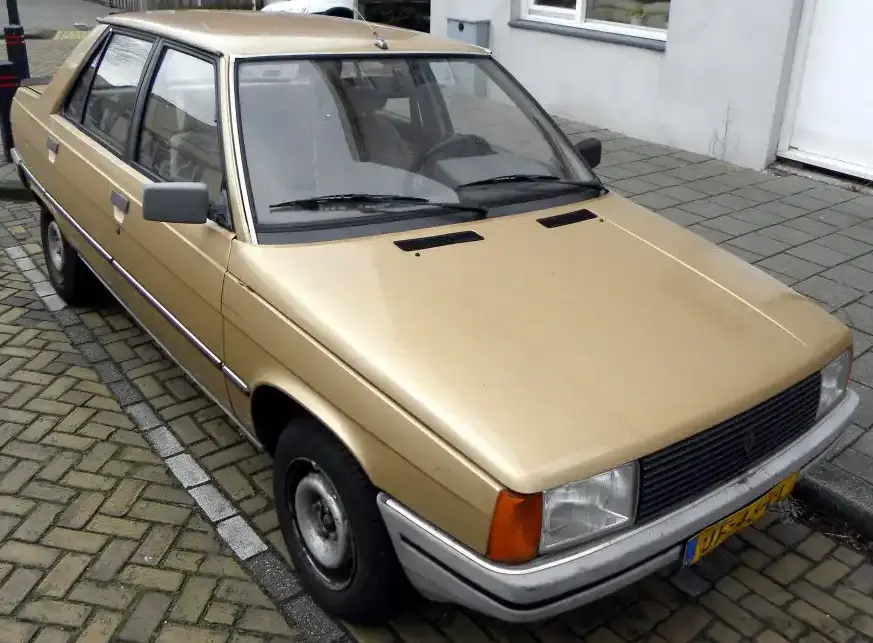
The Renault 9, designated internally as the L42, was a small family car produced by the French manufacturer Renault between 1982 and 1988. Positioned as a modern and economical option within the Renault lineup, it replaced the Renault 11 as the entry-level model. The 1.4-liter (L423, L42R) variant, producing 67 horsepower, represented a core offering within the range, aimed at buyers prioritizing fuel efficiency and affordability. It played a significant role in Renault’s strategy to offer a contemporary and accessible vehicle in a competitive European market.
Technical Specifications
| Brand | Renault |
| Model | 9 |
| Generation | 9 (L42) |
| Type (Engine) | 1.4 (L423, L42R) (67 Hp) |
| Start of production | 1982 |
| End of production | 1988 |
| Powertrain Architecture | Internal Combustion engine |
| Body type | Sedan |
| Seats | 5 |
| Doors | 4 |
| Fuel consumption (urban) | 8.3 l/100 km (28.3 US mpg, 34 UK mpg, 12 km/l) |
| Fuel consumption (extra urban) | 5.1 l/100 km (46.1 US mpg, 55.4 UK mpg, 19.6 km/l) |
| Fuel Type | Petrol (Gasoline) |
| Maximum speed | 160 km/h (99.42 mph) |
| Weight-to-power ratio | 9.7 kg/Hp (103.1 Hp/tonne) |
| Power | 67 Hp |
| Power per litre | 47.9 Hp/l |
| Engine Model/Code | C2J 720, C2J 766, C2J 767, C2J 768 |
| Engine displacement | 1400 cm3 (85.43 cu. in.) |
| Fuel injection system | Carburettor |
| Engine aspiration | Naturally aspirated engine |
| Engine oil capacity | 3.25 l (3.43 US qt, 2.86 UK qt) |
| Coolant capacity | 6 l (6.34 US qt, 5.28 UK qt) |
| Kerb Weight | 650 kg (1433 lbs) |
| Fuel tank capacity | 47 l (12.42 US gal, 10.34 UK gal) |
| Drivetrain Architecture | Front wheel drive, Internal Combustion Engine |
| Tire size | 155/70 R13 |
| Wheel rim size | 13 |
Powertrain & Engine Architecture
The Renault 9 1.4 utilized the C2J engine family, specifically the C2J 720, C2J 766, C2J 767, or C2J 768 variants depending on the specific year and market. This was a simple, overhead valve (OHV) engine with a cast iron block and an aluminum cylinder head. The engine featured a two-barrel carburetor for fuel delivery, a common setup for vehicles of this era aiming for affordability. The valvetrain consisted of a single camshaft operating the valves via pushrods and rocker arms. The 1.4-liter engine displaced 1397 cc and produced 67 horsepower at approximately 5,500 rpm, with peak torque of around 89 lb-ft (120 Nm) at 3,000 rpm. The engine was paired with a four-speed manual transmission as standard, but a three-speed automatic transmission was offered as an option. This automatic, while providing convenience, was known for its relatively slow shift times and tendency to hunt for gears, impacting fuel economy and performance.
Driving Characteristics
The 1.4-liter Renault 9 with the automatic transmission offered a comfortable, if uninspiring, driving experience. Acceleration was modest, taking approximately 14-15 seconds to reach 60 mph (96 km/h). The automatic transmission’s gear ratios were geared towards economy rather than performance, resulting in a noticeable delay when requesting sudden bursts of power. Compared to the five-speed manual version, the automatic suffered a noticeable performance deficit. The manual transmission allowed for better control and a more engaging driving experience, while also improving fuel efficiency. The suspension, consisting of MacPherson struts at the front and a torsion beam at the rear, provided a reasonably comfortable ride, absorbing most road imperfections adequately. However, the car exhibited noticeable body roll during cornering, a characteristic common to vehicles of this class.
Equipment & Trim Levels
The Renault 9 1.4 Automatic typically came equipped with basic amenities. Standard features included cloth upholstery, a simple dashboard layout with analog gauges, and manual windows and door locks. The interior was functional and durable, prioritizing practicality over luxury. Optional extras included a sunroof, upgraded upholstery, and a basic radio. The trim level for the 1.4 Automatic generally sat in the mid-range of the Renault 9 lineup. It offered a step up from the very basic entry-level models but lacked the more luxurious features found in the higher-spec 1.6-liter versions. The exterior trim was relatively understated, with black plastic bumpers and simple steel wheels with hubcaps.
Chassis & Braking
The Renault 9 featured a front-wheel-drive layout with a monocoque chassis. The front suspension utilized MacPherson struts, while the rear suspension employed a torsion beam axle. This setup provided a reasonable balance between ride comfort and handling. Braking was initially provided by drum brakes on all four wheels, but later models (particularly those sold in markets with stricter safety regulations) were upgraded with front disc brakes. The braking system was adequate for normal driving conditions, but lacked the stopping power of more modern vehicles. The steering was a recirculating ball system, offering light but imprecise steering feel.
Market Reception & Comparison
The Renault 9 1.4 Automatic was generally well-received as an affordable and economical family car. Critics praised its fuel efficiency and practicality, but noted its lack of performance and the somewhat sluggish operation of the automatic transmission. Compared to rivals such as the Peugeot 205 and the Citroën BX, the Renault 9 offered a more conventional and less sporty driving experience. However, it was often more affordable than these competitors. The 1.6-liter Renault 9 offered significantly better performance, but at a higher price point. The 1.4-liter engine, while less powerful, provided a good balance between fuel economy and usability for everyday driving.
Legacy
The Renault 9, particularly the 1.4-liter variants, proved to be a reliable and durable vehicle. The C2J engine, while simple in design, was known for its longevity and relatively low maintenance costs. Today, the Renault 9 is a relatively rare sight on the roads, but those that remain are often well-maintained by enthusiasts. The automatic transmission, however, is often considered the weak link in the powertrain, with some units experiencing issues with wear and tear over time. The car represents a significant example of 1980s European automotive design, offering a glimpse into a period when affordability and practicality were paramount. In the used car market, well-preserved examples of the Renault 9 1.4 Automatic can command a modest premium, particularly among collectors and enthusiasts seeking a nostalgic driving experience.
