
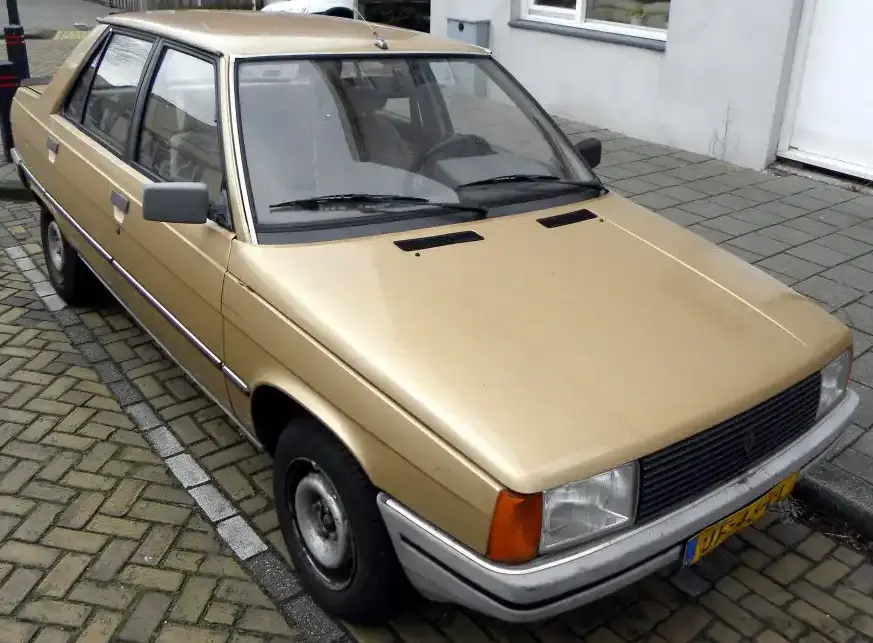
The Renault 9 (L42) 1.6 D, designated internally as the L424, was a diesel-powered variant of the Renault 9 compact sedan produced between 1982 and 1988. Positioned as the entry-level diesel offering within the L42 series, it aimed to provide fuel economy and practicality for budget-conscious buyers in Europe, particularly France, where diesel engines were gaining popularity. The 9 series represented Renault’s attempt to modernize its compact car lineup, replacing the aging Renault 8 and 10 models. This specific 1.6 D variant played a crucial role in establishing the Renault 9 as a viable option in the increasingly competitive small family car segment.
Technical Specifications
| Brand | Renault |
| Model | 9 |
| Generation | 9 (L42) |
| Type (Engine) | 1.6 D (L424) (55 Hp) |
| Start of production | 1982 |
| End of production | 1988 |
| Powertrain Architecture | Internal Combustion engine |
| Body type | Sedan |
| Seats | 5 |
| Doors | 4 |
| Fuel consumption (urban) | 6.4 l/100 km (36.8 US mpg, 44.1 UK mpg) |
| Fuel consumption (extra urban) | 4.4 l/100 km (53.5 US mpg, 64.2 UK mpg) |
| Fuel Type | Diesel |
| Maximum speed | 146 km/h (90.72 mph) |
| Power | 55 Hp |
| Engine Model/Code | F8M 700, F8M 720, F8M 730 |
| Engine aspiration | Naturally aspirated |
| Engine oil capacity | 5.5 l (5.81 US qt, 4.84 UK qt) |
| Coolant capacity | 6.7 l (7.08 US qt, 5.9 UK qt) |
| Fuel tank capacity | 47 l (12.42 US gal, 10.34 UK gal) |
Powertrain & Engine Architecture
The Renault 9 1.6 D was powered by the F8M engine family, specifically the F8M 700, 720, or 730 variants depending on the year and market. This was a 1.6-liter inline-four cylinder diesel engine. The F8M was a relatively simple, indirect injection diesel, utilizing a Bosch rotary injection pump. Unlike modern common-rail diesels, the F8M relied on pre-chamber combustion, where fuel was partially burned in a small pre-chamber before being ignited in the main cylinder. This design helped with cold starting and reduced engine noise, common issues with early diesel engines. The engine featured a single overhead camshaft operating two valves per cylinder. The engine’s modest 55 horsepower output was delivered at a relatively low engine speed, prioritizing torque over outright power. The engine was typically paired with a four-speed manual transmission, though a three-speed automatic transmission was also available, albeit less common. The automatic transmission was a conventional torque converter type, known for its smoothness but also for its efficiency drawbacks compared to manual gearboxes.
Driving Characteristics
The 1.6 D variant of the Renault 9 offered a distinctly different driving experience compared to its gasoline-powered siblings. Acceleration was leisurely, with a 0-60 mph time estimated around 16-18 seconds. The focus was on fuel efficiency and low-speed torque, making it well-suited for city driving and long-distance cruising at moderate speeds. The automatic transmission, when equipped, further smoothed out the driving experience, but at the cost of responsiveness. Gear ratios were optimized for economy, meaning the engine often operated at lower RPMs. The engine was relatively noisy, typical of indirect injection diesels of the era, and vibration was noticeable, particularly at idle. Compared to the 1.4 gasoline engine, the 1.6 D offered significantly more torque, making it easier to carry a full load of passengers and luggage. However, the gasoline engines provided quicker acceleration and a more refined driving experience.
Equipment & Trim Levels
The Renault 9 1.6 D typically occupied the base trim level within the diesel range. Standard equipment included basic cloth upholstery, a simple dashboard layout with analog gauges, and manual windows and door locks. Power steering was not standard, but could be added as an option. The interior was functional and durable, prioritizing practicality over luxury. Optional extras included a sunroof, upgraded stereo system, and metallic paint. The trim level was often denoted by a badge on the rear of the car. The 1.6 D was generally aimed at buyers who prioritized affordability and fuel economy over creature comforts.
Chassis & Braking
The Renault 9 utilized a relatively simple chassis design. The front suspension consisted of MacPherson struts, while the rear suspension employed a torsion beam axle. This setup provided a comfortable ride, but handling was not particularly sporty. Braking was typically accomplished with disc brakes on the front wheels and drum brakes on the rear wheels. The braking system was adequate for the car’s performance, but lacked the stopping power of more modern vehicles. Stabilizer bars were often omitted on the base trim levels, further contributing to the car’s less-than-dynamic handling characteristics. The car’s relatively light weight helped to offset some of the limitations of the chassis and braking system.
Market Reception & Comparison
The Renault 9 1.6 D was generally well-received in the European market, particularly in countries where diesel fuel was cheaper and more readily available than gasoline. Critics praised its fuel economy and durability, but noted its lack of performance and refinement. Compared to competitors like the Peugeot 205 and Citroën AX, the Renault 9 offered a similar level of practicality and affordability. However, the Peugeot 205 was often considered more stylish and engaging to drive, while the Citroën AX was known for its lightweight construction and fuel efficiency. The 1.6 D variant was often seen as a more sensible choice than the gasoline engines for those who covered high mileage or frequently drove on motorways.
Legacy
The Renault 9 1.6 D powertrain, while not particularly sophisticated, proved to be remarkably durable and reliable. Many examples remain on the road today, testament to the engine’s robust construction. The F8M engine family continued to be used in various Renault and other European vehicles for many years. In the used car market, the 1.6 D variant is often sought after by those looking for a simple, affordable, and fuel-efficient classic car. Maintenance is relatively straightforward, and spare parts are still readily available. However, potential buyers should be aware of the potential for age-related issues, such as corrosion and wear on suspension components. The Renault 9 1.6 D represents a significant chapter in the history of European compact cars, demonstrating the growing popularity of diesel engines and the importance of fuel efficiency in the automotive market.
