
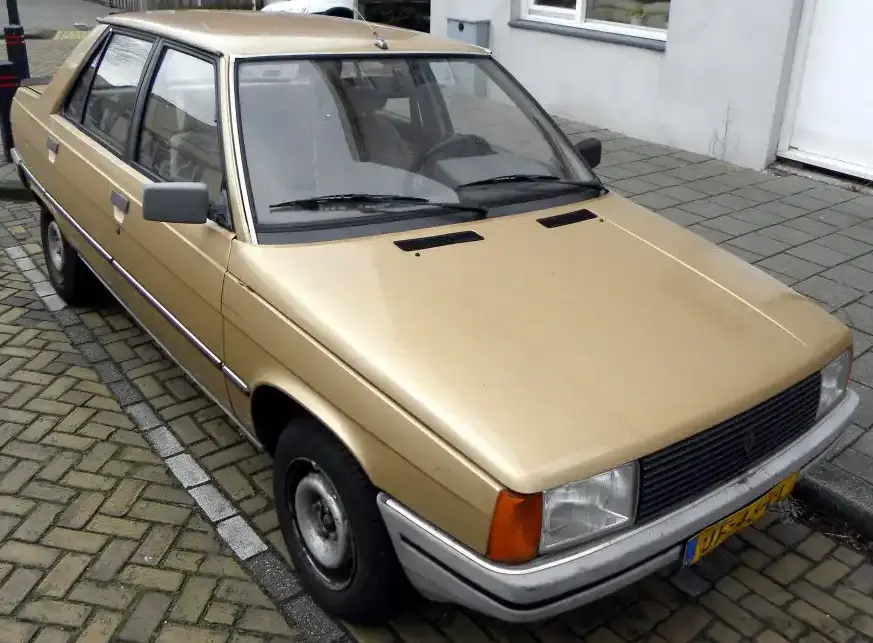
The Renault 9 (L42) 1.7, produced between 1986 and 1988, represented a significant step forward for Renault in the compact family car segment. Part of the L42 generation, this variant occupied a middle-ground position within the 9 lineup, offering a balance between affordability and reasonable performance. It was designed to appeal to buyers seeking a practical and reliable sedan for everyday use, primarily within the European market. The Renault 9 aimed to modernize Renault’s offerings and compete with established rivals like the Peugeot 205 and Volkswagen Golf.
Technical Specifications
| Brand | Renault |
| Model | 9 |
| Generation | 9 (L42) |
| Type (Engine) | 1.7 (L42F) (73 Hp) |
| Start of production | 1986 |
| End of production | 1988 |
| Powertrain Architecture | Internal Combustion engine |
| Body type | Sedan |
| Seats | 5 |
| Doors | 4 |
| Fuel Type | Petrol (Gasoline) |
| Power | 73 Hp |
| Engine Model/Code | F3N 718 |
| Engine aspiration | Naturally aspirated engine |
| Engine oil capacity | 5.5 l (5.81 US qt | 4.84 UK qt) |
| Coolant capacity | 6.5 l (6.87 US qt | 5.72 UK qt) |
| Fuel tank capacity | 47 l (12.42 US gal | 10.34 UK gal) |
Powertrain & Engine Architecture
The Renault 9 1.7 was powered by the F3N 718 engine, a 1.7-liter inline-four cylinder gasoline engine. This engine was a relatively simple design, utilizing a cast iron block and an aluminum cylinder head. It featured a single overhead camshaft (SOHC) valvetrain operating two valves per cylinder. Fuel delivery was managed by a Bosch Mono-Jetronic fuel injection system, a single-point injection system that was common for its time. While not as sophisticated as multi-point injection, Mono-Jetronic offered improved fuel efficiency and reduced emissions compared to carburetors. The engine produced 73 horsepower at approximately 5,500 rpm and 138 Nm (102 lb-ft) of torque at 3,000 rpm. The engine was paired with a three-speed automatic transmission, a relatively uncommon option for this class of vehicle in Europe. This transmission was designed for smooth operation and ease of use, prioritizing comfort over outright performance.
Driving Characteristics
The 1.7-liter engine and three-speed automatic transmission combination in the Renault 9 resulted in a driving experience geared towards practicality rather than sportiness. Acceleration was adequate for everyday driving, but not particularly brisk. The automatic transmission’s gear ratios were optimized for fuel economy and smooth cruising, rather than quick acceleration. Compared to the five-speed manual transmission available on other Renault 9 models, the automatic version felt noticeably slower, especially during overtaking maneuvers. The automatic transmission did offer a more relaxed driving experience, particularly in urban traffic, eliminating the need for constant gear changes. The suspension, tuned for comfort, provided a reasonably smooth ride, absorbing most road imperfections effectively. However, the car exhibited noticeable body roll during cornering, a characteristic typical of vehicles in this segment during the 1980s.
Equipment & Trim Levels
The Renault 9 1.7 automatic typically came equipped with a fairly basic level of standard features. Interior upholstery was generally cloth, with a simple dashboard layout. Standard equipment included power steering, a basic radio, and manual windows. Air conditioning was often an optional extra, as were features like central locking and electric windows. The trim level for the 1.7 automatic generally fell in the mid-range of the Renault 9 lineup. It offered more comfort and convenience features than the base models, but lacked the more luxurious appointments found in the higher-spec versions. The interior plastics were durable but not particularly refined, reflecting the car’s price point. The exterior typically featured steel wheels with hubcaps, and relatively simple body trim.
Chassis & Braking
The Renault 9 1.7 utilized a relatively conventional chassis design for the time. It featured a MacPherson strut front suspension and a torsion beam rear suspension. The front suspension provided decent handling and ride comfort, while the torsion beam rear suspension was cost-effective and space-efficient. Braking was accomplished via disc brakes on the front wheels and drum brakes on the rear wheels. This configuration was common for vehicles in this price range during the 1980s. The braking system was adequate for normal driving conditions, but lacked the stopping power of more advanced systems with disc brakes on all four wheels. The steering was a rack-and-pinion system, providing reasonably precise steering feel.
Market Reception & Comparison
The Renault 9 1.7 automatic received mixed reviews from automotive critics. While praised for its comfortable ride and practical interior, it was often criticized for its lack of performance and the somewhat dated three-speed automatic transmission. Compared to the manual transmission versions of the Renault 9, the automatic was significantly slower and less engaging to drive. Fuel economy was reasonable for the time, but not class-leading. The 1.7-liter engine offered a good balance between fuel consumption and power, but it was outclassed by more modern engines in terms of both performance and efficiency. Against competitors like the Peugeot 205 and Volkswagen Golf, the Renault 9 1.7 automatic offered a competitive price point but lacked the overall refinement and driving dynamics of its rivals.
Legacy
The Renault 9 1.7 automatic, while not a particularly groundbreaking vehicle, played an important role in Renault’s modernization efforts during the 1980s. The F3N engine proved to be a relatively reliable unit, and many examples are still on the road today. However, the three-speed automatic transmission is often considered the weakest link in the powertrain, and can be prone to wear and tear. In the used car market, the Renault 9 1.7 automatic is generally considered an affordable and practical classic car. Its simplicity and relatively low maintenance costs make it an appealing option for enthusiasts and budget-conscious buyers. While not a collector’s item, it represents a significant piece of automotive history and a reminder of a bygone era of automotive design.
