
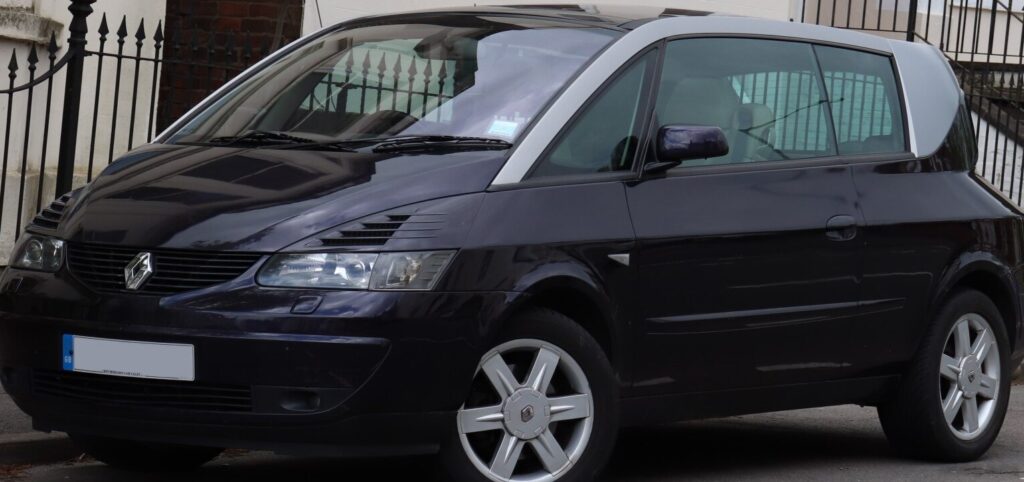
The Renault Avantime 2.0 16V Turbo, produced between September 2001 and February 2003, was a unique and ambitious vehicle from the French automaker. Positioned as a luxury crossover or “coupé-minivan,” the Avantime aimed to blend the spaciousness of a minivan with the styling and driving experience of a coupé. This particular variant, powered by the 2.0-liter 16-valve turbocharged engine producing 163 horsepower, represented the mainstream offering in the Avantime lineup, sitting between the base 2.0-liter naturally aspirated model and the higher-performance V6 versions. The Avantime was built on a stretched version of the Renault Espace platform, internally designated as the XJ3 platform, and represented a significant investment in design and engineering for Renault.
Powertrain & Engine Architecture
The heart of the Avantime 2.0 16V Turbo is the Renault F4R engine, a 1,998 cc (121.93 cu. in.) inline-four cylinder gasoline engine. This engine, a mainstay in Renault’s lineup for many years, was specifically the turbocharged variant, designated F4R 760. It featured multi-point fuel injection and a double overhead camshaft (DOHC) valvetrain with four valves per cylinder. The addition of a turbocharger and intercooler significantly boosted power output compared to the naturally aspirated 2.0-liter engine. The F4R engine benefits from Renault’s engineering expertise, offering a balance of performance and reliability.
The Avantime 2.0 16V Turbo was exclusively offered with a 6-speed manual transmission. This gearbox was chosen to handle the increased torque output of the turbocharged engine and provide a more engaging driving experience. The transmission’s gear ratios were tuned to optimize acceleration and fuel efficiency. First gear was relatively short for quick take-offs, while sixth gear was geared for comfortable highway cruising. The clutch was hydraulically operated, providing a smooth and consistent feel.
Engine Specifications
Key engine specifications include a compression ratio of 9.5:1, a bore of 82.7 mm (3.26 in), and a stroke of 93 mm (3.66 in). The engine produces a maximum torque of 250 Nm (184.39 lb-ft) at 2000 rpm, providing strong mid-range acceleration. Engine oil capacity is 5 liters (5.28 US qt / 4.4 UK qt), and Renault specified a particular oil grade for optimal performance and longevity.
Driving Characteristics
The Avantime 2.0 16V Turbo offered a noticeably more spirited driving experience than its naturally aspirated counterpart. The turbocharger provides a surge of power in the mid-range, making overtaking maneuvers easier and more confident. Acceleration from 0 to 100 km/h (0-62 mph) takes approximately 9.7 seconds, while 0 to 60 mph is achieved in around 9.2 seconds. The top speed is rated at 210 km/h (130.49 mph). While not a sports car, the Avantime 2.0 Turbo provided ample power for everyday driving and long-distance journeys.
The 6-speed manual transmission allows the driver to fully exploit the engine’s powerband. The gear ratios are well-matched, providing smooth and precise shifts. The Avantime’s relatively heavy weight (1680 kg / 3703.77 lbs) does impact acceleration, but the turbocharger helps to compensate for this. Compared to the V6 models, the 2.0 Turbo offered a more balanced driving experience, with less understeer and a more manageable power delivery.
Equipment & Trim Levels
The Avantime 2.0 16V Turbo came standard with a generous level of equipment, reflecting its positioning as a luxury vehicle. Standard features included air conditioning, power windows and mirrors, central locking, an RDS radio, and alloy wheels. The interior was characterized by its spaciousness and comfortable seating for five passengers. Upholstery was typically cloth, but leather options were available. The dashboard featured a unique design with a central information display.
Optional extras included leather upholstery, a sunroof, parking sensors, and a premium sound system. Renault also offered a range of customization options, allowing buyers to personalize their Avantime. The Avantime’s interior design was a key selling point, offering a blend of comfort, style, and practicality.
Chassis & Braking
The Avantime’s chassis was based on the Renault Espace platform, but with significant modifications to accommodate the Avantime’s unique body style and driving characteristics. The front suspension utilized a wishbone configuration, while the rear suspension employed a trailing arm setup. This suspension setup provided a comfortable ride quality while maintaining good handling characteristics. The Avantime 2.0 16V Turbo featured ventilated disc brakes at the front and solid disc brakes at the rear. Anti-lock Braking System (ABS) was standard, enhancing safety and control. The steering system was a hydraulic power-assisted rack and pinion system, providing precise and responsive steering feel. The vehicle rode on 225/55 R16 tires mounted on 16-inch alloy wheels.
Market Reception & Comparison
The Renault Avantime was a polarizing vehicle upon its release. Critics praised its innovative design and spacious interior, but some questioned its practicality and high price tag. The 2.0 16V Turbo variant was generally well-received, offering a good balance of performance, fuel economy, and price. Fuel consumption figures were rated at 12.6 l/100 km (18.7 US mpg / 22.4 UK mpg) in urban conditions, 7.3 l/100 km (32.2 US mpg / 38.7 UK mpg) on the extra-urban cycle, and 9.2 l/100 km (25.6 US mpg / 30.7 UK mpg) combined.
Compared to the V6 models, the 2.0 Turbo offered better fuel economy and a more affordable price point. However, the V6 models provided significantly more power and a more luxurious driving experience. The Avantime faced competition from other large MPVs and crossovers, such as the Ford Galaxy and the Citroën Espace. However, the Avantime’s unique styling and luxurious interior set it apart from its rivals.
Technical Specifications
| Brand | Renault |
| Model | Avantime |
| Generation | Avantime |
| Type (Engine) | 2.0 16V Turbo (163 Hp) |
| Start of production | September, 2001 |
| End of production | February, 2003 |
| Powertrain Architecture | Internal Combustion engine |
| Body type | Minivan |
| Seats | 5 |
| Doors | 2 |
| Fuel consumption (urban) | 12.6 l/100 km (18.7 US mpg) |
| Fuel consumption (extra urban) | 7.3 l/100 km (32.2 US mpg) |
| Fuel consumption (combined) | 9.2 l/100 km (25.6 US mpg) |
| Fuel Type | Petrol (Gasoline) |
| Acceleration 0 – 100 km/h | 9.7 sec |
| Acceleration 0 – 62 mph | 9.7 sec |
| Acceleration 0 – 60 mph | 9.2 sec |
| Maximum speed | 210 km/h (130.49 mph) |
| Kerb Weight | 1680 kg (3703.77 lbs) |
| Max. weight | 2200 kg (4850.17 lbs) |
| Trunk (boot) space – minimum | 530 l (18.72 cu. ft.) |
| Trunk (boot) space – maximum | 900 l (31.78 cu. ft.) |
| Fuel tank capacity | 80 l (21.13 US gal) |
| Length | 4642 mm (182.76 in) |
| Width | 1835 mm (72.24 in) |
| Height | 1627 mm (64.06 in) |
| Wheelbase | 2700 mm (106.3 in) |
| Engine Model/Code | F4R |
| Engine displacement | 1998 cm3 (121.93 cu. in.) |
| Power | 163 Hp @ 5000 rpm |
| Torque | 250 Nm @ 2000 rpm (184.39 lb.-ft. @ 2000 rpm) |
| Number of gears | 6 |
| Gearbox type | Manual transmission |
Legacy
The Renault Avantime was a commercial failure, with relatively low sales figures during its short production run. However, it has gained a cult following among enthusiasts who appreciate its unique design and innovative features. The F4R engine, while not without its quirks, is generally considered to be a reliable unit when properly maintained. Today, the Avantime 2.0 16V Turbo is a relatively rare sight on the road, and well-maintained examples are becoming increasingly collectible. Its legacy lies in its bold design and its attempt to redefine the minivan segment. The Avantime remains a testament to Renault’s willingness to take risks and push the boundaries of automotive design.
