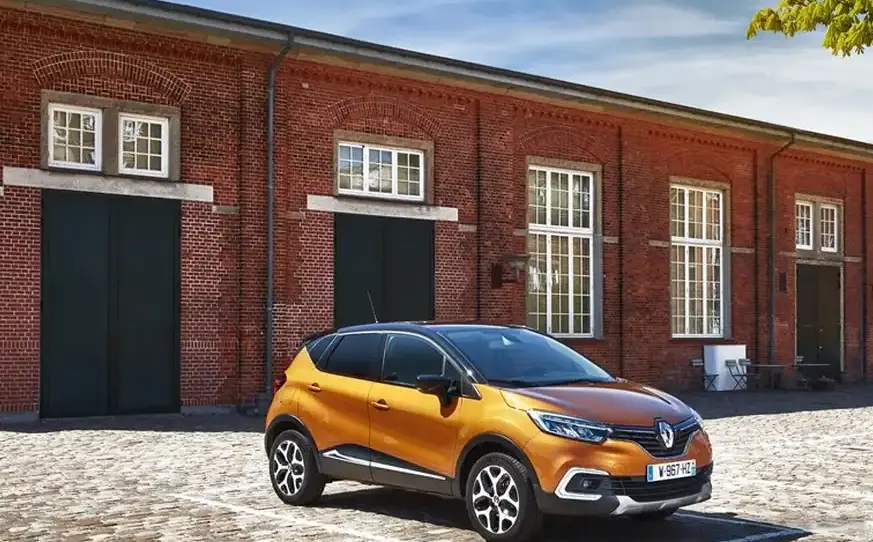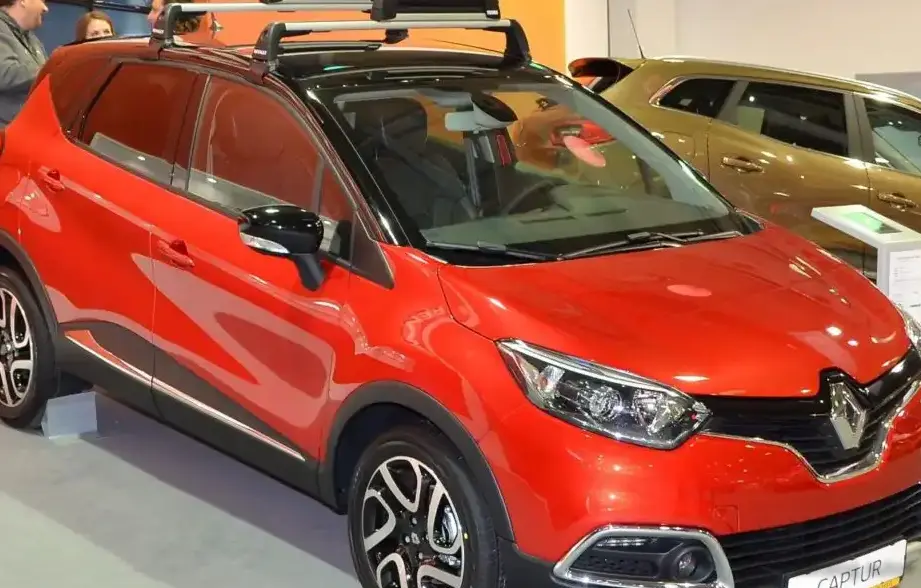
The Renault Captur 0.9 TCe (90 hp) start&stop was a popular entry-level variant of Renault’s successful Captur crossover, produced from 2013 to 2017. Positioned as an affordable and fuel-efficient option within the first generation Captur range (based on the Renault Clio MkIV platform), it aimed to attract buyers seeking a stylish and practical small SUV. This model played a significant role in establishing the Captur as a key player in the burgeoning European B-segment crossover market, offering a blend of modern design, compact dimensions, and a downsized turbocharged engine. The “start&stop” system was a key feature, enhancing fuel economy in urban driving conditions.
Technical Specifications
| Brand | Renault |
| Model | Captur |
| Generation | Captur |
| Type (Engine) | 0.9 TCe (90 Hp) start&stop |
| Start of production | 2013 |
| End of production | 2017 |
| Powertrain Architecture | Internal Combustion engine |
| Body type | Crossover |
| Seats | 5 |
| Doors | 5 |
| Fuel consumption (urban) | 6 l/100 km (39.2 US mpg, 47.1 UK mpg, 16.7 km/l) |
| Fuel consumption (extra urban) | 4.4 l/100 km (53.5 US mpg, 64.2 UK mpg, 22.7 km/l) |
| Fuel consumption (combined) | 5 l/100 km (47 US mpg, 56.5 UK mpg, 20 km/l) |
| CO2 emissions | 114 g/km |
| Fuel Type | Petrol (Gasoline) |
| Acceleration 0 – 100 km/h | 12.9 sec |
| Acceleration 0 – 62 mph | 12.9 sec |
| Acceleration 0 – 60 mph | 12.3 sec |
| Maximum speed | 171 km/h (106.25 mph) |
| Emission standard | Euro 5 |
| Weight-to-power ratio | 12.9 kg/Hp, 77.3 Hp/tonne |
| Weight-to-torque ratio | 8.6 kg/Nm, 116 Nm/tonne |
| Power | 90 Hp @ 5250 rpm |
| Power per litre | 100.2 Hp/l |
| Torque | 135 Nm @ 2500 rpm (99.57 lb.-ft. @ 2500 rpm) |
| Engine layout | Front, Transverse |
| Engine Model/Code | H4B 400 |
| Engine displacement | 898 cm3 (54.8 cu. in.) |
| Number of cylinders | 3 |
| Engine configuration | Inline |
| Number of valves per cylinder | 4 |
| Fuel injection system | Direct injection |
| Engine aspiration | Turbocharger, Intercooler |
| Engine oil capacity | 4.1 l (4.33 US qt, 3.61 UK qt) |
| Coolant capacity | 4.5 l (4.76 US qt, 3.96 UK qt) |
| Kerb Weight | 1164 kg (2566.18 lbs) |
| Max. weight | 1663 kg (3666.29 lbs) |
| Max load | 499 kg (1100.11 lbs) |
| Trunk (boot) space – minimum | 377 l (13.31 cu. ft.) |
| Trunk (boot) space – maximum | 1235 l (43.61 cu. ft.) |
| Fuel tank capacity | 45 l (11.89 US gal, 9.9 UK gal) |
| Length | 4122 mm (162.28 in) |
| Width | 1778 mm (70 in) |
| Height | 1566 mm (61.65 in) |
| Wheelbase | 2606 mm (102.6 in) |
| Front track | 1531 mm (60.28 in) |
| Rear track | 1516 mm (59.69 in) |
| Minimum turning circle | 10.42 m (34.19 ft) |
| Drivetrain Architecture | Front wheel drive, Internal Combustion engine |
| Number of gears | 5 |
| Gearbox type | Manual transmission |
| Front suspension | Independent, McPherson with coil spring and anti-roll bar |
| Rear suspension | Elastic beam |
| Front brakes | Ventilated discs |
| Rear brakes | Drum |
| Assisting systems | ABS (Anti-lock braking system) |
| Steering type | Steering rack and pinion |
| Tires size | 205/60 R16; 205/55 R17 |
| Wheel rims size | 16; 17 |
Powertrain & Engine Architecture
The heart of the Captur 0.9 TCe was the Renault H4B 400 engine, a 898cc three-cylinder petrol unit. This engine was part of Renault’s “Energy dCi” family, despite being a gasoline engine, reflecting the company’s focus on efficiency. It featured direct fuel injection and a turbocharger with an intercooler, allowing it to produce 90 horsepower at 5250 rpm and 135 Nm (99.57 lb-ft) of torque at 2500 rpm. The engine utilized a timing chain, intended to reduce maintenance compared to timing belts. The five-speed manual transmission was the standard offering for this variant, chosen for its affordability and contribution to fuel economy. The engine’s small displacement and turbocharging were designed to deliver acceptable performance while minimizing fuel consumption and emissions.
Driving Characteristics
The 0.9 TCe Captur with a manual transmission offered adequate, though not exhilarating, performance. Acceleration from 0-60 mph took around 12.3 seconds, and top speed was approximately 106 mph. The engine felt responsive at lower revs thanks to the turbocharger, providing sufficient power for everyday driving situations. However, overtaking maneuvers required downshifting, and the engine could feel strained at higher speeds or when fully loaded. The five-speed gearbox was well-matched to the engine’s characteristics, with relatively short ratios aiding acceleration. Compared to higher-powered Captur variants (like those with the 1.2 TCe engine), the 0.9 TCe prioritized fuel efficiency over outright performance. The lighter engine weight did contribute to nimble handling in urban environments.
Equipment & Trim Levels
The 0.9 TCe typically served as the entry point to the Captur range. Standard equipment generally included air conditioning, power steering, electric front windows, a basic audio system with USB connectivity, and ABS brakes. Safety features like ESC (Electronic Stability Control) and front airbags were also standard. Higher trim levels, such as the Expression and Dynamique, added features like alloy wheels, cruise control, rear parking sensors, a touchscreen infotainment system, and upgraded interior trim. Optional extras included a panoramic sunroof, leather upholstery, and a hands-free parking system. Interior upholstery was typically cloth, with a functional and durable design.
Chassis & Braking
The Captur’s chassis featured a McPherson strut front suspension and a torsion beam rear suspension. This setup provided a comfortable ride quality, well-suited for urban driving. The front brakes were ventilated discs, while the rear brakes were drums – a cost-saving measure common in entry-level models. ABS (Anti-lock Braking System) was standard, enhancing braking performance and safety. The steering was a rack and pinion system, providing reasonably precise control. Stabilizer bars were fitted to both the front and rear axles to reduce body roll during cornering.
Market Reception & Comparison
The Renault Captur 0.9 TCe was generally well-received by automotive critics as an affordable and practical crossover. Its fuel economy (around 50 mpg combined) was a major selling point, and its stylish design appealed to a broad range of buyers. However, some reviewers criticized its lack of power, particularly when fully loaded or on steep inclines. Compared to other B-segment crossovers like the Peugeot 2008 or the Opel/Vauxhall Mokka, the Captur offered a more spacious interior and a more refined driving experience. The 0.9 TCe variant was often seen as a sensible choice for urban commuters and those prioritizing fuel efficiency over performance.
Legacy
The Renault Captur 0.9 TCe (90 hp) start&stop has proven to be a relatively reliable powertrain. The H4B engine, while small, is generally robust, and the manual transmission is known for its durability. Common issues reported by owners include occasional turbocharger problems and potential issues with the start&stop system. On the used car market, these Capturs represent a good value proposition, offering a stylish and practical crossover at an affordable price. However, potential buyers should ensure that the vehicle has been properly maintained and that the turbocharger is functioning correctly. The Captur’s success helped establish Renault as a major player in the crossover segment, paving the way for future models like the second-generation Captur.