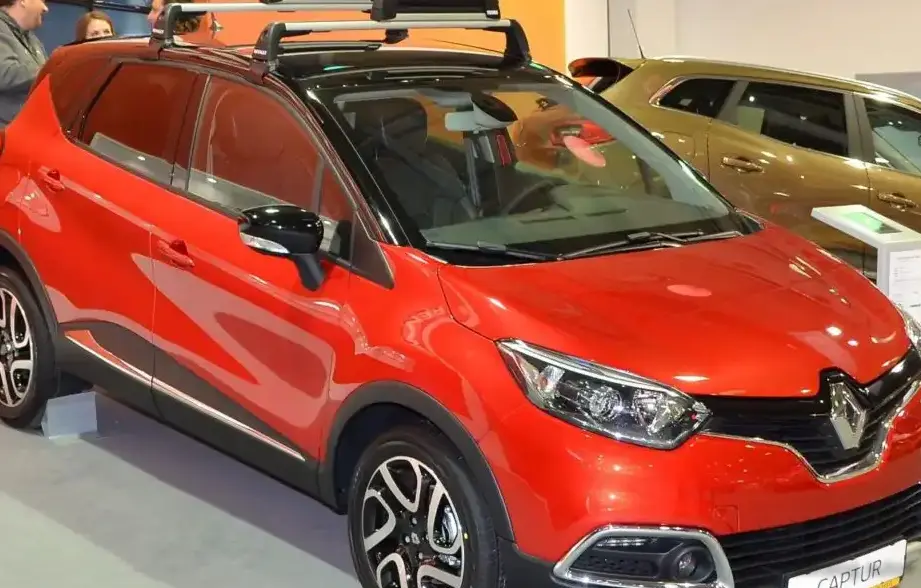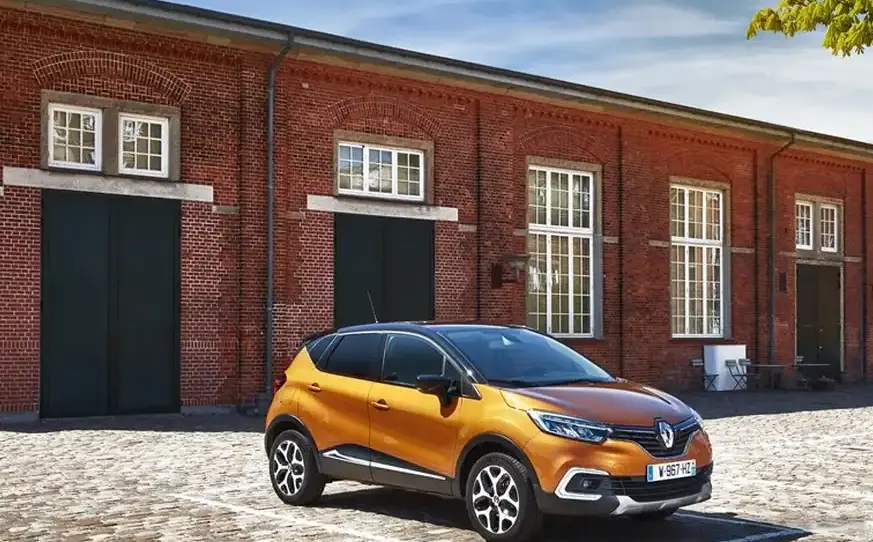
The Renault Captur (facelift 2017) 0.9 TCe (90 hp) Start & Stop represents an entry-level powertrain option within the second generation of Renault’s popular subcompact crossover. Introduced as part of the 2017 facelift, this variant aimed to provide an affordable and fuel-efficient choice for buyers in the European market. Positioned below the more powerful 1.2 TCe engines, the 0.9 TCe offered a balance between economy and usability, targeting urban commuters and drivers prioritizing lower running costs. Production of this specific configuration ran from 2017 to 2019.
| Brand | Renault |
| Model | Captur |
| Generation | Captur (facelift 2017) |
| Type (Engine) | 0.9 TCe (90 Hp) Start & Stop |
| Start of production | 2017 |
| End of production | 2019 |
| Powertrain Architecture | Internal Combustion engine |
| Body type | Crossover |
| Seats | 5 |
| Doors | 5 |
| Fuel consumption (urban) | 6 l/100 km (39.2 US mpg, 47.1 UK mpg, 16.7 km/l) |
| Fuel consumption (extra urban) | 4.5 l/100 km (52.3 US mpg, 62.8 UK mpg, 22.2 km/l) |
| Fuel consumption (combined) | 5.1 l/100 km (46.1 US mpg, 55.4 UK mpg, 19.6 km/l) |
| CO2 emissions | 113 g/km |
| Fuel Type | Petrol (Gasoline) |
| Acceleration 0 – 100 km/h | 13.05 sec |
| Acceleration 0 – 62 mph | 13.05 sec |
| Acceleration 0 – 60 mph | 12.4 sec |
| Maximum speed | 171 km/h (106.25 mph) |
| Emission standard | Euro 6b |
| Weight-to-power ratio | 12.3 kg/Hp, 81.4 Hp/tonne |
| Weight-to-torque ratio | 7.9 kg/Nm, 126.7 Nm/tonne |
| Power | 90 Hp @ 5000 rpm |
| Power per litre | 100.2 Hp/l |
| Torque | 140 Nm @ 2250 rpm (103.26 lb.-ft. @ 2250 rpm) |
| Engine layout | Front, Transverse |
| Engine Model/Code | H4B 408 |
| Engine displacement | 898 cm3 (54.8 cu. in.) |
| Number of cylinders | 3 |
| Engine configuration | Inline |
| Number of valves per cylinder | 4 |
| Fuel injection system | Multi-port manifold injection |
| Engine aspiration | Turbocharger, Intercooler |
| Engine oil capacity | 4.1 l (4.33 US qt, 3.61 UK qt) |
| Coolant capacity | 4.5 l (4.76 US qt, 3.96 UK qt) |
| Kerb Weight | 1105 kg (2436.11 lbs) |
| Max. weight | 1653 kg (3644.24 lbs) |
| Max load | 548 kg (1208.13 lbs) |
| Trunk (boot) space – minimum | 455 l (16.07 cu. ft.) |
| Trunk (boot) space – maximum | 1235 l (43.61 cu. ft.) |
| Length | 4122 mm (162.28 in) |
| Width | 1778 mm (70 in) |
| Height | 1556 mm (61.26 in) |
| Wheelbase | 2606 mm (102.6 in) |
| Front track | 1531 mm (60.28 in) |
| Rear track | 1516 mm (59.69 in) |
| Front overhang | 866 mm (34.09 in) |
| Rear overhang | 650 mm (25.59 in) |
| Ride height (ground clearance) | 170 mm (6.69 in) |
| Minimum turning circle | 10.42 m (34.19 ft) |
| Drivetrain Architecture | Front wheel drive |
| Number of gears | 5 |
| Gearbox type | Manual transmission |
| Front suspension | Independent, McPherson with coil spring and anti-roll bar |
| Rear suspension | Elastic beam |
| Front brakes | Ventilated discs |
| Rear brakes | Drum |
| Assisting systems | ABS (Anti-lock braking system) |
| Steering type | Steering rack and pinion |
| Tires size | 205/60 R16; 205/55 R17 |
| Wheel rims size | 16; 17 |
Powertrain & Engine Architecture
The heart of this Captur variant is the Renault H4B 408 engine, a 0.9-liter turbocharged three-cylinder petrol engine. This engine is part of Renault’s ‘Energy dCi’ family, despite being a gasoline unit, reflecting the company’s focus on efficiency. The H4B utilizes a single-scroll turbocharger with an intercooler to boost power and torque from its small displacement. Fuel is delivered via multi-point fuel injection, and the engine features four valves per cylinder for improved breathing. The 90 hp output is achieved at 5000 rpm, while peak torque of 140 Nm (103 lb-ft) is available from 2250 rpm. This engine is known for its relatively smooth operation for a three-cylinder, thanks to internal balancing shafts. The engine is paired with a five-speed manual transmission, chosen for its simplicity and cost-effectiveness in this entry-level model. A Start & Stop system was standard, further enhancing fuel economy in urban driving conditions.
Driving Characteristics
The 0.9 TCe 90 hp Captur offers adequate performance for typical urban and suburban driving. Acceleration from 0-60 mph takes around 12.4 seconds, and top speed is rated at 106 mph. However, it’s not a particularly quick vehicle. The turbocharger provides a noticeable boost in power once past around 1800-2000 rpm, but low-end torque is somewhat limited. The five-speed manual transmission is well-matched to the engine’s characteristics, with gear ratios geared towards fuel efficiency rather than outright performance. Compared to the 1.2 TCe variants, the 0.9 TCe feels noticeably slower, especially when fully loaded or tackling uphill climbs. The manual transmission also provides a more engaging driving experience than the optional EDC (Efficient Dual Clutch) automatic available on higher-spec models.
Equipment & Trim Levels
The 0.9 TCe 90 hp typically served as the base trim level for the Captur facelift. Standard equipment generally included air conditioning, power front windows, a basic audio system with USB connectivity, and stability control. Safety features such as ABS, ESC (Electronic Stability Control), and multiple airbags were also standard. Interior upholstery was typically cloth, and the dashboard featured a functional but relatively basic design. Optional extras included alloy wheels, a touchscreen infotainment system with navigation, rear parking sensors, and cruise control. Higher trim levels added features like automatic climate control, upgraded upholstery, and more advanced safety systems.
Chassis & Braking
The Captur’s chassis features a McPherson strut front suspension and a torsion beam rear suspension. This setup provides a comfortable ride quality, well-suited for everyday driving. The front brakes are ventilated discs, while the rear brakes are drums – a cost-saving measure common in entry-level models. ABS (Anti-lock Braking System) and ESC (Electronic Stability Control) are standard, providing enhanced safety and stability. The steering is electrically assisted, offering light and easy maneuverability. The relatively light weight of the 0.9 TCe variant (around 1105 kg / 2436 lbs) contributes to its decent handling characteristics.
Market Reception & Comparison
The Renault Captur 0.9 TCe 90 hp was generally well-received as an affordable and economical option in the subcompact crossover segment. Critics praised its fuel efficiency and comfortable ride, but noted its lack of outright performance. Compared to the 1.2 TCe variants, the 0.9 TCe offered significantly better fuel economy but at the expense of acceleration and overall refinement. The 1.5 dCi diesel variants provided even better fuel economy, but were often more expensive to purchase and maintain. The 0.9 TCe appealed to buyers prioritizing low running costs and practicality over driving excitement.
Legacy
The H4B 408 engine, while not known for being exceptionally durable, has proven to be reasonably reliable in the Captur. Common issues include turbocharger wear and occasional problems with the fuel injectors. However, with regular maintenance, these engines can provide many years of service. On the used car market, the 0.9 TCe Captur represents a budget-friendly option. Its fuel efficiency and low insurance costs continue to make it an attractive choice for first-time buyers and urban commuters. However, potential buyers should be aware of the engine’s limitations and ensure a thorough inspection before purchase.