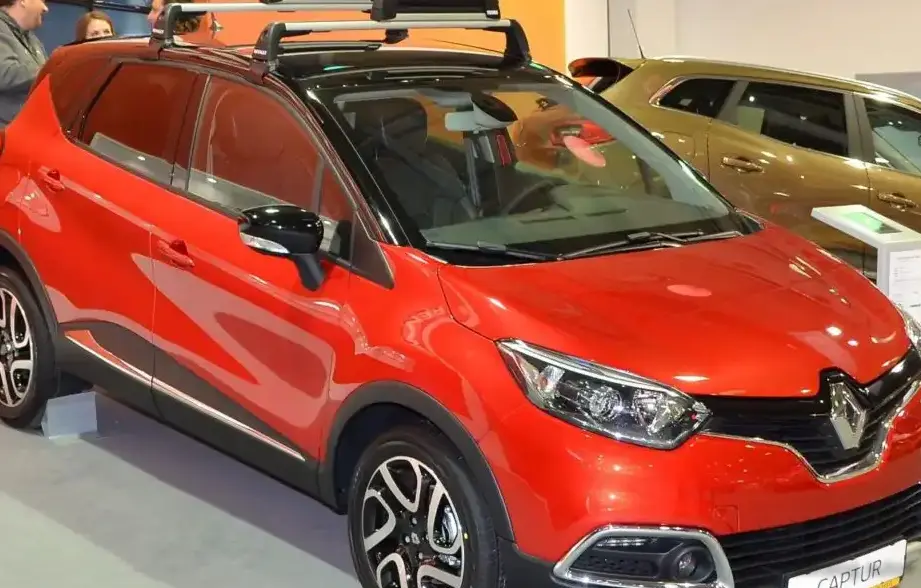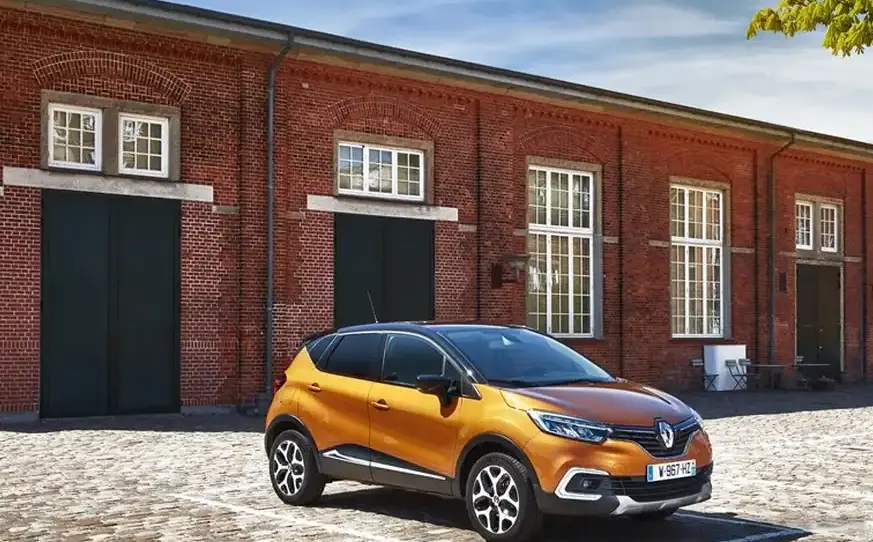
The Renault Captur (facelift, introduced in 2017) 1.2 TCe 120 horsepower Start & Stop represents a significant iteration of Renault’s popular subcompact crossover. Launched as part of the facelift for the first-generation Captur (codenamed B9K), this variant aimed to balance fuel efficiency with a reasonable level of performance for everyday driving. Production of this specific configuration ran from 2017 through August 2018, positioning it as a key offering in the European market, where the Captur competed with vehicles like the Peugeot 2008 and Opel/Vauxhall Crossland X. The Captur, in general, was designed to appeal to buyers seeking a stylish, practical, and affordable crossover, and the 1.2 TCe 120 offered a mid-range option within the lineup.
Technical Specifications
| Brand | Renault |
| Model | Captur |
| Generation | Captur (facelift 2017) |
| Type (Engine) | 1.2 TCe (120 Hp) Start & Stop |
| Start of production | 2017 |
| End of production | August, 2018 |
| Powertrain Architecture | Internal Combustion engine |
| Body type | Crossover |
| Seats | 5 |
| Doors | 5 |
| Fuel consumption (urban) | 7 l/100 km (33.6 US mpg, 40.4 UK mpg, 14.3 km/l) |
| Fuel consumption (extra urban) | 4.7 l/100 km (50 US mpg, 60.1 UK mpg, 21.3 km/l) |
| Fuel consumption (combined) | 5.5 l/100 km (42.8 US mpg, 51.4 UK mpg, 18.2 km/l) |
| CO2 emissions | 125 g/km |
| Fuel Type | Petrol (Gasoline) |
| Acceleration 0 – 100 km/h | 10.6 sec |
| Acceleration 0 – 62 mph | 10.6 sec |
| Acceleration 0 – 60 mph | 10.1 sec |
| Maximum speed | 192 km/h (119.3 mph) |
| Emission standard | Euro 6b |
| Weight-to-power ratio | 9.9 kg/Hp, 101.4 Hp/tonne |
| Weight-to-torque ratio | 5.8 kg/Nm, 173.1 Nm/tonne |
| Power | 120 Hp @ 5000 rpm |
| Power per litre | 100.3 Hp/l |
| Torque | 205 Nm @ 2000 rpm (151.2 lb.-ft. @ 2000 rpm) |
| Engine layout | Front, Transverse |
| Engine Model/Code | H5F |
| Engine displacement | 1197 cm3 (73.05 cu. in.) |
| Number of cylinders | 4 |
| Engine configuration | Inline |
| Number of valves per cylinder | 4 |
| Fuel injection system | Direct injection |
| Engine aspiration | Turbocharger, Intercooler |
| Engine oil capacity | 4.6 l (4.86 US qt | 4.05 UK qt) |
| Coolant capacity | 4.5 l (4.76 US qt | 3.96 UK qt) |
| Kerb Weight | 1184 kg (2610.27 lbs.) |
| Max. weight | 1723 kg (3798.56 lbs.) |
| Max load | 539 kg (1188.29 lbs.) |
| Trunk (boot) space – minimum | 455 l (16.07 cu. ft.) |
| Trunk (boot) space – maximum | 1235 l (43.61 cu. ft.) |
| Length | 4122 mm (162.28 in.) |
| Width | 1778 mm (70 in.) |
| Height | 1556 mm (61.26 in.) |
| Wheelbase | 2606 mm (102.6 in.) |
| Front track | 1531 mm (60.28 in.) |
| Rear track | 1516 mm (59.69 in.) |
| Front overhang | 866 mm (34.09 in.) |
| Rear overhang | 650 mm (25.59 in.) |
| Ride height (ground clearance) | 170 mm (6.69 in.) |
| Minimum turning circle | 10.42 m (34.19 ft.) |
| Drivetrain Architecture | Front wheel drive |
| Number of gears | 6 |
| Gearbox type | Manual transmission |
| Front suspension | Independent, McPherson with coil spring and anti-roll bar |
| Rear suspension | Elastic beam |
| Front brakes | Ventilated discs |
| Rear brakes | Drum |
| Assisting systems | ABS (Anti-lock braking system) |
| Steering type | Steering rack and pinion |
| Tires size | 205/60 R16; 205/55 R17 |
| Wheel rims size | 16; 17 |
Powertrain & Engine Architecture
The heart of the Captur 1.2 TCe 120 is the Renault H5F engine, a 1.2-liter turbocharged inline-four cylinder petrol engine. This engine is part of Renault’s wider family of three and four-cylinder engines, known for their efficiency and relatively compact size. The H5F utilizes direct fuel injection, which improves combustion efficiency and power output. The turbocharger, coupled with an intercooler, forces more air into the cylinders, boosting power and torque. The engine produces 120 horsepower at 5000 rpm and 205 Nm (151.2 lb-ft) of torque at 2000 rpm. This engine is paired with a six-speed manual transmission, which was the standard offering for this variant. The Start & Stop system, included as standard, automatically shuts off the engine when the vehicle is stationary (e.g., at traffic lights) to reduce fuel consumption and emissions.
Driving Characteristics
The 1.2 TCe 120 powertrain delivers adequate performance for urban and highway driving. While not particularly sporty, the engine provides sufficient power for overtaking and merging onto motorways. The six-speed manual transmission allows drivers to keep the engine in its optimal power band. Compared to the base 90 hp version, the 120 hp model offers a noticeable improvement in acceleration and overall responsiveness. However, it doesn’t match the performance of higher-spec Capturs equipped with more powerful engines. The gear ratios are tuned for fuel efficiency, meaning the engine can feel slightly strained when accelerating hard. The relatively light weight of the Captur helps to mitigate the effects of the modest power output.
Equipment & Trim Levels
The 1.2 TCe 120 typically came equipped with a reasonable level of standard features. These generally included air conditioning, power windows, central locking, a basic audio system with USB connectivity, and stability control. Higher trim levels, such as the Intens, added features like alloy wheels, a touchscreen infotainment system with navigation, rear parking sensors, and automatic climate control. Interior upholstery was typically cloth, with options for upgraded materials on higher trims. Optional extras included a panoramic sunroof, a reversing camera, and various styling packages.
Chassis & Braking
The Captur utilizes a front-wheel-drive layout with an independent McPherson strut suspension at the front and an elastic beam suspension at the rear. This setup provides a comfortable ride quality, although it’s not particularly sporty. The front brakes are ventilated discs, while the rear brakes are drums. ABS (Anti-lock Braking System) is standard. The suspension is tuned to prioritize comfort over handling, making it well-suited for everyday driving conditions. Stabilizer bars are included to reduce body roll during cornering.
Market Reception & Comparison
The Renault Captur 1.2 TCe 120 was generally well-received by critics as a practical and efficient crossover. It was praised for its stylish design, spacious interior, and comfortable ride. However, some reviewers noted that the engine could feel underpowered when fully loaded or driving uphill. Compared to the 90 hp version, the 120 hp model offered a worthwhile upgrade in performance, justifying the higher price. Fuel economy was a strong point, with combined figures around 5.5 l/100 km (42.8 US mpg). Compared to diesel variants, the 1.2 TCe offered a lower purchase price but slightly higher running costs due to fuel consumption.
Legacy
The Renault Captur 1.2 TCe 120 has proven to be a relatively reliable powertrain. The H5F engine is generally considered durable, although regular maintenance is essential. Common issues reported by owners include occasional turbocharger problems and issues with the Start & Stop system. On the used car market, these Capturs represent a good value proposition, offering a blend of style, practicality, and affordability. The 1.2 TCe engine is known for its reasonable fuel economy and relatively low maintenance costs, making it an attractive option for budget-conscious buyers. The Captur, as a whole, helped establish Renault as a major player in the subcompact crossover segment.