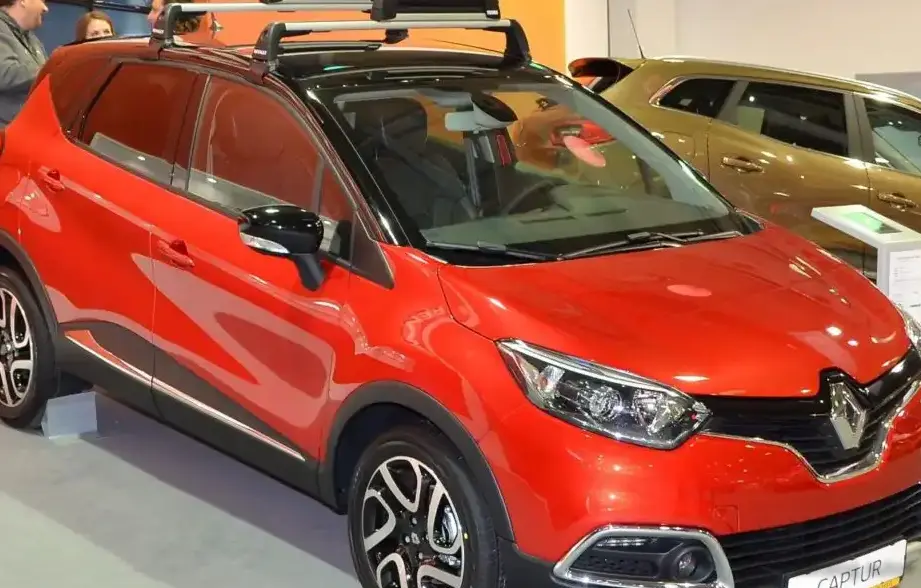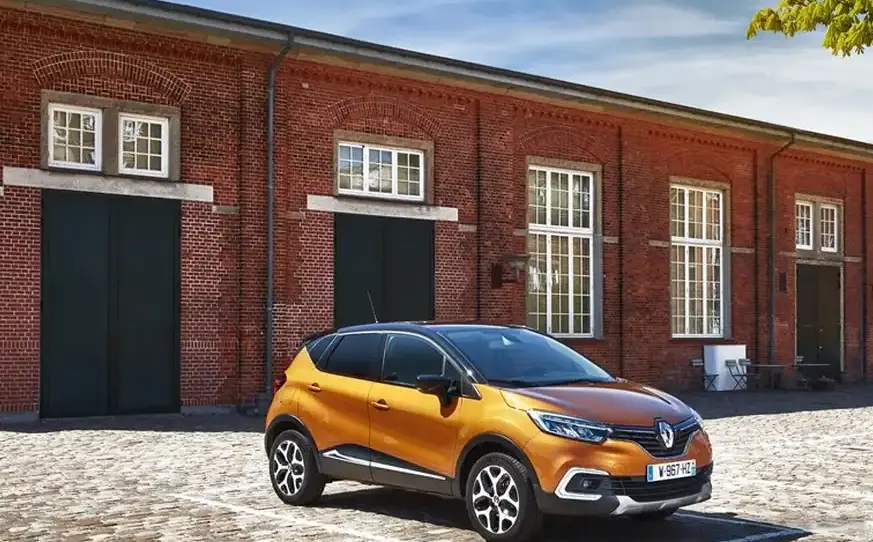
The Renault Captur (facelift 2017) 1.3 TCe (130 hp) FAP represents a significant iteration of Renault’s popular subcompact crossover, produced from 2018 to 2019. Positioned as a mid-range offering within the Captur lineup, this variant aimed to balance fuel efficiency with a respectable level of performance. It was primarily marketed in Europe, where the demand for smaller, economical vehicles with modern features was high. This model falls within the second generation of the Captur, built on the Renault-Nissan Alliance’s V0 platform (also known as the B0+ platform). The “FAP” designation indicates the inclusion of a particulate filter, a key component for meeting increasingly stringent European emission standards.
Technical Specifications
| Brand | Renault |
| Model | Captur |
| Generation | Captur (facelift 2017) |
| Type (Engine) | 1.3 TCe (130 Hp) FAP |
| Start of production | 2018 |
| End of production | 2019 |
| Powertrain Architecture | Internal Combustion engine |
| Body type | Crossover |
| Seats | 5 |
| Doors | 5 |
| Fuel consumption (urban) | 7.1 l/100 km (33.1 US mpg, 39.8 UK mpg, 14.1 km/l) |
| Fuel consumption (extra urban) | 4.8 l/100 km (49 US mpg, 58.9 UK mpg, 20.8 km/l) |
| Fuel consumption (combined) | 5.6 l/100 km (42 US mpg, 50.4 UK mpg, 17.9 km/l) |
| CO2 emissions | 128 g/km |
| Fuel Type | Petrol (Gasoline) |
| Acceleration 0 – 100 km/h | 10.2 sec |
| Acceleration 0 – 62 mph | 10.2 sec |
| Acceleration 0 – 60 mph | 9.7 sec |
| Maximum speed | 200 km/h (124.27 mph) |
| Emission standard | Euro 6d – TEMP |
| Weight-to-power ratio | 9.6 kg/Hp, 103.9 Hp/tonne |
| Weight-to-torque ratio | 5.7 kg/Nm, 175.9 Nm/tonne |
| Power | 130 Hp @ 5000 rpm |
| Power per litre | 97.5 Hp/l |
| Torque | 220 Nm @ 1500 rpm (162.26 lb.-ft. @ 1500 rpm) |
| Engine layout | Front, Transverse |
| Engine Model/Code | H5H 470 |
| Engine displacement | 1333 cm3 (81.34 cu. in.) |
| Engine configuration | Inline |
| Fuel injection system | Direct injection |
| Engine aspiration | Turbocharger, Intercooler |
| Engine oil capacity | 5.5 l (5.81 US qt | 4.84 UK qt) |
| Kerb Weight | 1251 kg (2757.98 lbs.) |
| Max. weight | 1729 kg (3811.79 lbs.) |
| Max load | 478 kg (1053.81 lbs.) |
| Trunk (boot) space – minimum | 377 l (13.31 cu. ft.) |
| Trunk (boot) space – maximum | 1235 l (43.61 cu. ft.) |
| Fuel tank capacity | 45 l (11.89 US gal | 9.9 UK gal) |
| Max. roof load | 80 kg (176.37 lbs.) |
| Permitted trailer load with brakes (12%) | 1200 kg (2645.55 lbs.) |
| Permitted trailer load without brakes | 660 kg (1455.05 lbs.) |
| Permitted towbar download | 75 kg (165.35 lbs.) |
| Length | 4122 mm (162.28 in.) |
| Width | 1778 mm (70 in.) |
| Width including mirrors | 1958 mm (77.09 in.) |
| Height | 1566 mm (61.65 in.) |
| Wheelbase | 2606 mm (102.6 in.) |
| Front track | 1531 mm (60.28 in.) |
| Rear (Back) track | 1516 mm (59.69 in.) |
| Front overhang | 866 mm (34.09 in.) |
| Rear overhang | 650 mm (25.59 in.) |
| Ride height (ground clearance) | 170 mm (6.69 in.) |
| Minimum turning circle (turning diameter) | 10.4 m (34.12 ft.) |
| Drivetrain Architecture | The Internal combustion engine (ICE) drives the front wheels of the vehicle. |
| Drive wheel | Front wheel drive |
| Number of gears and type of gearbox | 6 gears, manual transmission |
| Front brakes | Ventilated discs |
| Rear brakes | Disc |
| Assisting systems | ABS (Anti-lock braking system) |
| Steering type | Steering rack and pinion |
| Power steering | Electric Steering |
Powertrain & Engine Architecture
The heart of the Captur 1.3 TCe (130 hp) is the Renault H5H 470 engine, a 1.3-liter turbocharged inline-four cylinder gasoline engine. This engine is part of the broader Renault-Nissan-Mercedes-Benz alliance’s cooperative engine development program. It utilizes direct fuel injection, which improves combustion efficiency and power output. The turbocharger, coupled with an intercooler, forces more air into the cylinders, boosting performance. The engine produces 130 horsepower at 5000 rpm and 220 Nm (162 lb-ft) of torque at a low 1500 rpm, providing good responsiveness for everyday driving. The engine is transversely mounted at the front of the vehicle. The 6-speed manual transmission was the standard offering for this variant, providing a balance between fuel economy and driver engagement.
Driving Characteristics
The 1.3 TCe (130 hp) Captur offers a comfortable and practical driving experience. While not a performance-oriented model, the turbocharger provides adequate acceleration for merging onto highways and overtaking. The 0-60 mph time of around 9.7 seconds is respectable for a vehicle in this class. The manual transmission allows for greater driver control, but the gear ratios are tuned for fuel efficiency rather than outright speed. Compared to the lower-powered 1.2 TCe variants, the 1.3 TCe offers a noticeable improvement in performance, particularly when fully loaded or driving uphill. However, it doesn’t match the responsiveness of higher-performance models available in other markets.
Equipment & Trim Levels
The 1.3 TCe (130 hp) trim typically included standard features such as air conditioning, a touchscreen infotainment system with Bluetooth connectivity, power windows and mirrors, and a height-adjustable driver’s seat. Safety features included ABS, electronic stability control, and multiple airbags. Optional extras often included alloy wheels, a rearview camera, parking sensors, and a panoramic sunroof. Interior upholstery was typically cloth, with the option of upgrading to leatherette in some markets. The dashboard layout was modern and functional, with a focus on ease of use.
Chassis & Braking
The Captur’s chassis is based on the Renault-Nissan Alliance’s V0 platform, providing a good balance between ride comfort and handling. The front suspension utilizes MacPherson struts, while the rear suspension employs a torsion beam setup. This configuration is typical for vehicles in this segment, offering a cost-effective and space-efficient solution. The braking system consists of ventilated discs on the front wheels and solid discs on the rear. ABS (Anti-lock Braking System) is standard, enhancing safety during emergency braking situations.
Market Reception & Comparison
The Renault Captur 1.3 TCe (130 hp) was generally well-received by automotive critics. It was praised for its stylish design, spacious interior, and comfortable ride. The 1.3-liter engine was considered a good compromise between performance and fuel economy. Compared to the lower-powered 1.2 TCe variants, the 1.3 TCe offered a more refined driving experience. Fuel economy figures of around 42 US mpg combined were competitive for the segment. Reliability reports were generally positive, with few major issues reported.
Legacy
The Renault Captur 1.3 TCe (130 hp) remains a popular choice in the used car market. The H5H engine has proven to be relatively reliable, although regular maintenance is essential. The availability of spare parts is good, and the Captur’s relatively simple mechanical design makes it relatively easy to repair. The model’s enduring appeal lies in its combination of practicality, style, and affordability, making it a compelling option for buyers seeking a small, economical crossover.