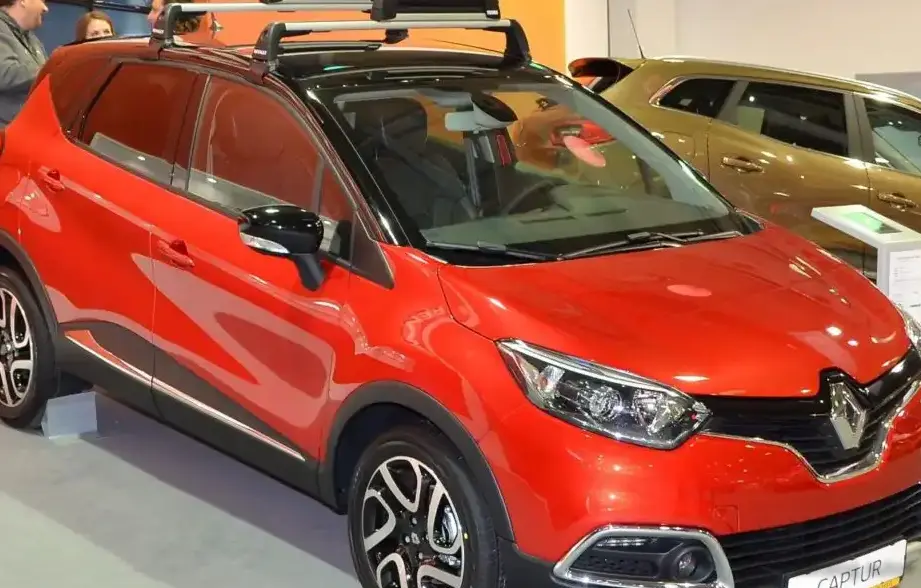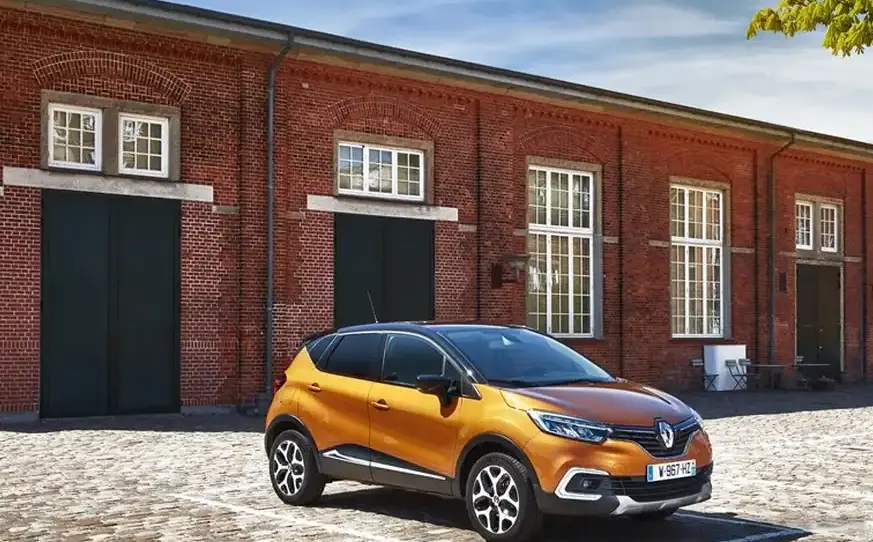
The Renault Captur 1.5 dCi (90 hp) Start & Stop, produced from 2017 to 2019, represents a key variant within the second generation (facelift) of Renault’s popular subcompact crossover. Positioned as an entry-level diesel option, it aimed to deliver fuel efficiency and affordability within the Captur range. This model was primarily marketed in Europe, where demand for economical diesel vehicles remained strong. It built upon the success of the initial Captur launched in 2013, offering a refreshed design and updated technology while retaining the core characteristics that made the original a hit – a practical, stylish, and relatively affordable crossover.
Technical Specifications
| Brand | Renault |
| Model | Captur |
| Generation | Captur (facelift 2017) |
| Type (Engine) | 1.5 dCi (90 Hp) Start & Stop |
| Start of production | 2017 |
| End of production | 2019 |
| Powertrain Architecture | Internal Combustion engine |
| Body type | Crossover |
| Seats | 5 |
| Doors | 5 |
| Fuel consumption (urban) | 4 l/100 km (58.8 US mpg, 70.6 UK mpg, 25 km/l) |
| Fuel consumption (extra urban) | 3.4 l/100 km (69.2 US mpg, 83.1 UK mpg, 29.4 km/l) |
| Fuel consumption (combined) | 3.6 l/100 km (65.3 US mpg, 78.5 UK mpg, 27.8 km/l) |
| CO2 emissions | 95 g/km |
| Fuel Type | Diesel |
| Acceleration 0 – 100 km/h | 13.1 sec |
| Acceleration 0 – 62 mph | 13.1 sec |
| Acceleration 0 – 60 mph | 12.4 sec |
| Maximum speed | 171 km/h (106.25 mph) |
| Emission standard | Euro 6b |
| Weight-to-power ratio | 13.1 kg/Hp, 76.4 Hp/tonne |
| Weight-to-torque ratio | 5.4 kg/Nm, 186.8 Nm/tonne |
| Power | 90 Hp @ 4000 rpm |
| Power per litre | 61.6 Hp/l |
| Torque | 220 Nm @ 1750 rpm (162.26 lb.-ft. @ 1750 rpm) |
| Engine layout | Front, Transverse |
| Engine Model/Code | K9K 628 |
| Engine displacement | 1461 cm3 (89.16 cu. in.) |
| Number of cylinders | 4 |
| Engine configuration | Inline |
| Number of valves per cylinder | 2 |
| Fuel injection system | Diesel Commonrail |
| Engine aspiration | Turbocharger, Intercooler |
| Engine oil capacity | 4.5 l (4.76 US qt | 3.96 UK qt) |
| Coolant capacity | 5 l (5.28 US qt | 4.4 UK qt) |
| Kerb Weight | 1178 kg (2597.05 lbs.) |
| Max. weight | 1727 kg (3807.38 lbs.) |
| Max load | 549 kg (1210.34 lbs.) |
| Trunk (boot) space – minimum | 455 l (16.07 cu. ft.) |
| Trunk (boot) space – maximum | 1235 l (43.61 cu. ft.) |
| Length | 4122 mm (162.28 in.) |
| Width | 1778 mm (70 in.) |
| Height | 1556 mm (61.26 in.) |
| Wheelbase | 2606 mm (102.6 in.) |
| Front track | 1531 mm (60.28 in.) |
| Rear track | 1516 mm (59.69 in.) |
| Front overhang | 866 mm (34.09 in.) |
| Rear overhang | 650 mm (25.59 in.) |
| Ride height (ground clearance) | 170 mm (6.69 in.) |
| Minimum turning circle | 10.42 m (34.19 ft.) |
| Drivetrain Architecture | Front wheel drive |
| Number of gears | 5 |
| Gearbox type | Manual transmission |
| Front suspension | Independent, McPherson with coil spring and anti-roll bar |
| Rear suspension | Elastic beam |
| Front brakes | Ventilated discs |
| Rear brakes | Drum |
| Assisting systems | ABS (Anti-lock braking system) |
| Steering type | Steering rack and pinion |
| Tires size | 205/60 R16; 205/55 R17 |
| Wheel rims size | 16; 17 |
INTRODUCTION
The Renault Captur 1.5 dCi 90 hp Start & Stop, introduced with the 2017 facelift, was a significant offering in Renault’s lineup. It was built on the 1HX0/A3 platform, shared with other Renault and Nissan models. This variant aimed to provide a balance between fuel economy, practicality, and affordability, targeting buyers who prioritized running costs over outright performance. The “Start & Stop” system, a standard feature, further enhanced fuel efficiency by automatically shutting off the engine when the vehicle was stationary. This trim level was positioned as the entry point into the Captur diesel range, sitting below the more powerful 110 hp dCi versions.
Powertrain & Engine Architecture
At the heart of this Captur variant lies the Renault K9K 628 engine, a 1.5-liter inline-four cylinder diesel. This engine is a long-standing design within the Renault-Nissan alliance, known for its robustness and fuel efficiency. The K9K 628 utilizes a diesel commonrail direct injection system, delivering fuel directly into the combustion chamber at high pressure for optimized combustion. A turbocharger with an intercooler is employed to boost power output and improve torque delivery. The engine features two valves per cylinder and operates a single overhead camshaft. The 90 hp output is achieved at 4000 rpm, while peak torque of 220 Nm (162 lb-ft) is available from 1750 rpm. This configuration prioritizes low-end torque for everyday drivability. The engine is paired with a five-speed manual transmission, chosen for its simplicity and cost-effectiveness. While an automatic transmission was available on other Captur models, it wasn’t offered with this specific 90 hp diesel engine.
Driving Characteristics
The 1.5 dCi 90 hp Captur delivers a driving experience focused on economy and ease of use rather than sporty performance. Acceleration from 0-60 mph takes around 12.4 seconds, and the top speed is 106.25 mph. The engine’s torque characteristics make it feel reasonably responsive in urban environments and during overtaking maneuvers, but it can feel strained when pushed hard, particularly when fully loaded. The five-speed manual transmission is well-matched to the engine’s power band, with gear ratios optimized for fuel efficiency. Compared to the 110 hp dCi versions, this variant feels noticeably slower, especially at higher speeds. The manual transmission also requires more driver involvement than the automatic options available on other Captur trims. However, the trade-off is improved fuel economy and a lower purchase price.
Equipment & Trim Levels
The 1.5 dCi 90 hp Start & Stop Captur typically came equipped with a reasonable level of standard features. These included air conditioning, a basic audio system with USB connectivity, electric front windows, and central locking. Safety features such as ABS, ESP (Electronic Stability Program), and driver/passenger airbags were also standard. Higher trim levels, such as the Intens, offered additional features like alloy wheels, a touchscreen infotainment system with navigation, rear parking sensors, and automatic climate control. Interior upholstery was typically cloth, with a functional and durable design. Optional extras included metallic paint, a panoramic sunroof, and a hands-free parking system.
Chassis & Braking
The Captur’s chassis features a McPherson strut front suspension and an elastic beam rear suspension. This setup provides a comfortable ride quality, well-suited for everyday driving. The front suspension incorporates a stabilizer bar to reduce body roll during cornering. Braking duties are handled by ventilated discs at the front and drum brakes at the rear. While the drum brakes are adequate for the vehicle’s weight and performance, they are less effective than disc brakes in terms of heat dissipation and stopping power. The steering is a rack and pinion system, providing reasonably precise and responsive steering feel.
Market Reception & Comparison
The Renault Captur 1.5 dCi 90 hp Start & Stop was generally well-received by critics as a practical and economical choice. Its fuel efficiency was a major selling point, particularly in Europe where diesel fuel was often cheaper than gasoline. However, some reviewers noted the engine’s lack of outright power and the somewhat basic interior trim. Compared to the 110 hp dCi versions, this variant offered lower running costs but compromised on performance. It also faced competition from other subcompact crossovers, such as the Peugeot 2008 and the Opel/Vauxhall Crossland X, which offered similar levels of practicality and fuel efficiency.
Legacy
The Renault Captur 1.5 dCi 90 hp Start & Stop has proven to be a relatively reliable powertrain. The K9K engine is known for its durability, and the manual transmission is generally trouble-free. However, like all diesel engines, it’s important to ensure regular maintenance, including oil changes and filter replacements. On the used car market, these Capturs represent a good value proposition for buyers seeking an economical and practical crossover. While newer models offer more advanced technology and features, the 1.5 dCi 90 hp variant remains a popular choice for those prioritizing fuel efficiency and affordability.