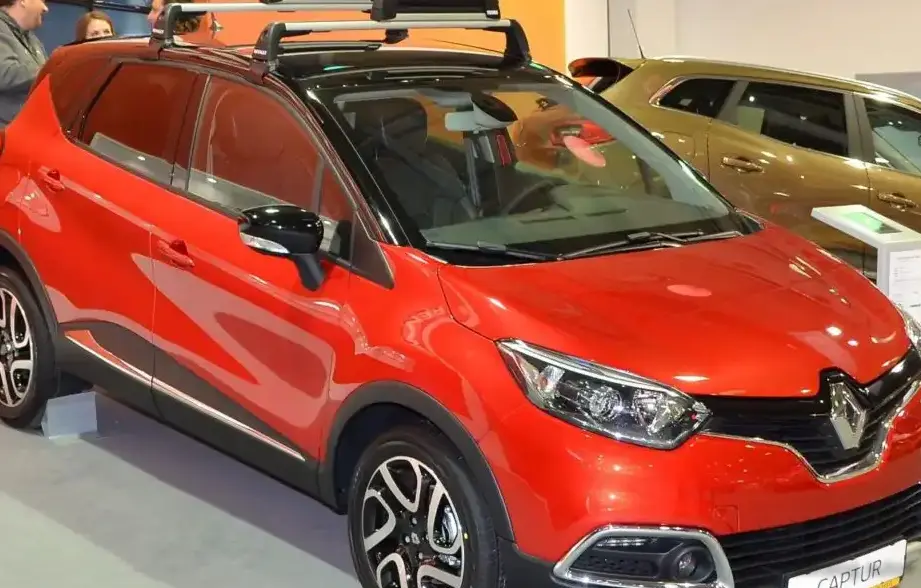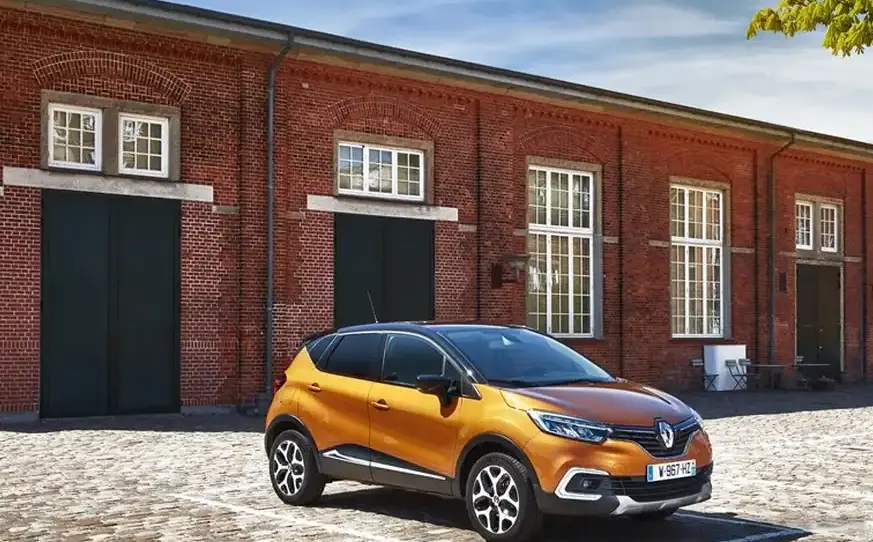
The Renault Captur S 1.3 TCe (150 hp) Start & Stop is a subcompact crossover SUV produced by the French manufacturer Renault. Introduced as part of the facelifted second-generation Captur range in 2018, it remained in production through 2019. This variant occupied a mid-range position within the Captur lineup, offering a balance between performance, fuel efficiency, and equipment. It was primarily marketed in Europe, where the subcompact crossover segment was experiencing significant growth. The Captur, and this specific trim, aimed to appeal to buyers seeking a stylish, practical, and relatively economical vehicle for urban and suburban driving.
Technical Specifications
| Brand | Renault |
| Model | Captur |
| Generation | Captur (facelift 2017) |
| Type (Engine) | S 1.3 TCe (150 Hp) Start & Stop |
| Start of production | 2018 |
| End of production | 2019 |
| Powertrain Architecture | Internal Combustion engine |
| Body type | Crossover |
| Seats | 5 |
| Doors | 5 |
| Fuel consumption (urban) | 6.8 l/100 km (34.6 US mpg, 41.5 UK mpg, 14.7 km/l) |
| Fuel consumption (extra urban) | 4.5 l/100 km (52.3 US mpg, 62.8 UK mpg, 22.2 km/l) |
| Fuel consumption (combined) | 5.4 l/100 km (43.6 US mpg, 52.3 UK mpg, 18.5 km/l) |
| CO2 emissions | 121 g/km |
| Fuel Type | Petrol (Gasoline) |
| Acceleration 0 – 100 km/h | 8.2 sec |
| Acceleration 0 – 62 mph | 8.2 sec |
| Acceleration 0 – 60 mph | 7.8 sec |
| Maximum speed | 216 km/h (134.22 mph) |
| Emission standard | Euro 6b |
| Power | 150 Hp |
| Power per litre | 112.5 Hp/l |
| Torque | 250 Nm (184.39 lb.-ft.) |
| Engine layout | Front, Transverse |
| Engine Model/Code | H5H 470 |
| Engine displacement | 1333 cm3 (81.34 cu. in.) |
| Number of cylinders | 4 |
| Engine configuration | Inline |
| Number of valves per cylinder | 4 |
| Fuel injection system | Direct injection |
| Engine aspiration | Turbocharger, Intercooler |
| Engine oil capacity | 5.5 l (5.81 US qt, 4.84 UK qt) |
| Trunk (boot) space (minimum) | 309 l (10.91 cu. ft.) |
| Trunk (boot) space (maximum) | 1235 l (43.61 cu. ft.) |
| Fuel tank capacity | 45 l (11.89 US gal, 9.9 UK gal) |
| Length | 4122 mm (162.28 in.) |
| Width | 1778 mm (70 in.) |
| Height | 1556 mm (61.26 in.) |
| Wheelbase | 2606 mm (102.6 in.) |
| Front track | 1531 mm (60.28 in.) |
| Rear track | 1516 mm (59.69 in.) |
| Ride height (ground clearance) | 170 mm (6.69 in.) |
| Minimum turning circle | 10.42 m (34.19 ft.) |
| Drivetrain | Front wheel drive |
| Number of gears | 6 |
| Gearbox type | Manual transmission |
Powertrain & Engine Architecture
The Renault Captur S 1.3 TCe (150 hp) is powered by the H5H 470 engine, a 1.3-liter turbocharged inline-four cylinder gasoline engine. This engine is part of Renault’s broader family of turbocharged engines developed in collaboration with Daimler AG (Mercedes-Benz). It features direct fuel injection, which improves combustion efficiency and power output. The engine utilizes a single scroll turbocharger with an intercooler to manage intake air temperature and boost pressure. The engine’s valvetrain employs four valves per cylinder, contributing to improved breathing and overall performance. The 6-speed manual transmission was the standard offering for this variant, providing drivers with direct control over gear selection. The transmission’s gear ratios are tuned to balance acceleration and fuel economy, with a relatively long final drive ratio to enhance cruising efficiency.
Driving Characteristics
The 150 hp output and 250 Nm (184 lb-ft) of torque provided a respectable level of performance for the Captur. Acceleration from 0 to 60 mph was achieved in approximately 7.8 seconds, making it reasonably quick for its class. The turbocharger provides a noticeable boost in power during acceleration, although some turbo lag is present at lower engine speeds. The 6-speed manual transmission allows for precise gear changes, and the gear ratios are well-matched to the engine’s powerband. Compared to lower-powered Captur variants, such as those with the 90 hp engine, the 1.3 TCe offered significantly improved responsiveness and overtaking capability. However, it didn’t match the outright performance of higher-spec models with more powerful engines. The suspension setup prioritized comfort over sporty handling, resulting in a compliant ride quality suitable for everyday driving.
Equipment & Trim Levels
The “S” trim level of the Captur offered a good level of standard equipment. Key features included air conditioning, a touchscreen infotainment system with Bluetooth connectivity, USB ports, and steering wheel-mounted audio controls. Safety features such as ABS, electronic stability control, and multiple airbags were also standard. Interior upholstery typically consisted of cloth seats, with options for upgraded materials available. Optional extras included a rearview camera, parking sensors, automatic climate control, and a panoramic sunroof. The dashboard layout was modern and functional, with a focus on ease of use. The Captur’s interior also benefited from clever storage solutions and a relatively spacious cabin for its size.
Chassis & Braking
The Renault Captur utilizes a front-wheel-drive platform with an independent McPherson strut suspension at the front and an elastic beam suspension at the rear. This suspension setup provides a good balance between ride comfort and handling. The front brakes are typically disc brakes, while the rear brakes are drum brakes on most variants. The steering system is a rack and pinion type, providing precise and responsive steering feel. The Captur’s tires are typically 205/55 R17, offering a good compromise between grip and rolling resistance. The vehicle’s relatively low weight contributes to its agility and fuel efficiency.
Market Reception & Comparison
The Renault Captur S 1.3 TCe (150 hp) was generally well-received by automotive critics. It was praised for its stylish design, practical interior, and enjoyable driving experience. The 1.3 TCe engine was considered a good all-rounder, offering a balance between performance and fuel economy. Compared to other subcompact crossovers in its class, such as the Peugeot 2008 and the Volkswagen T-Cross, the Captur offered a competitive level of equipment and value for money. Fuel economy was a strong point, with combined fuel consumption figures of around 5.4 l/100 km (43.6 US mpg). Reliability was generally considered average, with some reports of minor issues with the infotainment system and electrical components.
Legacy
The Renault Captur S 1.3 TCe (150 hp) remains a popular choice in the used car market. The 1.3 TCe engine has proven to be relatively reliable, although regular maintenance is essential to ensure long-term durability. The Captur’s stylish design and practical interior continue to appeal to buyers seeking a versatile and affordable subcompact crossover. While newer models offer more advanced technology and features, the facelifted second-generation Captur remains a competent and well-rounded vehicle. Its blend of practicality, efficiency, and style has cemented its position as a significant player in the European subcompact crossover segment.