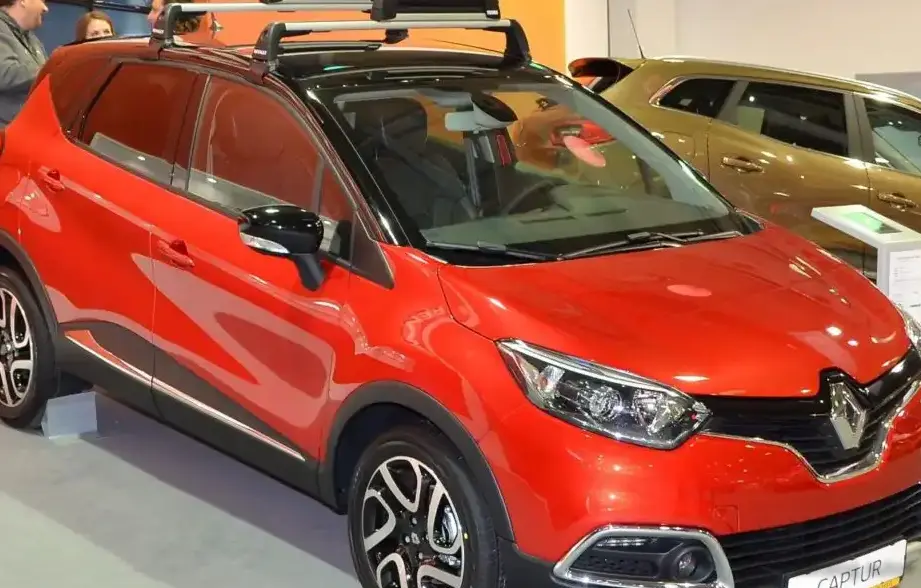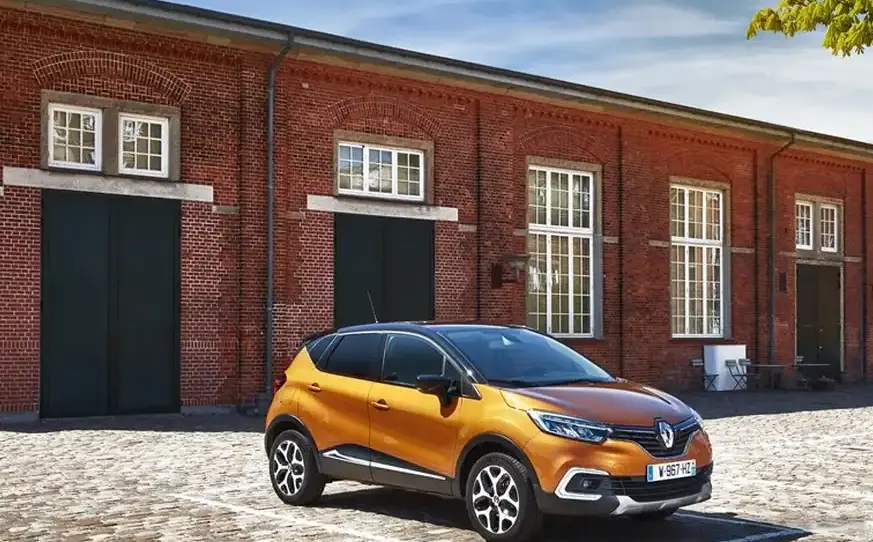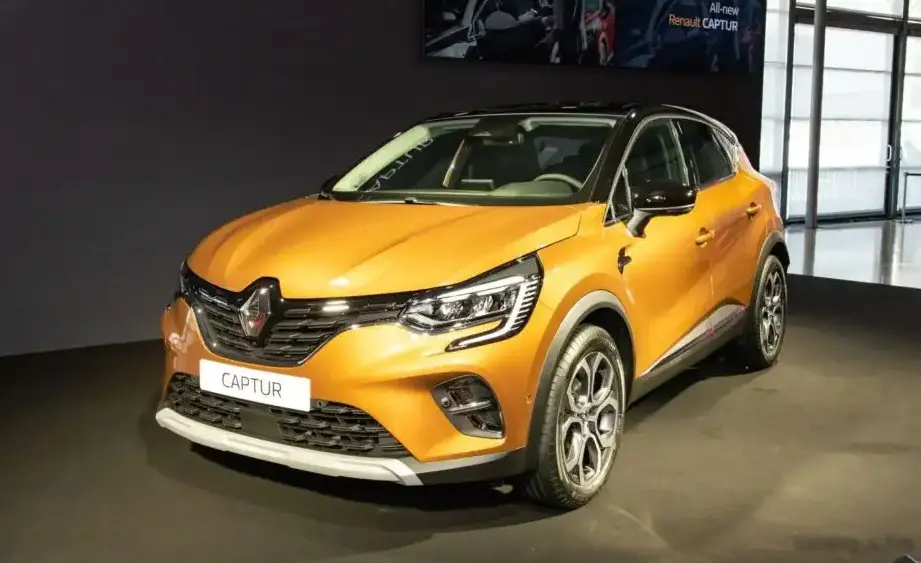
The Renault Captur II 1.0 TCe (100 hp) was a front-wheel-drive subcompact crossover produced from 2019 to August 2020. Positioned as an entry-level offering within the second-generation Captur range (introduced in 2019, internally designated as the 1HX0 series), this variant aimed to provide an accessible and fuel-efficient option for buyers seeking a practical and stylish urban vehicle. It represented Renault’s attempt to capture a broader segment of the market with a downsized engine option, appealing to cost-conscious consumers and those prioritizing lower running costs. This model was primarily sold in the European market, where subcompact crossovers were experiencing significant growth in popularity.
Technical Specifications
| Brand | Renault |
| Model | Captur |
| Generation | Captur II |
| Type (Engine) | 1.0 TCe (100 Hp) |
| Start of production | 2019 |
| End of production | August, 2020 |
| Powertrain Architecture | Internal Combustion engine |
| Body type | Crossover |
| Seats | 5 |
| Doors | 5 |
| Combined fuel consumption (WLTP) | 5.9 l/100 km (39.9 US mpg, 47.9 UK mpg, 16.9 km/l) |
| CO2 emissions (WLTP) | 133 g/km |
| Fuel consumption (economy) – urban (NEDC) | 6.0-6.3 l/100 km (39.2 – 37.3 US mpg, 47.1 – 44.8 UK mpg, 16.7 – 15.9 km/l) |
| Fuel consumption (economy) – extra urban (NEDC) | 4.5-4.6 l/100 km (52.3 – 51.1 US mpg, 62.8 – 61.4 UK mpg, 22.2 – 21.7 km/l) |
| Fuel consumption (economy) – combined (NEDC) | 5.1-5.2 l/100 km (46.1 – 45.2 US mpg, 55.4 – 54.3 UK mpg, 19.6 – 19.2 km/l) |
| CO2 emissions (NEDC) | 116-119 g/km |
| Fuel Type | Petrol (Gasoline) |
| Acceleration 0 – 100 km/h | 13.3 sec |
| Acceleration 0 – 62 mph | 13.3 sec |
| Acceleration 0 – 60 mph | 12.6 sec |
| Maximum speed | 173 km/h (107.5 mph) |
| Emission standard | Euro 6 d-TEMP |
| Weight-to-power ratio | 11.9 kg/Hp, 84 Hp/tonne |
| Weight-to-torque ratio | 7.4 kg/Nm, 134.5 Nm/tonne |
| Power | 100 Hp @ 5000 rpm |
| Power per litre | 100.1 Hp/l |
| Torque | 160 Nm @ 2750 rpm (118.01 lb.-ft. @ 2750 rpm) |
| Engine layout | Front, Transverse |
| Engine Model/Code | H4D 450 |
| Engine displacement | 999 cm3 (60.96 cu. in.) |
| Number of cylinders | 3 |
| Engine configuration | Inline |
| Cylinder Bore | 72.2 mm (2.84 in.) |
| Piston Stroke | 81.3 mm (3.2 in.) |
| Number of valves per cylinder | 4 |
| Fuel injection system | Multi-port manifold injection |
| Engine aspiration | Turbocharger, Intercooler |
| Engine oil capacity | 4.2 l (4.44 US qt | 3.7 UK qt) |
| Coolant | 6.4 l (6.76 US qt | 5.63 UK qt) |
| Kerb Weight | 1190 kg (2623.5 lbs.) |
| Max. weight | 1751 kg (3860.29 lbs.) |
| Max load | 561 kg (1236.79 lbs.) |
| Trunk (boot) space – minimum | 536 l (18.93 cu. ft.) |
| Trunk (boot) space – maximum | 1275 l (45.03 cu. ft.) |
| Fuel tank capacity | 48 l (12.68 US gal | 10.56 UK gal) |
| Max. roof load | 80 kg (176.37 lbs.) |
| Permitted trailer load with brakes (12%) | 1200 kg (2645.55 lbs.) |
| Permitted trailer load without brakes | 630 kg (1388.91 lbs.) |
| Permitted towbar download | 75 kg (165.35 lbs.) |
| Length | 4227 mm (166.42 in.) |
| Width with mirrors folded | 1797 mm (70.75 in.) |
| Width including mirrors | 2003 mm (78.86 in.) |
| Height | 1585 mm (62.4 in.) |
| Wheelbase | 2639 mm (103.9 in.) |
| Front track | 1560 mm (61.42 in.) |
| Rear (Back) track | 1544 mm (60.79 in.) |
| Front overhang | 876 mm (34.49 in.) |
| Rear overhang | 712 mm (28.03 in.) |
| Ride height (ground clearance) | 174 mm (6.85 in.) |
| Minimum turning circle (turning diameter) | 11 m (36.09 ft.) |
| Drivetrain Architecture | The Internal combustion engine (ICE) drives the front wheels of the vehicle. |
| Drive wheel | Front wheel drive |
| Number of gears and type of gearbox | 5 gears, manual transmission |
| Front suspension | Independent type McPherson |
| Rear suspension | Elastic beam |
| Front brakes | Ventilated discs, 280 mm |
| Rear brakes | Drum |
| Assisting systems | ABS (Anti-lock braking system) |
| Steering type | Steering rack and pinion |
| Power steering | Electric Steering |
| Tires size | 215/65 R16; 215/60 R17; 215/55 R18 |
| Wheel rims size | 16; 17; 18 |
Powertrain & Engine Architecture
The Renault Captur II 1.0 TCe (100 hp) was powered by the H4D 450 engine, a 999cc, three-cylinder turbocharged gasoline engine. This engine is part of Renault’s ‘Energy dCi’ family, despite being a petrol unit, reflecting the company’s focus on efficiency. The engine utilizes multi-point fuel injection and a single turbocharger with an intercooler to boost power and torque. The engine’s aluminum block and cylinder head contribute to weight reduction. The 100 hp version of this engine was tuned for efficiency rather than outright performance. The engine is transversely mounted at the front of the vehicle, driving the front wheels. The five-speed manual transmission was the standard offering for this variant, chosen for its simplicity and contribution to fuel economy. The transmission’s gear ratios were optimized for urban driving and mid-range acceleration, rather than high-speed cruising.
Driving Characteristics
The 1.0 TCe (100 hp) Captur offered adequate, but not exhilarating, performance. Acceleration from 0-60 mph took approximately 12.6 seconds, and the top speed was around 107.5 mph. The turbocharger provided a noticeable boost in power at lower engine speeds, helping with everyday driving situations like merging onto highways or overtaking. However, the engine could feel strained when fully loaded or climbing steep hills. Compared to higher-powered Captur variants, such as those with the 1.3 TCe engine, the 1.0 TCe felt noticeably slower. The five-speed manual transmission was generally smooth, but the gear ratios were spaced to prioritize fuel efficiency over sporty driving. The relatively light weight of the vehicle (1190 kg) helped to mitigate the effects of the modest power output.
Equipment & Trim Levels
The 1.0 TCe (100 hp) Captur typically came with a base level of equipment, focusing on essential features. Standard equipment generally included air conditioning, a basic infotainment system with Bluetooth connectivity, power windows, and central locking. Safety features such as ABS, electronic stability control, and multiple airbags were also standard. Interior upholstery was typically cloth, and the dashboard featured a functional, if somewhat basic, design. Optional extras included alloy wheels, a more advanced infotainment system with navigation, parking sensors, and a rearview camera. Higher trim levels added features like automatic climate control, rain-sensing wipers, and upgraded interior materials.
Chassis & Braking
The Captur II utilized a McPherson strut front suspension and an elastic beam rear suspension. This setup provided a comfortable ride quality, well-suited for urban environments. The front brakes were ventilated discs, providing adequate stopping power, while the rear brakes were drums, a cost-saving measure for the entry-level variant. The electric power steering offered light and easy steering, making it maneuverable in tight spaces. Stabilizer bars were fitted to both the front and rear axles to reduce body roll during cornering.
Market Reception & Comparison
The Renault Captur II 1.0 TCe (100 hp) was generally well-received by critics as a practical and affordable option in the subcompact crossover segment. Its fuel economy (around 39.9 US mpg combined) was a major selling point, and its compact size made it easy to park and maneuver in urban areas. However, some reviewers criticized its lack of power, particularly when fully loaded. Compared to the 1.3 TCe variants, the 1.0 TCe offered lower running costs but sacrificed performance. The 1.5 dCi diesel variants, while offering even better fuel economy, were often more expensive to purchase and maintain.
Legacy
The Renault Captur II 1.0 TCe (100 hp) has proven to be a relatively reliable vehicle in the used car market. The three-cylinder engine, while not known for its longevity like some larger engines, has generally proven durable with regular maintenance. Common issues reported by owners include occasional turbocharger problems and issues with the fuel injection system. However, these issues are not widespread. The Captur II’s popularity and relatively low purchase price have ensured a steady supply of used examples, making it an attractive option for budget-conscious buyers seeking a practical and stylish subcompact crossover.