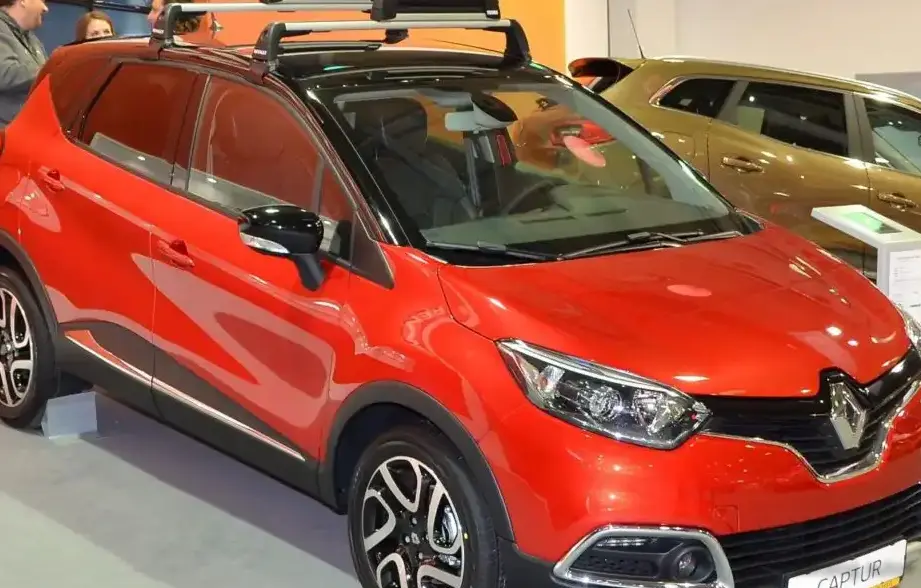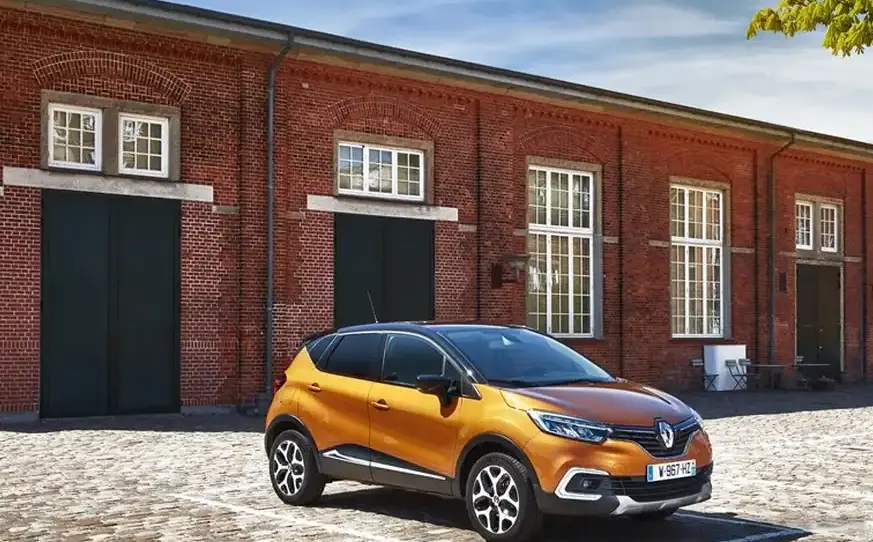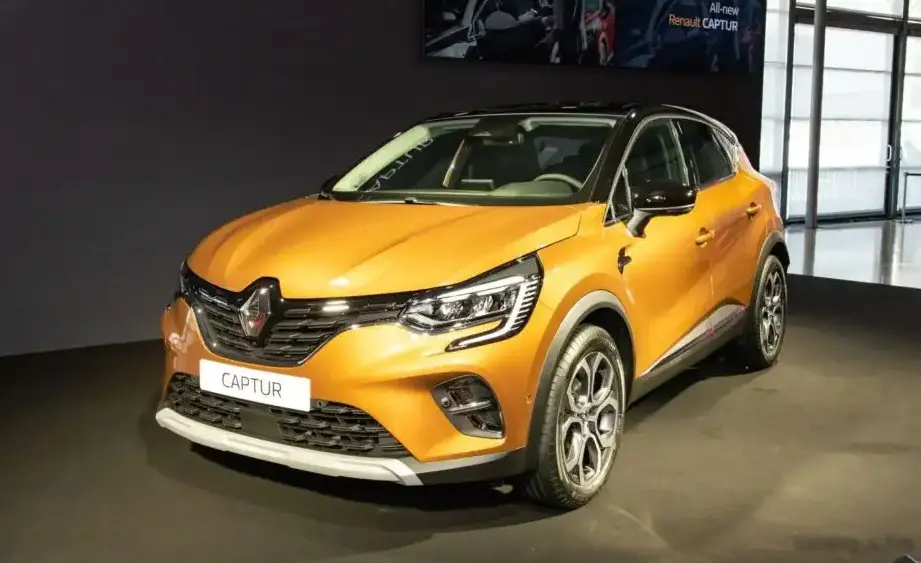
The Renault Captur II 1.3 TCe (130 hp) GPF represents a significant iteration in Renault’s popular subcompact crossover offering. Introduced in 2019 as part of the second-generation Captur range (codenamed JKE), this variant aimed to balance fuel efficiency with respectable performance, appealing to a broad segment of the European market. Production of this specific configuration continued until August 2020, before Renault refined the engine lineup further. It occupied a mid-range position within the Captur II portfolio, slotting between the lower-powered 1.0 TCe engine and the more premium hybrid options.
Technical Specifications
| Brand | Renault |
| Model | Captur |
| Generation | Captur II |
| Type (Engine) | 1.3 TCe (130 Hp) GPF |
| Start of production | 2019 |
| End of production | August, 2020 |
| Powertrain Architecture | Internal Combustion engine |
| Body type | Crossover |
| Seats | 5 |
| Doors | 5 |
| Combined fuel consumption (WLTP) | 6.2 l/100 km (37.9 US mpg, 45.6 UK mpg, 16.1 km/l) |
| CO2 emissions (WLTP) | 141 g/km |
| Fuel consumption (economy) – urban (NEDC) | 7.0-7.2 l/100 km (33.6 – 32.7 US mpg, 40.4 – 39.2 UK mpg, 14.3 – 13.9 km/l) |
| Fuel consumption (economy) – extra urban (NEDC) | 4.9-5.1 l/100 km (48 – 46.1 US mpg, 57.6 – 55.4 UK mpg, 20.4 – 19.6 km/l) |
| Fuel consumption (economy) – combined (NEDC) | 5.0-5.6 l/100 km (47 – 42 US mpg, 56.5 – 50.4 UK mpg, 20 – 17.9 km/l) |
| CO2 emissions (NEDC) | 123-127 g/km |
| Fuel Type | Petrol (Gasoline) |
| Acceleration 0 – 100 km/h | 10.6 sec |
| Acceleration 0 – 62 mph | 10.6 sec |
| Acceleration 0 – 60 mph | 10.1 sec |
| Maximum speed | 195 km/h (121.17 mph) |
| Emission standard | Euro 6 d-TEMP |
| Weight-to-power ratio | 9.5 kg/Hp, 105.3 Hp/tonne |
| Weight-to-torque ratio | 5.1 kg/Nm, 194.5 Nm/tonne |
| Power | 130 Hp @ 5000 rpm |
| Torque | 240 Nm @ 1600 rpm (177.01 lb.-ft. @ 1600 rpm) |
| Engine layout | Front, Transverse |
| Engine Model/Code | H5H 470 |
| Engine displacement | 1333 cm3 (81.34 cu. in.) |
| Number of cylinders | 4 |
| Engine configuration | Inline |
| Cylinder Bore | 72.2 mm (2.84 in.) |
| Piston Stroke | 81.3 mm (3.2 in.) |
| Number of valves per cylinder | 4 |
| Fuel injection system | Direct injection |
| Engine aspiration | Turbocharger, Intercooler |
| Engine oil capacity | 5.4 l (5.71 US qt, 4.75 UK qt) |
| Coolant | 7.5 l (7.93 US qt, 6.6 UK qt) |
| Kerb Weight | 1234 kg (2720.5 lbs.) |
| Max. weight | 1775 kg (3913.21 lbs.) |
| Max load | 541 kg (1192.7 lbs.) |
| Trunk (boot) space – minimum | 536 l (18.93 cu. ft.) |
| Trunk (boot) space – maximum | 1275 l (45.03 cu. ft.) |
| Fuel tank capacity | 48 l (12.68 US gal, 10.56 UK gal) |
| Max. roof load | 80 kg (176.37 lbs.) |
| Permitted trailer load with brakes (12%) | 1200 kg (2645.55 lbs.) |
| Permitted trailer load without brakes | 650 kg (1433 lbs.) |
| Permitted towbar download | 75 kg (165.35 lbs.) |
| Length | 4227 mm (166.42 in.) |
| Width with mirrors folded | 1797 mm (70.75 in.) |
| Width including mirrors | 2003 mm (78.86 in.) |
| Height | 1585 mm (62.4 in.) |
| Wheelbase | 2639 mm (103.9 in.) |
| Front track | 1560 mm (61.42 in.) |
| Rear (Back) track | 1544 mm (60.79 in.) |
| Front overhang | 876 mm (34.49 in.) |
| Rear overhang | 712 mm (28.03 in.) |
| Ride height (ground clearance) | 174 mm (6.85 in.) |
| Minimum turning circle (turning diameter) | 11 m (36.09 ft.) |
| Drivetrain Architecture | The Internal combustion engine (ICE) drives the front wheels of the vehicle. |
| Drive wheel | Front wheel drive |
| Number of gears and type of gearbox | 6 gears, manual transmission |
| Front suspension | Independent type McPherson |
| Rear suspension | Elastic beam |
| Front brakes | Ventilated discs, 280 mm |
| Rear brakes | Drum |
| Assisting systems | ABS (Anti-lock braking system) |
| Steering type | Steering rack and pinion |
| Power steering | Electric Steering |
| Tires size | 215/65 R16; 215/60 R17; 215/55 R18 |
| Wheel rims size | 16; 17; 18 |
Powertrain & Engine Architecture
The heart of the Captur II 1.3 TCe (130 hp) is the Renault-Nissan Alliance’s H5H 470 engine. This is a 1.3-liter, inline four-cylinder gasoline engine featuring direct fuel injection and a turbocharger with an intercooler. The engine utilizes a gasoline particulate filter (GPF) to reduce particulate matter emissions, meeting stringent Euro 6d-TEMP standards. The engine produces 130 horsepower at 5000 rpm and 240 Nm (177 lb-ft) of torque at 1600 rpm. This torque figure is a key characteristic, providing good low-end responsiveness for everyday driving. The engine’s architecture is designed for efficiency, with features like variable valve timing and optimized combustion chamber design. The 6-speed manual transmission was standard for this variant, offering a balance between fuel economy and driver engagement.
Driving Characteristics
The 1.3 TCe (130 hp) powertrain delivers a comfortable and practical driving experience. Acceleration from 0-60 mph takes approximately 10.1 seconds, and the top speed is 195 km/h (121 mph). While not a performance-oriented setup, the engine provides sufficient power for typical urban and highway driving. The turbocharger contributes to a noticeable surge in power during acceleration, but the engine remains relatively smooth and refined. Compared to the base 1.0 TCe engine, the 1.3 TCe offers a more relaxed driving experience, particularly when fully loaded or tackling inclines. The manual transmission allows for greater driver control, but the gear ratios are tuned for fuel efficiency rather than outright performance.
Equipment & Trim Levels
The 1.3 TCe (130 hp) trim typically included features such as air conditioning, a touchscreen infotainment system with smartphone integration (Apple CarPlay and Android Auto), Bluetooth connectivity, and a suite of safety features including automatic emergency braking and lane departure warning. Higher trim levels added features like automatic climate control, a rearview camera, parking sensors, and upgraded interior materials. Interior upholstery was typically cloth, with options for partial leather trim. The dashboard layout was modern and functional, with a focus on ease of use.
Chassis & Braking
The Captur II utilizes a McPherson strut front suspension and an elastic beam rear suspension. This setup provides a good balance between ride comfort and handling. The front brakes are ventilated discs, while the rear brakes are drums. This configuration is typical for vehicles in this weight class and price range. The electric power steering provides light and precise steering feel. ABS (Anti-lock Braking System) is standard, enhancing safety during emergency braking situations.
Market Reception & Comparison
The Renault Captur II 1.3 TCe (130 hp) was generally well-received by automotive critics. It was praised for its fuel efficiency, comfortable ride, and practical interior space. However, some reviewers noted that the engine could feel strained when pushed hard, and the manual transmission was not as refined as some competitors. Compared to the lower-powered 1.0 TCe engine, the 1.3 TCe offered a noticeable improvement in performance and refinement. Compared to the diesel options, the 1.3 TCe provided a quieter and smoother driving experience, but with slightly higher fuel consumption.
Legacy
The Renault Captur II 1.3 TCe (130 hp) has proven to be a relatively reliable powertrain. The H5H engine, while not without its minor issues, has generally demonstrated good durability. Common issues reported include occasional turbocharger problems and sensor failures, but these are not widespread. On the used car market, this variant represents a good value proposition, offering a well-equipped and practical crossover at a competitive price. Its fuel efficiency and relatively low running costs make it an attractive option for budget-conscious buyers.