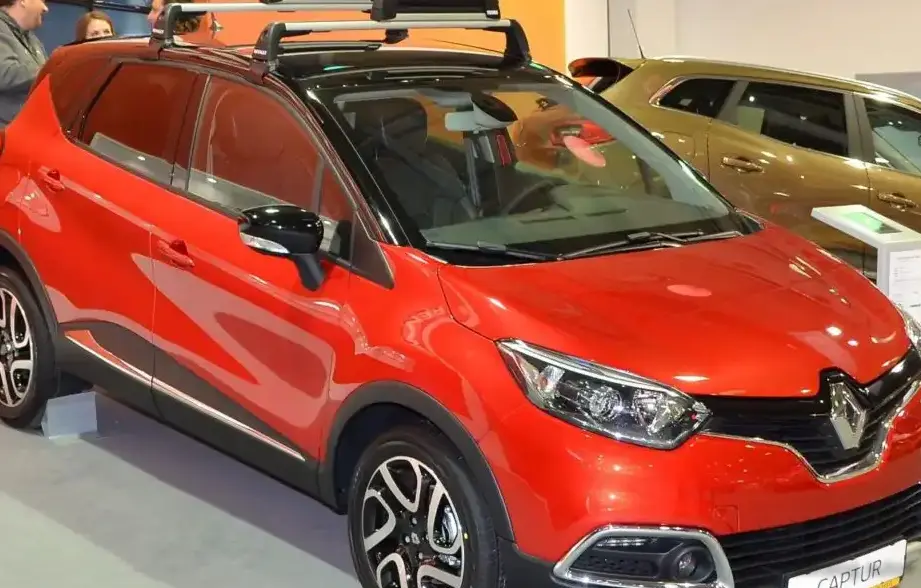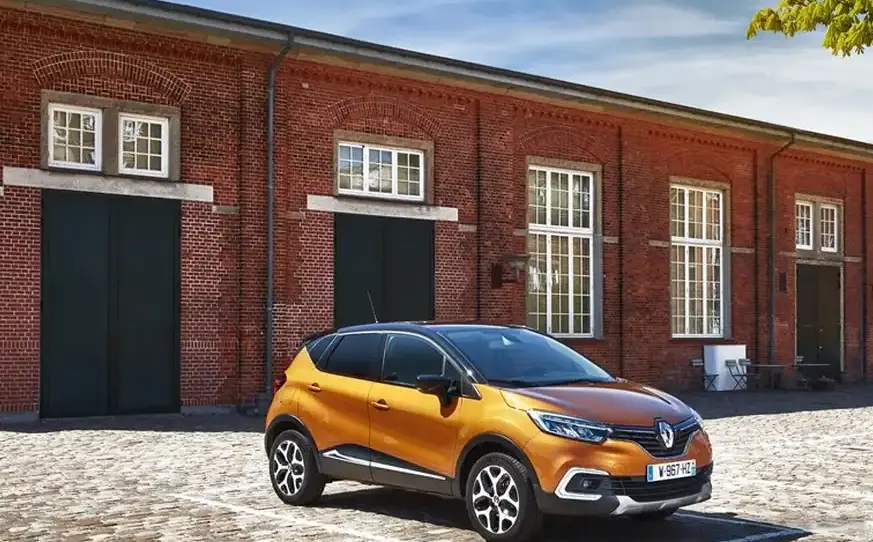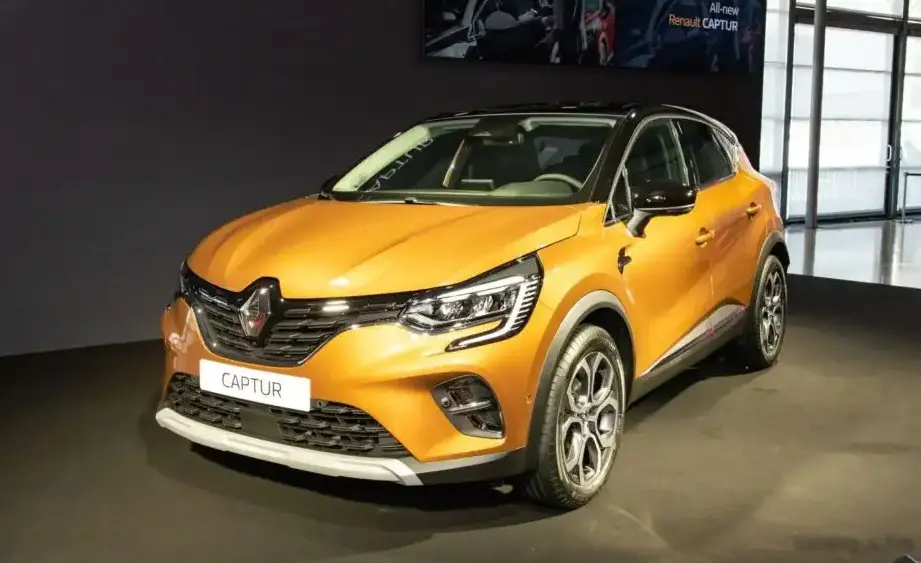
The Renault Captur II 1.5 Blue dCi (115 hp) was a front-wheel-drive subcompact crossover produced by Renault from 2019 through August 2020. Positioned as a mid-range offering within the second-generation Captur lineup, it aimed to balance fuel efficiency with acceptable performance for everyday driving. This variant played a significant role in Renault’s European sales strategy, capitalizing on the growing demand for diesel-powered crossovers. It was never officially sold in the North American market.
Technical Specifications
| Brand | Renault |
| Model | Captur |
| Generation | Captur II |
| Type (Engine) | 1.5 Blue dCi (115 Hp) |
| Start of production | 2019 |
| End of production | August, 2020 |
| Powertrain Architecture | Internal Combustion engine |
| Body type | Crossover |
| Seats | 5 |
| Doors | 5 |
| Combined fuel consumption (WLTP) | 4.7 l/100 km (50 US mpg, 60.1 UK mpg, 21.3 km/l) |
| CO2 emissions (WLTP) | 123 g/km |
| Fuel consumption (economy) – urban (NEDC) | 4.8-4.9 l/100 km (49 – 48 US mpg, 58.9 – 57.6 UK mpg, 20.8 – 20.4 km/l) |
| Fuel consumption (economy) – extra urban (NEDC) | 3.9-4.0 l/100 km (60.3 – 58.8 US mpg, 72.4 – 70.6 UK mpg, 25.6 – 25 km/l) |
| Fuel consumption (economy) – combined (NEDC) | 4.2-4.4 l/100 km (56 – 53.5 US mpg, 67.3 – 64.2 UK mpg, 23.8 – 22.7 km/l) |
| CO2 emissions (NEDC) | 111-114 g/km |
| Fuel Type | Diesel |
| Acceleration 0 – 100 km/h | 11.9 sec |
| Acceleration 0 – 62 mph | 11.9 sec |
| Acceleration 0 – 60 mph | 11.3 sec |
| Maximum speed | 187 km/h (116.2 mph) |
| Emission standard | Euro 6 d-TEMP |
| Weight-to-power ratio | 11.3 kg/Hp, 88.3 Hp/tonne |
| Weight-to-torque ratio | 5 kg/Nm, 199.5 Nm/tonne |
| Power | 115 Hp @ 3750 rpm |
| Power per litre | 78.7 Hp/l |
| Torque | 260 Nm @ 2000 rpm (191.77 lb.-ft. @ 2000 rpm) |
| Engine layout | Front, Transverse |
| Engine Model/Code | K9K 872 |
| Engine displacement | 1461 cm3 (89.16 cu. in.) |
| Number of cylinders | 4 |
| Engine configuration | Inline |
| Cylinder Bore | 76 mm (2.99 in.) |
| Piston Stroke | 80.5 mm (3.17 in.) |
| Number of valves per cylinder | 2 |
| Fuel injection system | Diesel Commonrail |
| Engine aspiration | Turbocharger, Intercooler |
| Engine oil capacity | 5.7 l (6.02 US qt, 5.02 UK qt) |
| Coolant | 10 l (10.57 US qt, 8.8 UK qt) |
| Kerb Weight | 1303 kg (2872.62 lbs.) |
| Max. weight | 1850 kg (4078.55 lbs.) |
| Max load | 547 kg (1205.93 lbs.) |
| Trunk (boot) space – minimum | 536 l (18.93 cu. ft.) |
| Trunk (boot) space – maximum | 1275 l (45.03 cu. ft.) |
| Fuel tank capacity | 46 l (12.15 US gal, 10.12 UK gal) |
| AdBlue tank | 13 l (3.43 US gal, 2.86 UK gal) |
| Max. roof load | 80 kg (176.37 lbs.) |
| Permitted trailer load with brakes (12%) | 1200 kg (2645.55 lbs.) |
| Permitted trailer load without brakes | 685 kg (1510.17 lbs.) |
| Permitted towbar download | 75 kg (165.35 lbs.) |
| Length | 4227 mm (166.42 in.) |
| Width with mirrors folded | 1797 mm (70.75 in.) |
| Width including mirrors | 2003 mm (78.86 in.) |
| Height | 1585 mm (62.4 in.) |
| Wheelbase | 2639 mm (103.9 in.) |
| Front track | 1560 mm (61.42 in.) |
| Rear (Back) track | 1547 mm (60.91 in.) |
| Front overhang | 876 mm (34.49 in.) |
| Rear overhang | 712 mm (28.03 in.) |
| Ride height (ground clearance) | 174 mm (6.85 in.) |
| Minimum turning circle (turning diameter) | 11 m (36.09 ft.) |
| Drivetrain Architecture | The Internal combustion engine (ICE) drives the front wheels of the vehicle. |
| Drive wheel | Front wheel drive |
| Number of gears and type of gearbox | 6 gears, manual transmission |
| Front suspension | Independent type McPherson |
| Rear suspension | Elastic beam |
| Front brakes | Ventilated discs, 280 mm |
| Rear brakes | Drum |
| Assisting systems | ABS (Anti-lock braking system) |
| Steering type | Steering rack and pinion |
| Power steering | Electric Steering |
| Tires size | 215/65 R16; 215/60 R17; 215/55 R18 |
| Wheel rims size | 16; 17; 18 |
Powertrain & Engine Architecture
The Renault Captur II 1.5 Blue dCi (115 hp) was powered by the K9K 872 engine, a 1.5-liter inline-four cylinder diesel engine. This engine was a mainstay in Renault’s compact vehicle lineup for many years, known for its relatively good fuel economy and durability. The ‘Blue dCi’ designation indicates the inclusion of Renault’s Selective Catalytic Reduction (SCR) system, utilizing AdBlue (Diesel Exhaust Fluid) to reduce nitrogen oxide (NOx) emissions, ensuring compliance with Euro 6d-TEMP emission standards. The engine featured a turbocharger with an intercooler to boost power output and improve efficiency. Fuel was delivered via a common-rail direct injection system, optimizing combustion and reducing particulate matter. The engine produced 115 horsepower at 3750 rpm and 260 Nm (191.77 lb-ft) of torque at 2000 rpm. The engine’s valvetrain employed two valves per cylinder. The engine was transversely mounted in the front of the vehicle.
Driving Characteristics
The 1.5 Blue dCi (115 hp) variant of the Captur II offered a comfortable, if not particularly sporty, driving experience. Acceleration from 0-60 mph took approximately 11.3 seconds, and top speed was limited to 116.2 mph. The engine’s torque peak at 2000 rpm provided adequate pulling power for everyday driving situations, such as merging onto highways or overtaking slower vehicles. However, compared to higher-output Captur models, such as those with gasoline engines, the diesel variant felt less responsive. The six-speed manual transmission was well-matched to the engine’s characteristics, offering smooth gear changes. The gear ratios were optimized for fuel efficiency rather than outright performance. The relatively low horsepower and torque figures meant that the engine needed to be revved more to achieve brisk acceleration, which could result in increased engine noise.
Equipment & Trim Levels
The 1.5 Blue dCi (115 hp) trim typically included standard features such as air conditioning, a touchscreen infotainment system with Bluetooth connectivity, power windows and mirrors, and a basic suite of safety equipment including ABS, ESP (Electronic Stability Program), and multiple airbags. Higher trim levels offered additional features like alloy wheels, a rearview camera, parking sensors, automatic climate control, and a more advanced infotainment system with navigation. Interior upholstery was typically cloth, with options for upgraded materials on higher trims. Optional extras included a panoramic sunroof, keyless entry, and a premium audio system.
Chassis & Braking
The Captur II utilized a McPherson strut front suspension and an elastic beam rear suspension. This setup provided a good balance between ride comfort and handling. The front brakes were ventilated discs measuring 280mm, while the rear brakes were drums. This configuration was typical for vehicles in this weight class and price range. The electric power steering provided light and precise steering feel. ABS (Anti-lock Braking System) was standard, enhancing braking performance and stability.
Market Reception & Comparison
The Renault Captur II 1.5 Blue dCi (115 hp) was generally well-received by automotive critics for its fuel efficiency and practicality. However, some reviewers noted that the engine lacked the refinement and performance of some of its competitors. Compared to the gasoline-powered Captur variants, the diesel model offered significantly better fuel economy but at the expense of acceleration and overall driving enjoyment. The diesel variant was often favored by drivers who prioritized fuel savings and covered long distances regularly. Its fuel economy of around 50 US mpg made it an attractive option for cost-conscious buyers.
Legacy
The K9K engine family, including the K9K 872 variant, has a reputation for being relatively reliable, although diesel engines in general can be more prone to issues with the diesel particulate filter (DPF) and turbocharger. Regular maintenance, including oil changes and AdBlue refills, is crucial for ensuring long-term reliability. In the used car market, the Captur II 1.5 Blue dCi (115 hp) remains a popular choice for buyers seeking a fuel-efficient and practical subcompact crossover. However, potential buyers should be aware of the potential maintenance costs associated with diesel engines and the importance of verifying the vehicle’s service history.