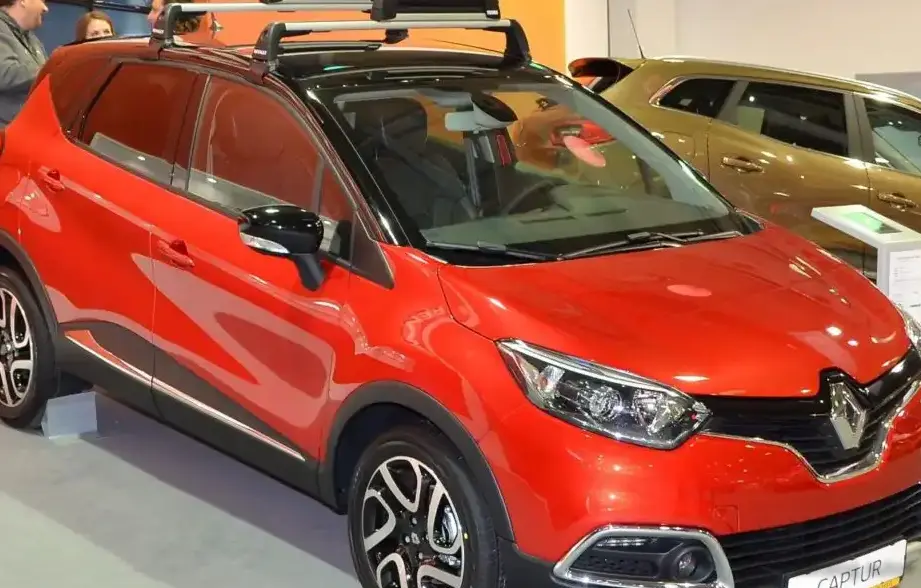
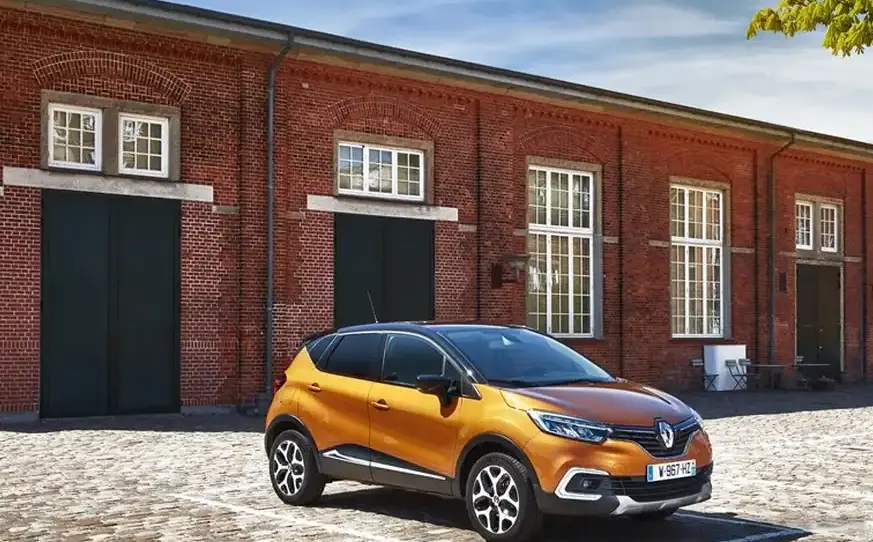
The Renault Captur II (facelift 2024) 1.0 TCe (101 hp) LPG is a subcompact crossover introduced in April 2024 as part of the Captur II’s mid-life refresh. This variant represents an entry-level powertrain option within the Captur range, designed to appeal to buyers seeking a fuel-efficient and affordable vehicle. It combines a three-cylinder turbocharged petrol engine with the flexibility of LPG (Liquefied Petroleum Gas) capability, positioning it as a practical choice in European markets where LPG infrastructure is well-established. The Captur II itself is built on the CMP (Common Modular Platform) shared with other Stellantis and Renault Group vehicles, like the Peugeot 208 and Opel Corsa.
Technical Specifications
| Brand | Renault |
| Model | Captur |
| Generation | Captur II (facelift 2024) |
| Type (Engine) | 1.0 TCe (101 Hp) LPG |
| Start of production | April, 2024 |
| Powertrain Architecture | Internal Combustion engine |
| Body type | Crossover |
| Seats | 5 |
| Doors | 5 |
| Combined fuel consumption (WLTP) | 6.0-6.1 l/100 km (39.2 – 38.6 US mpg, 47.1 – 46.3 UK mpg, 16.7 – 16.4 km/l) |
| Combined fuel consumption (WLTP) (LPG) | 7.7-7.9 l/100 km |
| CO2 emissions (WLTP) | 119 g/km |
| Fuel Type | Petrol / LPG |
| Acceleration 0 – 100 km/h | 13 sec |
| Acceleration 0 – 62 mph | 13 sec |
| Acceleration 0 – 60 mph | 12.4 sec |
| Emission standard | Euro 6d |
| Power | 101 Hp |
| Power per litre | 101.1 Hp/l |
| Torque | 160 Nm @ 2750 rpm (118.01 lb.-ft. @ 2750 rpm) |
| Torque (LPG) | 170 Nm @ 2000 rpm |
| Engine layout | Front, Transverse |
| Engine Model/Code | H4D 460 |
| Engine displacement | 999 cm3 (60.96 cu. in.) |
| Number of cylinders | 3 |
| Engine configuration | Inline |
| Number of valves per cylinder | 4 |
| Fuel injection system | Multi-port manifold injection |
| Engine aspiration | Turbocharger, Intercooler |
| Engine oil capacity | 4.2 l (4.44 US qt | 3.7 UK qt) |
| Coolant | 6.4 l (6.76 US qt | 5.63 UK qt) |
| Trunk (boot) space – minimum | 422 l (14.9 cu. ft.) |
| Trunk (boot) space – maximum | 1596 l (56.36 cu. ft.) |
| Length | 4239 mm (166.89 in.) |
| Width with mirrors folded | 1797 mm (70.75 in.) |
| Width including mirrors | 2003 mm (78.86 in.) |
| Height | 1575 mm (62.01 in.) |
| Wheelbase | 2639 mm (103.9 in.) |
| Front track | 1562 mm (61.5 in.) |
| Rear (Back) track | 1547 mm (60.91 in.) |
| Front overhang | 883 mm (34.76 in.) |
| Rear overhang | 717 mm (28.23 in.) |
| Ride height (ground clearance) | 169 mm (6.65 in.) |
| Drivetrain Architecture | The Internal combustion engine (ICE) drives the front wheels of the vehicle. |
| Drive wheel | Front wheel drive |
| Number of gears and type of gearbox | 6 gears, manual transmission |
| Front suspension | Independent type McPherson |
| Rear suspension | Elastic beam |
| Front brakes | Ventilated discs |
| Rear brakes | Drum |
| Assisting systems | ABS (Anti-lock braking system) |
| Steering type | Steering rack and pinion |
| Power steering | Electric Steering |
| Tires size | 215/60 R17 |
| Wheel rims size | 17 |
Powertrain & Engine Architecture
The heart of this Captur variant is the Renault H4D 460 engine, a 999cc three-cylinder petrol engine. This engine is part of Renault’s ‘TCe’ family, utilizing a single turbocharger and multi-point fuel injection. The three-cylinder configuration inherently offers reduced internal friction compared to four-cylinder engines, contributing to improved fuel economy. The addition of an intercooler helps to manage intake air temperature, maximizing the efficiency of the turbocharger. The engine is tuned to produce 101 horsepower and 160 Nm (118 lb-ft) of torque when running on petrol. When switched to LPG, the torque output increases slightly to 170 Nm at a lower 2000 rpm. The engine meets Euro 6d emissions standards, incorporating a particulate filter to reduce emissions. The engine is paired with a six-speed manual transmission, which is the only transmission option available for this specific configuration.
Driving Characteristics
The 1.0 TCe 101 hp engine, coupled with the manual transmission, delivers adequate performance for urban and suburban driving. Acceleration from 0-100 km/h (0-62 mph) takes approximately 13 seconds. While not particularly sporty, the engine provides sufficient power for everyday commuting and overtaking maneuvers. The six-speed gearbox is well-matched to the engine’s characteristics, allowing for comfortable cruising at highway speeds. Compared to higher-output Captur variants, such as those with the 1.3 TCe engine, this version feels less responsive, particularly when fully loaded. However, the LPG capability offers a cost-effective alternative fuel source, potentially lowering running costs for drivers who frequently travel long distances. The manual transmission provides a more engaging driving experience than an automatic, offering greater control over gear selection.
Equipment & Trim Levels
The 1.0 TCe (101 hp) LPG variant typically sits as an entry-level or mid-range trim within the Captur II lineup. Standard equipment generally includes air conditioning, a touchscreen infotainment system with smartphone integration (Apple CarPlay and Android Auto), and basic safety features like ABS, ESP (Electronic Stability Program), and multiple airbags. Higher trim levels add features such as automatic climate control, a larger touchscreen display, parking sensors, a reversing camera, and advanced driver-assistance systems (ADAS) like lane departure warning and automatic emergency braking. Interior upholstery is typically cloth, with options for upgraded materials on higher trims. Optional extras often include a panoramic sunroof, alloy wheels, and a premium audio system.
Chassis & Braking
The Renault Captur II utilizes a McPherson strut front suspension and an elastic beam rear suspension. This setup provides a good balance between ride comfort and handling. The front brakes are ventilated discs, offering good stopping power, while the rear brakes are drums, a cost-saving measure common in entry-level variants. The electric power steering provides light and precise steering feel. The vehicle’s relatively low weight, thanks to the three-cylinder engine, contributes to its agility. Stabilizer bars are fitted to both the front and rear axles to reduce body roll during cornering.
Market Reception & Comparison
The Renault Captur II 1.0 TCe (101 hp) LPG has been generally well-received in markets where LPG is popular. Critics have praised its fuel efficiency and affordability, particularly when considering the lower cost of LPG compared to petrol. Compared to other Captur variants, this version offers a more economical option, albeit with slightly reduced performance. The manual transmission is seen as a positive by driving enthusiasts, but some buyers may prefer the convenience of an automatic gearbox. Fuel economy figures of 6.0-6.1 l/100km (39.2-38.6 US mpg) on petrol and 7.7-7.9 l/100km on LPG are competitive within the subcompact crossover segment.
Legacy
The Renault Captur II 1.0 TCe (101 hp) LPG represents a practical and efficient option in the subcompact crossover market. The H4D 460 engine has proven to be relatively reliable, and the addition of LPG capability extends its versatility. As a used car, this variant is likely to appeal to budget-conscious buyers seeking a fuel-efficient and well-equipped vehicle. The availability of LPG conversions in many European countries ensures that this powertrain will remain a viable option for years to come. Its position as an entry-level trim suggests it will be a common sight on the used car market, offering a good value proposition for those seeking affordable transportation.