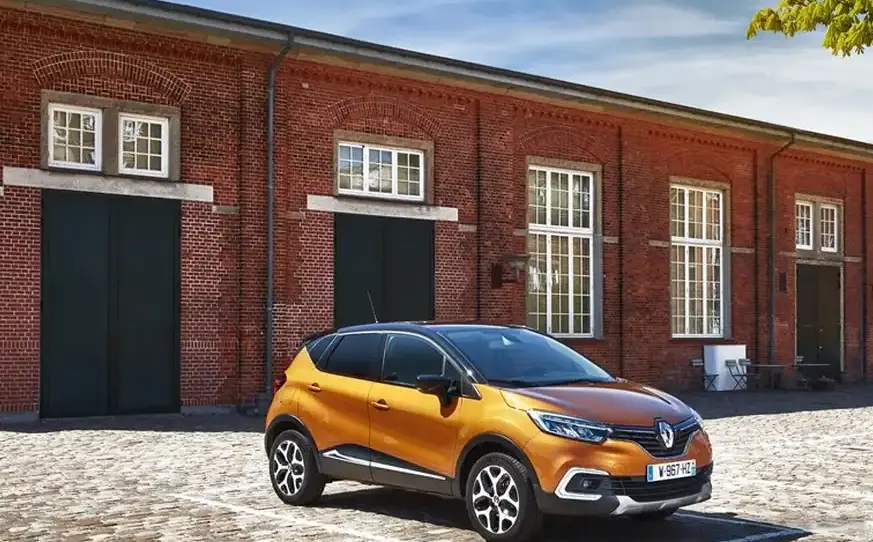
The Renault Captur II (facelift 2024) 1.3 TCe (140 hp) Mild Hybrid represents a significant update to Renault’s popular subcompact crossover. Introduced in April 2024, this variant builds upon the second-generation Captur, offering a blend of fuel efficiency and performance through the integration of mild hybrid technology. Positioned as a mid-range offering within the Captur lineup, it slots between the base engine options and the more powerful, non-hybridized variants. The facelift brought styling revisions and updated technology, aiming to maintain the Captur’s appeal in a competitive segment. This model is primarily targeted towards the European market, where demand for fuel-efficient and versatile small crossovers is high.
Technical Specifications
| Brand | Renault |
| Model | Captur |
| Generation | Captur II (facelift 2024) |
| Type (Engine) | 1.3 TCe (140 Hp) Mild Hybrid |
| Start of production | April, 2024 |
| Powertrain Architecture | MHEV (Mild Hybrid Electric Vehicle) |
| Body type | Crossover |
| Seats | 5 |
| Doors | 5 |
| Combined fuel consumption (WLTP) | 5.8-5.9 l/100 km (40.6 – 39.9 US mpg) |
| CO2 emissions (WLTP) | 133 g/km |
| Fuel Type | Petrol (Gasoline) |
| Acceleration 0 – 100 km/h | 10.4 sec |
| Acceleration 0 – 62 mph | 10.4 sec |
| Acceleration 0 – 60 mph | 9.9 sec |
| Emission standard | Euro 6d |
| Battery voltage | 12 V |
| Battery technology | Lithium-ion (Li-Ion) |
| Battery location | Below the floor, under the front seats |
| Power | 140 Hp |
| Torque | 260 Nm @ 3500 rpm (191.77 lb.-ft. @ 3500 rpm) |
| Engine layout | Front, Transverse |
| Engine Model/Code | H5H 490 |
| Engine displacement | 1330 cm3 (81.16 cu. in.) |
| Number of cylinders | 4 |
| Engine configuration | Inline |
| Number of valves per cylinder | 4 |
| Fuel injection system | Direct injection |
| Engine aspiration | Turbocharger, Intercooler |
| Engine oil capacity | 5.4 l (5.71 US qt | 4.75 UK qt) |
| Coolant | 7.5 l (7.93 US qt | 6.6 UK qt) |
| Trunk (boot) space – minimum | 422 l (14.9 cu. ft.) |
| Trunk (boot) space – maximum | 1596 l (56.36 cu. ft.) |
| Length | 4239 mm (166.89 in.) |
| Width with mirrors folded | 1797 mm (70.75 in.) |
| Width including mirrors | 2003 mm (78.86 in.) |
| Height | 1575 mm (62.01 in.) |
| Wheelbase | 2639 mm (103.9 in.) |
| Front track | 1562 mm (61.5 in.) |
| Rear (Back) track | 1547 mm (60.91 in.) |
| Front overhang | 883 mm (34.76 in.) |
| Rear overhang | 717 mm (28.23 in.) |
| Ride height (ground clearance) | 169 mm (6.65 in.) |
| Drivetrain Architecture | Front wheel drive, MHEV |
| Number of gears and type of gearbox | 6 gears, manual transmission |
| Front suspension | Independent type McPherson |
| Rear suspension | Elastic beam |
| Front brakes | Ventilated discs |
| Rear brakes | Drum |
| Assisting systems | ABS (Anti-lock braking system) |
| Steering type | Steering rack and pinion |
| Power steering | Electric Steering |
| Tires size | 215/60 R17 |
| Wheel rims size | 17 |
Powertrain & Engine Architecture
At the heart of the Captur II 1.3 TCe Mild Hybrid lies the Renault H5H 490 engine, a 1.3-liter turbocharged inline-four cylinder gasoline engine. This engine benefits from direct fuel injection and an intercooler, contributing to its 140 horsepower output and 260 Nm (191.77 lb.-ft.) of torque at 3500 rpm. The “Mild Hybrid” designation indicates the presence of a 48-volt starter-generator system. This system assists the engine during acceleration, allowing for smoother starts and improved fuel economy. It also enables a start/stop system that operates more seamlessly than traditional systems. The engine is paired with a 6-speed manual transmission, delivering power to the front wheels. The mild hybrid system doesn’t allow for electric-only driving, but it recovers energy during braking and deceleration, storing it in a small lithium-ion battery located under the front seats.
Driving Characteristics
The 1.3 TCe Mild Hybrid powertrain delivers a balanced driving experience. While not exceptionally quick, the 0-60 mph time of around 9.9 seconds is adequate for everyday driving. The turbocharger provides a noticeable boost in power, making overtaking maneuvers relatively effortless. The 6-speed manual transmission offers precise shifts, and the mild hybrid system contributes to a smoother overall feel. Compared to higher-output Captur variants, this version prioritizes fuel efficiency over outright performance. The manual gearbox, while engaging for some drivers, may be less convenient than the automatic options available on other trims. The mild hybrid system does help to mitigate some of the turbo lag often associated with smaller displacement turbocharged engines.
Equipment & Trim Levels
The 1.3 TCe Mild Hybrid trim typically includes a generous level of standard equipment. This often encompasses features such as a 7-inch touchscreen infotainment system with Apple CarPlay and Android Auto compatibility, manual air conditioning, cruise control, and a suite of safety systems including automatic emergency braking and lane departure warning. Interior upholstery is typically cloth, with options for upgraded materials available. Higher trim levels within the 1.3 TCe range may add features like a larger touchscreen, automatic climate control, rear parking sensors, and a reversing camera. Optional extras often include a panoramic sunroof, upgraded audio systems, and various styling packages.
Chassis & Braking
The Renault Captur II utilizes a McPherson strut suspension setup at the front and an elastic beam suspension at the rear. This configuration provides a comfortable ride quality, well-suited for urban driving conditions. The front brakes are ventilated discs, offering good stopping power, while the rear brakes are drums. This combination is typical for vehicles in this weight class and price range. The electric power steering provides light and precise steering feel. The chassis is tuned to prioritize comfort and stability over sporty handling. Stabilizer bars are fitted to both the front and rear axles to reduce body roll during cornering.
Market Reception & Comparison
The Renault Captur II 1.3 TCe Mild Hybrid has been generally well-received by automotive critics. Its fuel efficiency, comfortable ride, and practical interior space are frequently praised. However, some reviewers have noted that the engine can feel strained when fully loaded or driving uphill. Compared to the non-hybrid 1.3 TCe variants, the mild hybrid version offers improved fuel economy and a smoother start/stop experience. Against competitors like the Volkswagen T-Cross, Peugeot 2008, and Opel/Vauxhall Mokka, the Captur offers a competitive package in terms of price, features, and fuel efficiency. The manual transmission may be a drawback for some buyers compared to the automatic options offered by rivals.
Legacy
The Renault Captur II 1.3 TCe Mild Hybrid represents a step towards electrification for the popular crossover. While the mild hybrid system is a relatively simple implementation, it demonstrates Renault’s commitment to reducing emissions and improving fuel economy. The long-term reliability of the H5H engine and the mild hybrid components remains to be fully assessed, but early reports suggest a generally positive outlook. As the used car market matures, this variant is likely to become a popular choice for buyers seeking a fuel-efficient and practical small crossover with a reasonable price tag. The integration of mild hybrid technology positions this Captur as a transitional model, bridging the gap between traditional gasoline engines and full hybrid or electric vehicles.