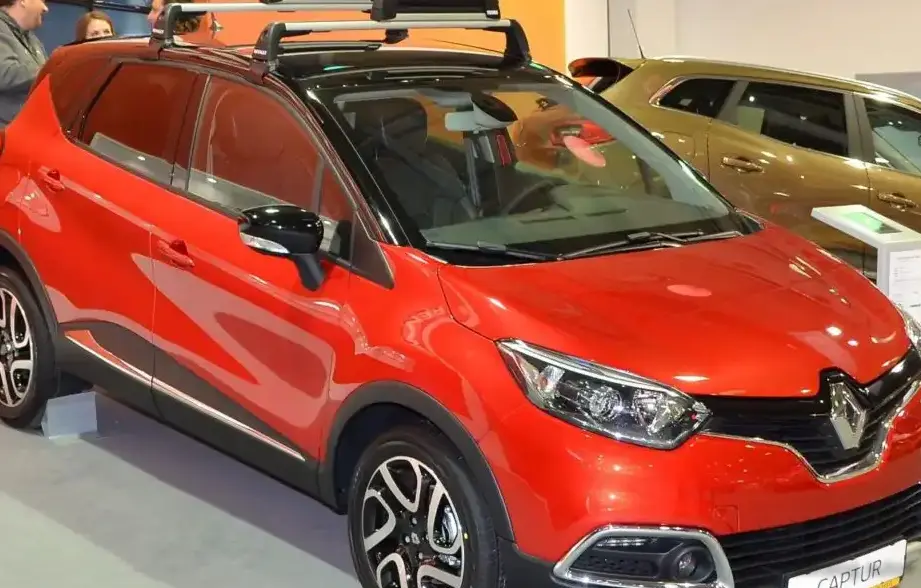
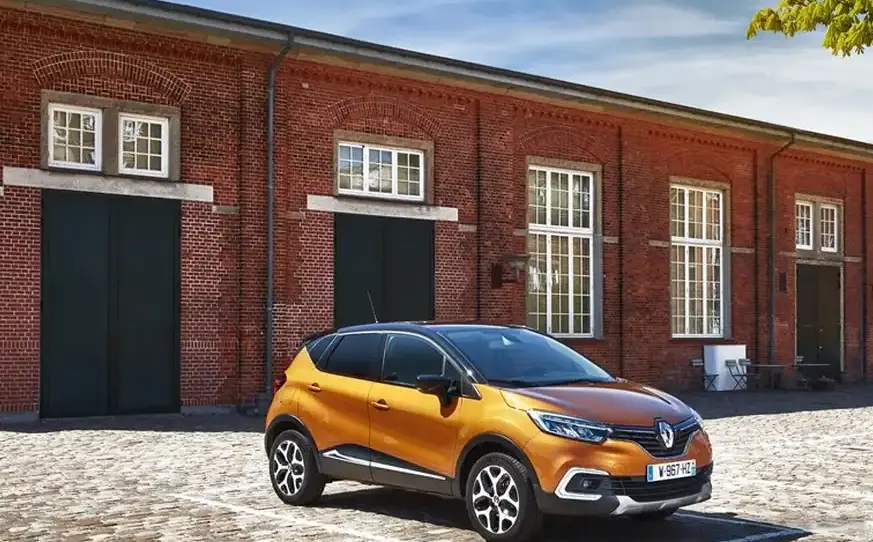
The Renault Captur II (facelift 2024) 1.6 E-Tech Full Hybrid Multi-Mode represents Renault’s continued push into electrified powertrains within its popular subcompact crossover segment. Introduced in April 2024, this variant builds upon the second-generation Captur (released in 2019), incorporating styling updates and, crucially, a more sophisticated hybrid system. Positioned as a mid-range offering within the Captur lineup, it aims to balance fuel efficiency with adequate performance for everyday driving. The Captur, originally launched in 2013, quickly became a key model for Renault, particularly in Europe, offering a stylish and practical alternative to traditional hatchback options. This facelifted version, and specifically the 1.6 E-Tech, is designed to appeal to buyers seeking lower running costs and reduced emissions without sacrificing the convenience of an automatic transmission.
Technical Specifications
| Brand | Renault |
| Model | Captur |
| Generation | Captur II (facelift 2024) |
| Type (Engine) | 1.6 (143 Hp) E-Tech Full Hybrid Multi-Mode |
| Start of production | April, 2024 |
| Powertrain Architecture | FHEV (Full Hybrid Electric Vehicle) |
| Body type | Crossover |
| Seats | 5 |
| Doors | 5 |
| Combined fuel consumption (WLTP) | 4.7-4.9 l/100 km (50 – 48 US mpg, 60.1 – 57.6 UK mpg, 21.3 – 20.4 km/l) |
| CO2 emissions (WLTP) | 105 g/km |
| Fuel Type | Petrol (Gasoline) |
| Acceleration 0 – 100 km/h | 10 sec |
| Acceleration 0 – 62 mph | 10 sec |
| Acceleration 0 – 60 mph | 9.5 sec |
| Emission standard | Euro 6d |
| Gross battery capacity | 1.2 kWh |
| Battery voltage | 245 V |
| Battery technology | Lithium-ion (Li-Ion) |
| Battery location | Below the floor, under the rear seats |
| Electric motor power | 49 Hp |
| Electric motor location | Front, Transverse |
| System power | 143 Hp |
| System torque | 250 Nm (184.39 lb.-ft.) |
| Engine Power | 94 Hp |
| Power per litre | 58.8 Hp/l |
| Engine Torque | 145 Nm @ 3200 rpm (106.95 lb.-ft. @ 3200 rpm) |
| Engine layout | Front, Transverse |
| Engine Model/Code | H4M 632 |
| Engine displacement | 1598 cm3 (97.52 cu. in.) |
| Number of cylinders | 4 |
| Engine configuration | Inline |
| Number of valves per cylinder | 4 |
| Fuel injection system | Multi-port manifold injection |
| Engine aspiration | Naturally aspirated engine |
| Engine oil capacity | 4.5 l (4.76 US qt | 3.96 UK qt) |
| Trunk (boot) space – minimum | 326 l (11.51 cu. ft.) |
| Trunk (boot) space – maximum | 1458 l (51.49 cu. ft.) |
| Length | 4239 mm (166.89 in.) |
| Width with mirrors folded | 1797 mm (70.75 in.) |
| Width including mirrors | 2003 mm (78.86 in.) |
| Height | 1575 mm (62.01 in.) |
| Wheelbase | 2639 mm (103.9 in.) |
| Front track | 1562 mm (61.5 in.) |
| Rear (Back) track | 1547 mm (60.91 in.) |
| Front overhang | 883 mm (34.76 in.) |
| Rear overhang | 717 mm (28.23 in.) |
| Ride height (ground clearance) | 169 mm (6.65 in.) |
| Drivetrain Architecture | Front wheel drive. FHEV. ICE and electric motor drive front wheels. |
| Drive wheel | Front wheel drive |
| Number of gears and type of gearbox | automatic transmission Multi-Mode |
| Front suspension | Independent type McPherson |
| Rear suspension | Elastic beam |
| Front brakes | Ventilated discs |
| Rear brakes | Drum |
| Assisting systems | ABS (Anti-lock braking system) |
| Steering type | Steering rack and pinion |
| Power steering | Electric Steering |
| Tires size | 215/55 R18; 225/45 R19 |
| Wheel rims size | 18; 19 |
Powertrain & Engine Architecture
The heart of the Captur II 1.6 E-Tech is a combination of a 1.6-liter naturally aspirated inline-four cylinder gasoline engine (code H4M 632) and an electric motor. The gasoline engine produces 94 horsepower, while the electric motor adds another 49 horsepower, resulting in a combined system output of 143 horsepower and 250 Nm (184 lb-ft) of torque. The engine utilizes multi-port fuel injection and is designed for efficiency rather than outright performance. The hybrid system employs a 1.2 kWh lithium-ion battery pack located under the rear seats. Unlike a plug-in hybrid, this system cannot be charged externally; the battery is replenished through regenerative braking and engine operation. The “Multi-Mode” automatic transmission is a unique design, essentially a power-split device that seamlessly blends power from the engine and electric motor. It doesn’t have traditional gears but operates through a combination of planetary gearsets and electronic control, offering a continuously variable-like experience. This transmission is crucial to the system’s efficiency, allowing the engine to operate at its optimal point while the electric motor fills in gaps in torque.
Driving Characteristics
The 1.6 E-Tech Automatic delivers a comfortable and refined driving experience, prioritizing fuel economy over sporty acceleration. The 0-60 mph time of around 9.5 seconds is adequate for everyday driving but won’t provide exhilarating performance. The electric motor provides instant torque, which is particularly noticeable during initial acceleration from a standstill. The Multi-Mode transmission operates smoothly, though it can sometimes feel slightly disconnected compared to a traditional automatic. In typical driving scenarios, the system intelligently switches between electric, gasoline, and combined power modes. The Captur can operate in pure electric mode for short distances at lower speeds, contributing to reduced emissions in urban environments. Compared to the standard 1.3-liter turbocharged gasoline engine offered in other Captur trims, the 1.6 E-Tech provides a more relaxed and refined driving experience, albeit with slightly slower acceleration. The automatic transmission also differentiates it from the available manual gearbox options.
Equipment & Trim Levels
The 1.6 E-Tech Full Hybrid typically comes with a generous level of standard equipment. Features commonly include air conditioning, a touchscreen infotainment system with Apple CarPlay and Android Auto compatibility, rear parking sensors, and a suite of safety features such as automatic emergency braking and lane departure warning. Higher trim levels add features like a larger touchscreen, upgraded upholstery, a panoramic sunroof, and adaptive cruise control. Interior upholstery is typically cloth on base models, with leather options available on higher trims. The dashboard layout is modern and functional, with a focus on ease of use. Optional extras often include a premium audio system and various styling packages.
Chassis & Braking
The Captur II utilizes a McPherson strut front suspension and an elastic beam rear suspension. This setup provides a good balance between ride comfort and handling. The front brakes are ventilated discs, while the rear brakes are drums, a cost-saving measure common in this segment. Electric power steering provides light and precise steering feel. ABS (Anti-lock Braking System) is standard, along with electronic stability control. The suspension is tuned for comfort, absorbing bumps and imperfections in the road effectively. Stabilizer bars are fitted to both the front and rear axles to reduce body roll during cornering.
Market Reception & Comparison
The Renault Captur II 1.6 E-Tech Full Hybrid has been generally well-received by automotive critics, praised for its fuel efficiency and smooth driving experience. However, some reviewers have noted the slightly underwhelming acceleration compared to some competitors. Compared to other Captur trims, the E-Tech version offers significantly better fuel economy, making it an attractive option for drivers who prioritize running costs. Its reliability is still being established, as it’s a relatively new powertrain, but Renault has a generally good reputation for reliability. Competitors in this segment include the Toyota Yaris Hybrid, Hyundai Kona Hybrid, and Kia Niro Hybrid.
Legacy
The Renault Captur II 1.6 E-Tech Full Hybrid represents a significant step forward in Renault’s electrification strategy. The powertrain, while not groundbreaking, offers a practical and efficient solution for urban driving. Its long-term reliability remains to be seen, but the use of proven components and Renault’s commitment to hybrid technology suggest a positive outlook. On the used car market, these models are expected to hold their value well due to their fuel efficiency and the growing demand for hybrid vehicles. The Captur’s success demonstrates the increasing consumer acceptance of hybrid technology as a viable alternative to traditional gasoline and diesel engines.