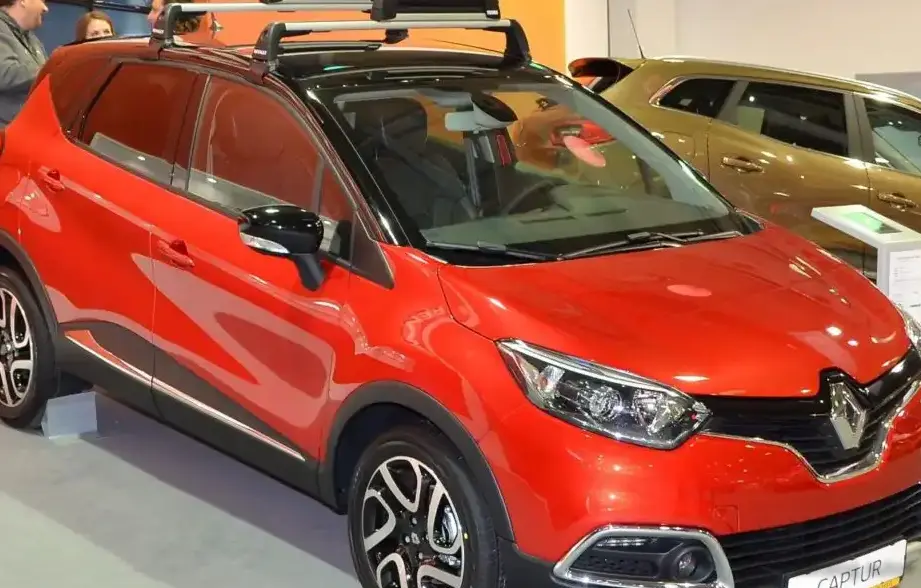
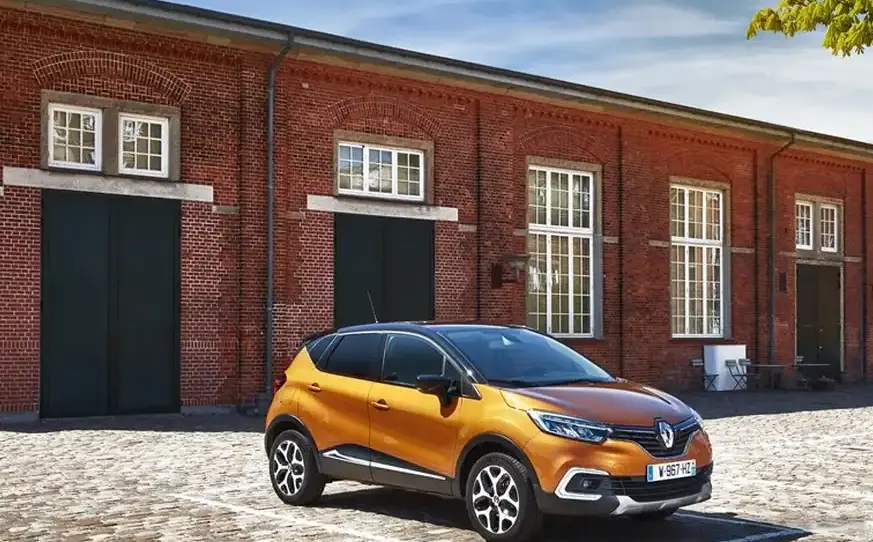
The Renault Captur II (facelift 2024) 1.8 E-Tech Full Hybrid Multi-Mode represents Renault’s continued push towards electrified powertrains within its popular subcompact crossover segment. Introduced in May 2025, this variant builds upon the second-generation Captur (released in 2019), incorporating styling updates and, crucially, a more sophisticated hybrid system. Positioned as a mid-range offering within the Captur lineup, it aims to balance fuel efficiency with a respectable level of performance and features, appealing to buyers seeking a practical and economical urban vehicle. The Captur, since its original introduction in 2013, has become a significant model for Renault, particularly in the European market, where it competes with vehicles like the Peugeot 2008, Volkswagen T-Cross, and Nissan Juke.
Technical Specifications
| Brand | Renault |
| Model | Captur |
| Generation | Captur II (facelift 2024) |
| Type (Engine) | 1.8 (158 Hp) E-Tech Full Hybrid Multi-Mode |
| Start of production | May, 2025 |
| Powertrain Architecture | FHEV (Full Hybrid Electric Vehicle) |
| Body type | Crossover |
| Seats | 5 |
| Doors | 5 |
| Fuel consumption at Low speed (WLTP) | 5.1 l/100 km (46.1 US mpg, 55.4 UK mpg, 19.6 km/l) |
| Fuel consumption at Medium speed (WLTP) | 3.6 l/100 km (65.3 US mpg, 78.5 UK mpg, 27.8 km/l) |
| Fuel consumption at high speed (WLTP) | 4.2 l/100 km (56 US mpg, 67.3 UK mpg, 23.8 km/l) |
| Fuel consumption at very high speed (WLTP) | 5.1 l/100 km (46.1 US mpg, 55.4 UK mpg, 19.6 km/l) |
| Combined fuel consumption (WLTP) | 4.5 l/100 km (52.3 US mpg, 62.8 UK mpg, 22.2 km/l) |
| CO2 emissions (WLTP) | 102 g/km |
| Fuel Type | Petrol (Gasoline) |
| Acceleration 0 – 100 km/h | 8.9 sec |
| Acceleration 0 – 62 mph | 8.9 sec |
| Acceleration 0 – 60 mph | 8.5 sec |
| Maximum speed | 180 km/h (111.85 mph) |
| Weight-to-power ratio | 9.6 kg/Hp, 104.4 Hp/tonne |
| Weight-to-torque ratio | 5.7 kg/Nm, 175 Nm/tonne |
| Gross battery capacity | 1.4 kWh |
| Battery technology | Lithium-ion (Li-Ion) |
| Battery location | Below the floor, under the rear seats |
| Electric motor power | 49 Hp |
| Electric motor location | Front axle, Transverse |
| Electric motor type | Synchronous |
| System power | 158 Hp @ 5350 rpm |
| System torque | 265 Nm @ 3600 rpm (195.45 lb.-ft. @ 3600 rpm) |
| Engine Power | 109 Hp |
| Power per litre | 60.9 Hp/l |
| Engine displacement | 1789 cm3 (109.17 cu. in.) |
| Number of cylinders | 4 |
| Engine configuration | Inline |
| Number of valves per cylinder | 4 |
| Fuel injection system | Multi-port manifold injection |
| Engine aspiration | Naturally aspirated engine |
| Engine systems | Start & Stop System, Particulate filter |
| Kerb Weight | 1514 kg (3337.8 lbs.) |
| Max. weight | 1890 kg (4166.74 lbs.) |
| Max load | 376 kg (828.94 lbs.) |
| Trunk (boot) space – minimum | 326-440 l (11.51 – 15.54 cu. ft.) |
| Trunk (boot) space – maximum | 1276 l (45.06 cu. ft.) |
| Fuel tank capacity | 48 l (12.68 US gal, 10.56 UK gal) |
| Max. roof load | 80 kg (176.37 lbs.) |
| Permitted trailer load with brakes (12%) | 1000 kg (2204.62 lbs.) |
| Permitted trailer load without brakes | 720 kg (1587.33 lbs.) |
| Permitted towbar download | 75 kg (165.35 lbs.) |
| Length | 4239 mm (166.89 in.) |
| Width | 1797 mm (70.75 in.) |
| Width including mirrors | 2003 mm (78.86 in.) |
| Height | 1575 mm (62.01 in.) |
| Wheelbase | 2639 mm (103.9 in.) |
| Front track | 1562 mm (61.5 in.) |
| Rear (Back) track | 1547 mm (60.91 in.) |
| Front overhang | 883 mm (34.76 in.) |
| Rear overhang | 717 mm (28.23 in.) |
| Ride height (ground clearance) | 169 mm (6.65 in.) |
| Minimum turning circle (turning diameter) | 11.1 m (36.42 ft.) |
| Drivetrain Architecture | The Internal combustion engine (ICE) and electric motor drive the front wheels of the car with the ability to work in full electric or mixed mode. |
| Drive wheel | Front wheel drive |
| Number of gears and type of gearbox | automatic transmission Multi-Mode |
| Front suspension | Independent type McPherson |
| Rear suspension | Elastic beam |
| Front brakes | Ventilated discs |
| Rear brakes | Drum |
| Assisting systems | ABS (Anti-lock braking system) |
| Steering type | Steering rack and pinion |
| Power steering | Electric Steering |
| Tires size | 215/60 R17; 215/55 R18; 225/45 R19 |
| Wheel rims size | 17; 18; 19 |
Powertrain & Engine Architecture
The 1.8 E-Tech Full Hybrid Multi-Mode powertrain is a key feature of this Captur variant. It combines a 1.6-liter naturally aspirated four-cylinder gasoline engine (producing 109 hp) with two electric motors – a 49 hp electric motor and a high-voltage starter/generator unit. The engine code is not publicly available, but it is a member of the HR16 family of engines used by Renault-Nissan-Mitsubishi Alliance. The system utilizes a multi-mode automatic transmission, which Renault refers to as “Claw” technology. This transmission doesn’t have a traditional gear selector; instead, it intelligently blends power from the engine and electric motors, offering a seamless driving experience. The fuel injection system is multi-port, and the engine incorporates a particulate filter to reduce emissions. The 1.4 kWh lithium-ion battery is positioned under the rear seats, minimizing impact on passenger space.
Driving Characteristics
The 1.8 E-Tech delivers a surprisingly refined driving experience. The combined system output of 158 hp and 265 Nm (195 lb-ft) of torque provides adequate acceleration, with a 0-60 mph time of around 8.5 seconds. The electric motors provide instant torque, making city driving particularly smooth and responsive. The Multi-Mode transmission operates largely independently, optimizing efficiency and minimizing engine noise. Compared to the standard 1.3-liter turbocharged gasoline engine, the hybrid offers superior fuel economy, especially in urban environments. However, it doesn’t provide the same level of outright performance as the more powerful gasoline variants. The focus is on efficiency and ease of driving rather than sporty handling.
Equipment & Trim Levels
The 1.8 E-Tech Full Hybrid typically comes with a generous level of standard equipment. This includes features like a 7-inch touchscreen infotainment system with Apple CarPlay and Android Auto compatibility, automatic climate control, rear parking sensors, and a suite of safety features such as automatic emergency braking and lane departure warning. Higher trim levels add features like a larger touchscreen, a digital instrument cluster, adaptive cruise control, and premium upholstery. Interior materials are generally of good quality, with a focus on practicality and durability. Optional extras include a panoramic sunroof, a premium audio system, and various styling packages.
Chassis & Braking
The Captur II utilizes a McPherson strut front suspension and an elastic beam rear suspension. This setup provides a comfortable ride quality, well-suited for everyday driving. The 1.8 E-Tech variant, due to its added weight from the hybrid system, may have slightly stiffer spring rates compared to the standard gasoline models. Braking duties are handled by ventilated discs at the front and drum brakes at the rear. ABS (Anti-lock Braking System) is standard. The electric motors also contribute to regenerative braking, helping to recharge the battery and improve efficiency.
Market Reception & Comparison
The Renault Captur II 1.8 E-Tech Full Hybrid has been well-received by critics for its fuel efficiency and smooth driving experience. It offers a compelling alternative to traditional gasoline-powered crossovers, particularly for drivers who primarily commute in urban areas. Compared to the 1.3-liter turbocharged gasoline version, the hybrid offers significantly better fuel economy, although it comes at a higher price point. The hybrid also provides a quieter and more refined driving experience. Reliability reports are still emerging, but Renault has a generally good reputation for build quality and durability.
Legacy
The 1.8 E-Tech Full Hybrid powertrain represents Renault’s commitment to electrification and its efforts to meet increasingly stringent emissions regulations. While long-term reliability data is still being gathered, the hybrid system is expected to be durable and relatively maintenance-free. The Captur II 1.8 E-Tech is likely to hold its value well in the used car market, as demand for fuel-efficient vehicles continues to grow. It serves as an important stepping stone towards Renault’s future plans for fully electric vehicles.