
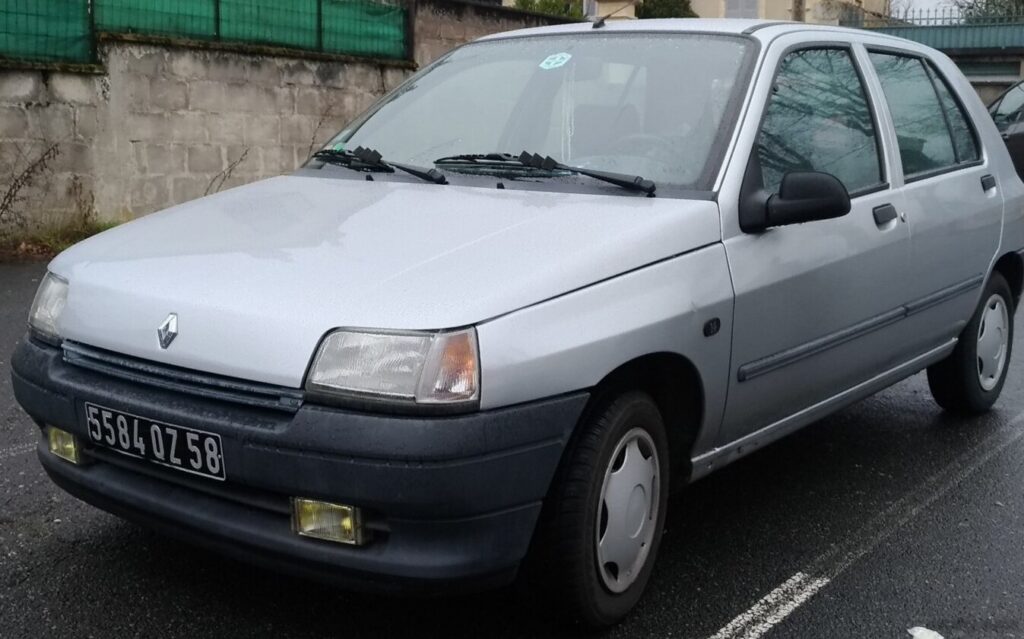
The Renault Clio I (Phase I) 1.4 i, producing 80 horsepower, was a mainstay of the first-generation Clio lineup, produced from 1990 to 1995. This variant occupied the entry to mid-level position within the range, offering a balance of affordability, practicality, and reasonable performance. The Clio I, internally designated the B/C57 platform, represented Renault’s significant step into the supermini segment, replacing the aging Renault 5. The 1.4 i model was particularly important for broadening the Clio’s appeal beyond the base models, attracting buyers seeking a slightly more refined and capable vehicle.
The 1.4 i (80 hp) Engine and Powertrain
The heart of the Clio I 1.4 i was the Renault E6J engine, a 1390cc inline-four cylinder gasoline engine. This engine utilized a single-point fuel injection system, a common feature for vehicles of this era, delivering fuel to the intake manifold rather than directly into the cylinders. The E6J featured an overhead camshaft (OHC) valvetrain with two valves per cylinder. Its 9.5:1 compression ratio contributed to its modest power output. The engine produced 80 horsepower at 5750 rpm and 109 Nm (80.39 lb-ft) of torque at 2750 rpm. While not a powerhouse, the E6J was known for its relative reliability and ease of maintenance.
The 1.4 i engine was typically paired with a five-speed manual transmission, however, a three-speed automatic transmission was also offered, though less common. The automatic transmission was a Jatco unit, known for its durability but also for its relatively slow shift times and tendency to hunt for gears, especially under load. The automatic version significantly impacted performance, as detailed in the driving characteristics section.
Engine Code Specifics
The E6J engine code is crucial for identifying this specific variant. Early versions of the E6J were known to have some minor issues with the throttle position sensor, but these were largely addressed in later production years. The engine’s relatively simple design made it accessible for amateur mechanics, contributing to its longevity in the hands of private owners. Regular maintenance, including oil changes and timing belt replacements, were essential for ensuring the E6J’s continued operation.
Driving Characteristics
The driving experience in the Clio I 1.4 i differed considerably depending on the transmission. The five-speed manual version offered a reasonably engaging drive, with acceptable acceleration for urban and suburban environments. 0-60 mph was achievable in approximately 10.4 seconds, and the car could reach a top speed of 175 km/h (108.74 mph). The manual gearbox allowed drivers to keep the engine in its optimal power band, maximizing performance.
However, the three-speed automatic transmission significantly hampered performance. Acceleration was noticeably slower, with 0-60 mph times extending to around 10.9 seconds. The automatic’s limited number of gears meant the engine often operated at higher rpm, resulting in increased fuel consumption and a less refined driving experience. The automatic version was primarily targeted at drivers prioritizing convenience over performance. The gear ratios were optimized for fuel economy rather than spirited driving.
Equipment & Trim Levels
The Clio I 1.4 i typically came equipped with basic but functional features. Standard equipment included cloth upholstery, a basic dashboard layout with analog gauges, and manual windows and door locks. Power steering was often an optional extra, as was air conditioning. The interior was designed with practicality in mind, offering reasonable space for passengers and luggage. Trim levels varied slightly depending on the market, but generally, the 1.4 i sat between the base “Campus” and the more luxurious “RSi” models. Optional extras included a sunroof, upgraded stereo systems, and alloy wheels.
Chassis & Braking
The Clio I utilized a front-wheel-drive layout with a relatively simple suspension setup. The front suspension consisted of MacPherson strut springs, while the rear employed a torsion beam axle. This configuration provided a comfortable ride, although handling was not particularly sporty. Braking was typically accomplished with ventilated discs on the front wheels and drum brakes on the rear. ABS (Anti-lock Braking System) was available as an optional extra, enhancing safety in emergency braking situations. The curb weight of approximately 850 kg (1873.93 lbs) contributed to the car’s relatively nimble handling.
Market Reception & Comparison
The Clio I 1.4 i was generally well-received by automotive critics as a practical and affordable supermini. It was praised for its fuel efficiency, reliability, and ease of driving. However, the engine was often criticized for its lack of power, particularly when paired with the automatic transmission. Compared to other trims in the Clio lineup, the 1.4 i offered a compromise between performance and economy. The more powerful 1.8-liter and 2.0-liter engines provided significantly more exhilarating performance, but at a higher price point and with increased fuel consumption. The diesel variants, such as the 1.9 TDI, offered superior fuel economy but lacked the refinement of the gasoline engines.
Technical Specifications
| Engine Type | Inline-4, Naturally Aspirated |
| Engine Displacement | 1390 cm³ (84.82 cu in) |
| Engine Code | E6J |
| Power Output | 80 hp @ 5750 rpm |
| Torque Output | 109 Nm (80.39 lb-ft) @ 2750 rpm |
| Fuel Injection | Single-Point |
| Compression Ratio | 9.5:1 |
| Transmission | 5-Speed Manual or 3-Speed Automatic |
| Drive Wheels | Front |
| Curb Weight | 850 kg (1873.93 lbs) |
| Maximum Speed | 175 km/h (108.74 mph) |
| 0-100 km/h | 10.9 seconds (Automatic), 10.4 seconds (Manual – calculated) |
| Fuel Consumption (Urban) | 8.3 l/100 km (28.3 US mpg) |
| Fuel Consumption (Extra Urban) | 5.2 l/100 km (45.2 US mpg) |
| Fuel Consumption (Combined) | 6.9 l/100 km (34.1 US mpg) |
| Fuel Tank Capacity | 43 l (11.36 US gal) |
| Trunk Space (Minimum) | 265 l (9.36 cu ft) |
| Trunk Space (Maximum) | 1055 l (37.26 cu ft) |
Legacy
The Renault Clio I 1.4 i, particularly the manual transmission version, has proven to be a relatively reliable and durable vehicle. The E6J engine, while not particularly powerful, is known for its longevity when properly maintained. Today, these cars are increasingly sought after by classic car enthusiasts and collectors. The automatic transmission versions, while less desirable due to their slower performance, remain affordable and practical transportation options. Parts availability is generally good, although some specific components may be becoming increasingly difficult to find. The Clio I 1.4 i represents a significant milestone in Renault’s history, establishing the Clio as a major player in the European supermini market and laying the foundation for future generations of the popular hatchback.
