
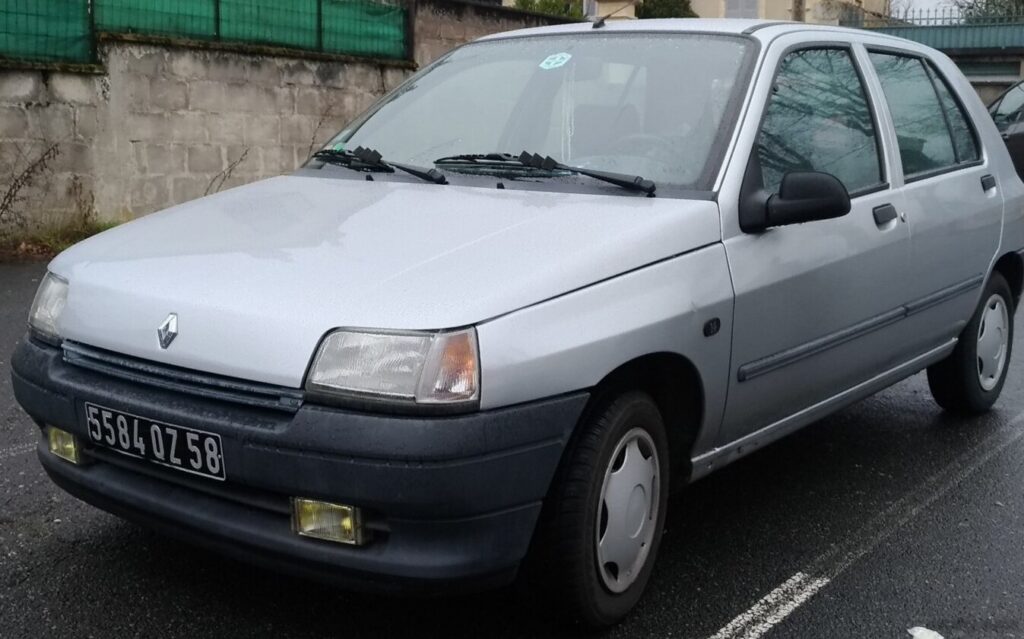
The Renault Clio I (Phase I) 1.4 i RT, producing 75 horsepower, was a mainstay of the first-generation Clio lineup, manufactured from 1991 to 1998. This variant occupied a crucial mid-range position within the broader Clio I range, offering a balance between affordability, fuel efficiency, and practicality. It was positioned above the base-level 1.2-liter models and below the more performance-oriented 1.8-liter and diesel options. The Clio I, internally designated the B/C53 platform, represented a significant departure for Renault, moving towards a more modern and rounded design compared to its predecessors like the Renault 5.
Powertrain & Engine Architecture
The 1.4 i RT variant was powered by the Renault E6J engine, a 1390cc (84.82 cubic inches) inline-four cylinder gasoline engine. This engine featured a single overhead camshaft (OHC) valvetrain with two valves per cylinder. The E6J engine utilized a single-point fuel injection system, a common technology for the early 1990s, delivering fuel into the intake manifold rather than directly into the combustion chamber. This system, while less efficient than later multi-point injection systems, contributed to the engine’s simplicity and reliability. The engine produced 75 hp at 5750 rpm and 107 Nm (78.92 lb-ft) of torque at 3500 rpm.
The 1.4 i RT was typically paired with a five-speed manual transmission, however, an optional three-speed automatic transmission was available. This automatic gearbox, while offering convenience, was known for its relatively slow shift times and tendency to hunt for gears, particularly under heavy acceleration. The automatic transmission impacted the overall performance and fuel economy compared to the manual version.
Engine Specifications
Key engine specifications included a compression ratio of 9.5:1 and a bore and stroke of 75.8 mm (2.98 in) and 77 mm (3.03 in) respectively. The engine required 4 liters (4.23 US quarts) of engine oil, specified to Renault’s standards for the period, and 5.2 liters (5.49 US quarts) of coolant. The engine’s design prioritized durability and ease of maintenance, making it a relatively straightforward unit for mechanics to service.
Driving Characteristics
The Clio 1.4 i RT, particularly in automatic transmission guise, offered a comfortable but unhurried driving experience. Acceleration from 0 to 62 mph (0-100 km/h) took approximately 11.3 seconds, and it achieved a maximum speed of 108.74 mph (175 km/h). Compared to the manual transmission version, the automatic suffered a slight performance penalty due to the transmission’s inefficiencies. The power delivery was relatively linear, with peak torque available at 3500 rpm, providing adequate pulling power for everyday driving situations. However, overtaking maneuvers required careful planning, and the engine could feel strained when pushed hard.
The automatic transmission’s gear ratios were optimized for fuel economy rather than outright performance. The first gear was relatively short, providing decent acceleration from a standstill, but the higher gears were spaced to prioritize cruising efficiency. This resulted in a noticeable drop in engine speed when shifting into higher gears, contributing to a quieter and more relaxed driving experience on the highway.
Equipment & Trim Levels
The “RT” designation indicated a mid-level trim package. Standard equipment on the 1.4 i RT typically included features such as power steering, central locking, and a basic stereo system. Interior upholstery was usually cloth, with a simple and functional dashboard layout. Optional extras included features like electric windows, a sunroof, and upgraded audio systems. The interior plastics were durable but lacked the refinement found in more expensive vehicles.
The 3-door and 5-door body styles were both available for the 1.4 i RT, offering varying levels of practicality. The 5-door version provided easier access to the rear seats, making it a more family-friendly option. The trunk space ranged from 265 liters (9.36 cubic feet) with the rear seats up to 1055 liters (37.26 cubic feet) with the rear seats folded down, providing ample space for luggage and cargo.
Chassis & Braking
The Clio I utilized a front-engine, front-wheel-drive layout. The front suspension consisted of a MacPherson strut setup, while the rear suspension employed a torsion beam axle. This configuration provided a reasonable balance between ride comfort and handling. The steering was rack and pinion, offering precise and responsive control. The 1.4 i RT models were equipped with ventilated disc brakes on the front wheels and drum brakes on the rear wheels. An Anti-lock Braking System (ABS) was available as an optional extra, enhancing braking performance and safety.
The curb weight of the 1.4 i RT was approximately 850 kg (1873.93 lbs), contributing to its relatively nimble handling. The tires were typically 165/65 R13 S size, mounted on 13-inch steel wheels. The suspension was tuned for comfort, resulting in a slightly softer ride compared to the more performance-oriented Clio variants.
Market Reception & Comparison
The Clio 1.4 i RT was generally well-received by automotive critics as a practical and affordable small car. It was praised for its fuel efficiency, reliability, and comfortable ride. However, the automatic transmission was often criticized for its sluggish performance. Compared to the 1.2-liter models, the 1.4 i RT offered a noticeable improvement in performance, making it a more suitable choice for drivers who frequently traveled on highways or carried passengers. In contrast to the 1.8-liter and diesel versions, the 1.4 i RT was more economical to run and maintain, appealing to a wider range of buyers.
Fuel economy figures were respectable for the time, with combined fuel consumption averaging 6.4 l/100 km (36.8 US mpg, 44.1 UK mpg). This made it a competitive option in the small car segment. Reliability was generally good, with the E6J engine proving to be a durable and long-lasting unit.
Technical Specifications
| Brand | Renault |
| Model | Clio I (Phase I) |
| Type | 1.4 i RT (75 Hp) |
| Start of production | 1991 |
| End of production | 1998 |
| Engine Displacement | 1390 cm3 (84.82 cu. in.) |
| Engine Layout | Inline-4 |
| Fuel Type | Petrol (Gasoline) |
| Power | 75 Hp @ 5750 rpm |
| Torque | 107 Nm @ 3500 rpm (78.92 lb.-ft. @ 3500 rpm) |
| Compression Ratio | 9.5:1 |
| Fuel Consumption (Urban) | 7 l/100 km (33.6 US mpg, 40.4 UK mpg) |
| Fuel Consumption (Extra Urban) | 5 l/100 km (47 US mpg, 56.5 UK mpg) |
| Fuel Consumption (Combined) | 6.4 l/100 km (36.8 US mpg, 44.1 UK mpg) |
| Acceleration 0-100 km/h | 11.3 sec |
| Maximum Speed | 175 km/h (108.74 mph) |
| Kerb Weight | 850 kg (1873.93 lbs) |
| Max. Weight | 1295 kg (2854.99 lbs) |
| Fuel Tank Capacity | 43 l (11.36 US gal, 9.46 UK gal) |
| Trunk Space (Min) | 265 l (9.36 cu. ft.) |
| Trunk Space (Max) | 1055 l (37.26 cu. ft.) |
Legacy
The Renault Clio I 1.4 i RT, particularly with the automatic transmission, has become a relatively affordable and accessible classic car in the used market. The E6J engine is known for its durability, and with proper maintenance, it can continue to provide reliable service for many years. However, finding parts for the automatic transmission can be challenging, and the transmission itself may require more frequent servicing than the manual version. The Clio I 1.4 i RT remains a popular choice for enthusiasts and collectors seeking a simple, practical, and affordable classic hatchback.
The 1.4 i RT variant represents a significant chapter in Renault’s history, demonstrating the company’s commitment to producing well-rounded and accessible vehicles. Its blend of affordability, fuel efficiency, and practicality made it a popular choice among European drivers in the 1990s, and it continues to hold a nostalgic appeal for many today.
