
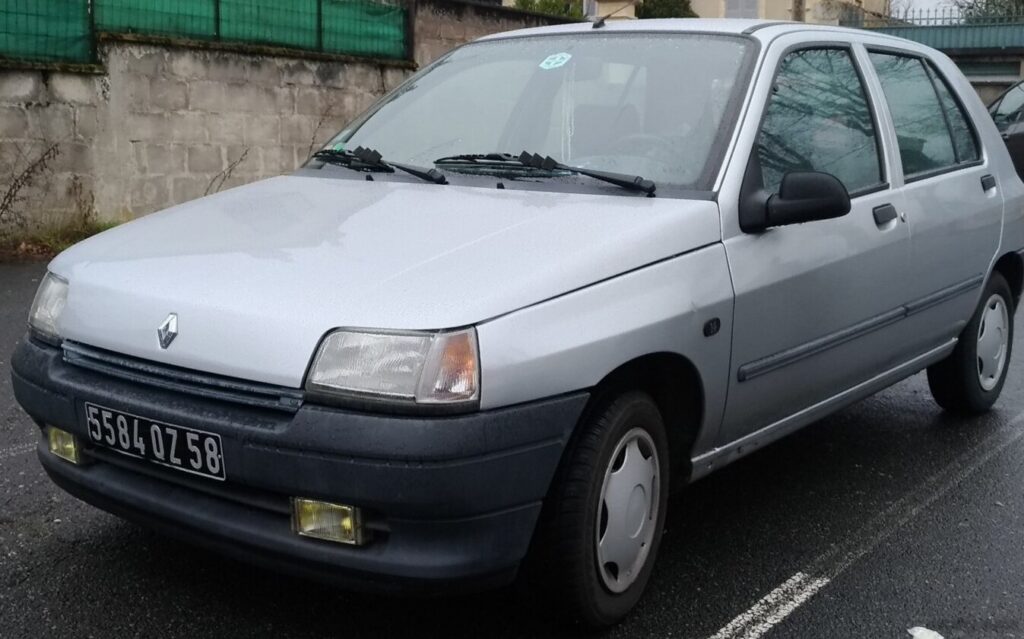
The Renault Clio I (Phase I) 1.8 i, produced between 1990 and 1995, represented a significant step up in performance and refinement for the Clio range. Positioned as the upper-mid-range offering within the Phase I lineup, it catered to buyers seeking more power than the base 1.1 and 1.4 liter engines, but without the cost premium of the later Renaultsport models. Built on the 1HX0/A3 platform, the 1.8 i aimed to provide a balance of practicality, economy, and driving enjoyment in the competitive European supermini segment. This variant was available in both 3-door and 5-door hatchback configurations.
Powertrain & Engine Architecture
The heart of the Clio 1.8 i is the Renault F3P engine, an inline four-cylinder, naturally aspirated gasoline engine displacing 1794 cc (109.48 cubic inches). This engine utilized a single-point fuel injection system, a common feature for the era, delivering fuel to the intake manifold rather than directly into the cylinders. The F3P engine featured an overhead camshaft (OHC) valvetrain with two valves per cylinder. The compression ratio was set at 9.7:1. Engine output was rated at 88 horsepower (hp) at 5750 rpm and 145 Newton-meters (106.95 lb-ft) of torque at 2750 rpm.
The 1.8 i was primarily offered with a five-speed manual transmission. However, a four-speed automatic transmission was also available, though less common. The automatic transmission, a Renault-sourced unit, was designed for smooth operation and ease of use, prioritizing comfort over outright performance. The gear ratios were tailored to provide adequate acceleration and cruising ability, but the automatic version inevitably resulted in some power loss compared to the manual.
Engine Code Variations
While the F3P designation is common, slight variations existed depending on the specific market and year of production. These variations primarily concerned minor adjustments to the engine management system to meet local emissions regulations. However, the core engine architecture remained consistent throughout the production run.
Driving Characteristics
The Clio 1.8 i offered a noticeable performance improvement over the lower-displacement models. Acceleration from 0 to 62 mph (0-100 km/h) took approximately 9.9 seconds, with a top speed of 114.95 mph (185 km/h). The engine provided a reasonably responsive feel, particularly in the mid-range, making it suitable for both urban driving and longer journeys. The manual transmission allowed drivers to fully exploit the engine’s power, while the automatic version offered a more relaxed driving experience.
Compared to the manual version, the automatic Clio 1.8 i felt somewhat slower and less engaging. The automatic transmission’s shift points were programmed for economy, which sometimes resulted in the engine bogging down during acceleration. The weight-to-power ratio of 10.8 kg/hp, while respectable for the time, was higher with the automatic transmission due to the added weight of the gearbox itself. The 1.8 i was generally considered more refined and quieter than the smaller-engined Clios, offering a more comfortable ride.
Equipment & Trim Levels
The Clio 1.8 i typically came equipped with a higher level of standard features than the base models. These included central locking, electric front windows, and a basic stereo system. Interior upholstery was generally cloth, with options for upgraded materials available. The dashboard layout was functional and straightforward, typical of cars from the early 1990s. Optional extras included a sunroof, alloy wheels, and upgraded sound systems.
Trim levels varied depending on the market. In some regions, the 1.8 i was offered in a single, well-equipped trim, while in others, there were further options for customization. The availability of features like air conditioning and power steering depended on the specific market and the year of production.
Chassis & Braking
The Clio I utilized a relatively simple chassis design. Front suspension consisted of MacPherson struts, while the rear employed a torsion beam setup. This configuration provided a good balance of ride comfort and handling. The 1.8 i models generally featured a slightly thicker front stabilizer bar compared to the lower-spec Clios, improving body control during cornering.
Braking systems varied. Most 1.8 i models were equipped with front disc brakes and rear drum brakes. However, some higher-spec versions featured disc brakes all around. Anti-lock braking system (ABS) was available as an option, enhancing safety and braking performance, particularly on slippery surfaces. The steering system was a rack and pinion setup, providing precise and responsive steering feel.
Market Reception & Comparison
The Clio 1.8 i was generally well-received by automotive critics. It was praised for its lively performance, comfortable ride, and relatively spacious interior. However, some critics noted that the single-point fuel injection system was becoming outdated compared to multi-point injection systems found in some competitor vehicles. Fuel economy was considered reasonable for the time, with combined fuel consumption figures around 30.9 US mpg (37.2 UK mpg).
Compared to other trims in the Clio lineup, the 1.8 i offered a significant performance advantage over the 1.1 and 1.4 liter models. It was a more appealing option for drivers who prioritized power and driving enjoyment. However, it was more expensive to purchase and operate than the smaller-engined Clios. Compared to rivals like the Peugeot 205 and Citroën Saxo, the Clio 1.8 i offered a competitive package in terms of performance, features, and price.
Technical Specifications
| Brand | Renault |
| Model | Clio I (Phase I) |
| Type | 1.8 i (88 Hp) |
| Start of production | 1990 |
| End of production | 1995 |
| Engine Displacement | 1794 cm3 (109.48 cu. in.) |
| Engine Code | F3P |
| Number of Cylinders | 4 |
| Engine Configuration | Inline |
| Fuel Type | Petrol (Gasoline) |
| Power | 88 Hp @ 5750 rpm |
| Torque | 145 Nm @ 2750 rpm (106.95 lb.-ft. @ 2750 rpm) |
| Fuel Consumption (Urban) | 10.5 l/100 km (22.4 US mpg) |
| Fuel Consumption (Extra Urban) | 5.9 l/100 km (39.9 US mpg) |
| Fuel Consumption (Combined) | 7.6 l/100 km (30.9 US mpg) |
| Acceleration 0-100 km/h | 9.9 sec |
| Acceleration 0-62 mph | 9.9 sec |
| Maximum Speed | 185 km/h (114.95 mph) |
| Kerb Weight | 950 kg (2094.39 lbs) |
| Fuel Tank Capacity | 43 l (11.36 US gal) |
| Tire Size | 165/60 R14 |
Legacy
The Renault Clio I 1.8 i, while not a high-performance model, remains a popular choice among classic car enthusiasts. The F3P engine is known for its reliability and relatively simple construction, making it relatively easy to maintain. However, like all cars of this era, rust can be a significant issue, particularly in regions with harsh winters. The availability of spare parts is generally good, although some specific components may be becoming increasingly difficult to find.
In the used car market, the 1.8 i models typically command a slightly higher price than the lower-spec Clios, reflecting their increased performance and equipment levels. The manual transmission versions are generally more sought after by enthusiasts, while the automatic models appeal to buyers seeking a more comfortable and convenient driving experience. The Clio I 1.8 i represents a significant milestone in Renault’s history, establishing the Clio as a popular and versatile supermini.
