
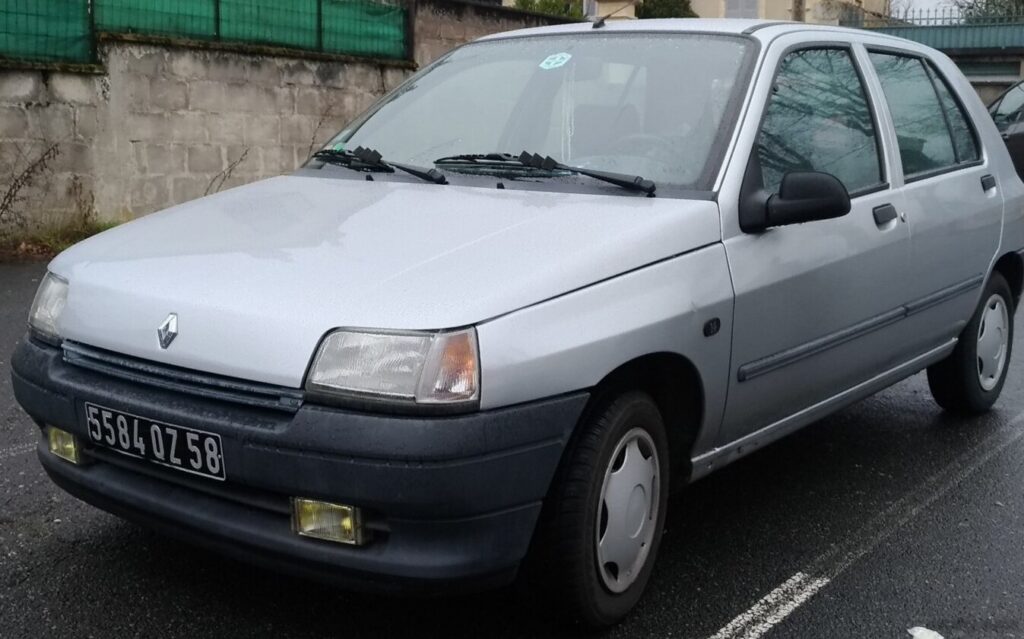
The Renault Clio I (Phase I) 1.8i RSi, produced between 1995 and 1998, represented a performance-oriented variant within the first generation of the Clio (XB0/B series). Positioned as the flagship model in the Phase I lineup, the 1.8i RSi offered a significant power upgrade over the base models, targeting drivers seeking a more engaging and sporty driving experience. It was available in both 3-door and 5-door hatchback configurations, becoming a popular choice for those wanting a practical yet spirited small car. The Clio I platform, co-developed with Peugeot, aimed to provide a modern and efficient package in the supermini segment.
Powertrain & Engine Architecture
The heart of the 1.8i RSi is the Renault F3P engine, an 1794cc (109.48 cubic inches) inline-four cylinder gasoline engine. This engine produced 107 horsepower (hp) at 5500 rpm and 150 Newton-meters (110.63 lb-ft) of torque at 2750 rpm, resulting in a power-to-liter ratio of 59.6 hp/l. The F3P featured a naturally aspirated intake and a multi-port fuel injection system, providing a responsive throttle and relatively smooth power delivery. The engine utilized an overhead camshaft (OHC) valvetrain with two valves per cylinder.
While a five-speed manual transmission was the standard offering for the RSi, a four-speed automatic transmission was also available, albeit less common. This automatic option, while offering convenience, did impact the car’s acceleration and overall driving dynamics. The automatic transmission was a conventional hydraulic unit, lacking the modern electronic controls found in later automatics. The engine oil capacity is 5.3 liters (5.6 US quarts / 4.66 UK quarts), and the coolant capacity is 6.4 liters (6.76 US quarts / 5.63 UK quarts).
Engine Code Specifics
The F3P engine code encompasses several variations, but the version used in the 1.8i RSi is specifically tuned for increased performance. The compression ratio is 9.8:1. The engine’s bore measures 82.7 mm (3.26 inches) and the stroke is 83.5 mm (3.29 inches). The engine’s transverse mounting and front-wheel drive configuration contribute to its compact footprint and efficient packaging within the Clio’s chassis.
Driving Characteristics
The 1.8i RSi, when equipped with the five-speed manual transmission, offered brisk acceleration for its class. The 0-62 mph (0-100 km/h) sprint took approximately 8.9 seconds, with a top speed of 195 km/h (121.17 mph). The automatic transmission version saw a slight decrease in performance, with 0-60 mph times around 8.5 seconds (calculated by Auto-Data.net). The manual gearbox provided precise shifts and allowed drivers to fully exploit the engine’s powerband.
The automatic transmission, while convenient, resulted in noticeable power loss due to the torque converter and less direct connection to the engine. Gear ratios were optimized for a balance between acceleration and fuel economy, but the automatic lacked the responsiveness of the manual. Handling was generally considered good for a supermini, with a relatively firm suspension setup contributing to reduced body roll. The RSi’s weight-to-power ratio of 8.9 kg/hp and weight-to-torque ratio of 6.4 kg/Nm further enhanced its driving dynamics.
Equipment & Trim Levels
The 1.8i RSi came standard with a number of features designed to enhance both comfort and style. Interior appointments included upgraded upholstery, often featuring a sporty pattern, and a more comprehensive instrument cluster. Power steering was standard, providing lighter steering effort at low speeds. The RSi also featured anti-lock brakes (ABS), a significant safety feature for the time. Optional extras included electric windows, central locking, and a sunroof. The dashboard layout was typical of early 1990s Renaults, with a functional and straightforward design. The 3-door version often appealed to younger buyers, while the 5-door offered greater practicality for families.
Chassis & Braking
The Clio I utilized a front strut suspension and a torsion beam rear suspension. This setup provided a good balance between ride comfort and handling. The front suspension featured a stabilizer bar to reduce body roll during cornering. The braking system consisted of ventilated discs on the front wheels and discs on the rear wheels, providing adequate stopping power. The RSi’s chassis was reinforced compared to the base models to handle the increased power output. Tire size was typically 175/60 R14 H, mounted on 14-inch wheel rims.
Market Reception & Comparison
The Renault Clio 1.8i RSi was generally well-received by automotive critics. It was praised for its lively performance, sporty handling, and relatively affordable price. Compared to other trims in the Clio lineup, the RSi offered a significant performance advantage. The base 1.2 and 1.4-liter models were more focused on fuel economy and practicality, while the RSi catered to drivers seeking a more engaging driving experience. Compared to rivals like the Peugeot 205 and Citroën Saxo, the Clio RSi offered a competitive package in terms of performance and features. Fuel consumption was rated at 8.1 l/100 km (29 US mpg / 34.9 UK mpg / 12.3 km/l).
Technical Specifications
| Brand | Renault |
| Model | Clio |
| Generation | Clio I (Phase I) |
| Type (Engine) | 1.8 i RSi (107 Hp) |
| Start of production | 1995 |
| End of production | 1998 |
| Powertrain Architecture | Internal Combustion engine |
| Body type | Hatchback |
| Seats | 5 |
| Doors | 3/5 |
| Fuel consumption (combined) | 8.1 l/100 km |
| Fuel Type | Petrol (Gasoline) |
| Acceleration 0 – 100 km/h | 8.9 sec |
| Acceleration 0 – 62 mph | 8.9 sec |
| Acceleration 0 – 60 mph | 8.5 sec |
| Maximum speed | 195 km/h / 121.17 mph |
| Weight-to-power ratio | 8.9 kg/Hp |
| Weight-to-torque ratio | 6.4 kg/Nm |
| Power | 107 Hp @ 5500 rpm |
| Torque | 150 Nm @ 2750 rpm / 110.63 lb.-ft. @ 2750 rpm |
| Engine layout | Front, Transverse |
| Engine Model/Code | F3P |
| Engine displacement | 1794 cm3 / 109.48 cu. in. |
| Number of cylinders | 4 |
| Engine configuration | Inline |
| Cylinder Bore | 82.7 mm / 3.26 in. |
| Piston Stroke | 83.5 mm / 3.29 in. |
| Compression ratio | 9.8:1 |
| Number of valves per cylinder | 2 |
| Fuel injection system | Multi-port manifold injection |
| Engine aspiration | Naturally aspirated engine |
| Valvetrain | OHC |
| Engine oil capacity | 5.3 l / 5.6 US qt | 4.66 UK qt |
| Coolant | 6.4 l / 6.76 US qt | 5.63 UK qt |
| Kerb Weight | 955 kg / 2105.41 lbs. |
| Max. weight | 1400 kg / 3086.47 lbs. |
| Max load | 445 kg / 981.06 lbs. |
| Trunk (boot) space – minimum | 265 l / 9.36 cu. ft. |
| Trunk (boot) space – maximum | 1055 l / 37.26 cu. ft. |
| Fuel tank capacity | 43 l / 11.36 US gal | 9.46 UK gal |
| Length | 3709 mm / 146.02 in. |
| Width | 1616 mm / 63.62 in. |
| Height | 1395 mm / 54.92 in. |
| Wheelbase | 2472 mm / 97.32 in. |
| Front track | 1324 mm / 52.13 in. |
| Rear (Back) track | 1358 mm / 53.46 in. |
| Drive wheel | Front wheel drive |
| Number of gears and type of gearbox | 5 gears, manual transmission |
| Front suspension | Spring Strut |
| Rear suspension | Torsion |
| Front brakes | Ventilated discs |
| Rear brakes | Disc |
| Assisting systems | ABS (Anti-lock braking system) |
| Steering type | Steering rack and pinion |
| Power steering | Hydraulic Steering |
| Tires size | 175/60 R14 H |
| Wheel rims size | 14 |
Legacy
The Renault Clio I 1.8i RSi remains a popular choice among enthusiasts and collectors. The F3P engine, while not known for exceptional longevity, is generally reliable with proper maintenance. Common issues include oil leaks and occasional sensor failures. The availability of spare parts is good, and the car’s relatively simple mechanical design makes it accessible for DIY repairs. Today, well-maintained examples of the 1.8i RSi command a premium in the used car market, appealing to those seeking a classic French hatchback with a sporty character. The automatic transmission versions are less sought after due to their reduced performance, but still offer a comfortable and practical driving experience.
