
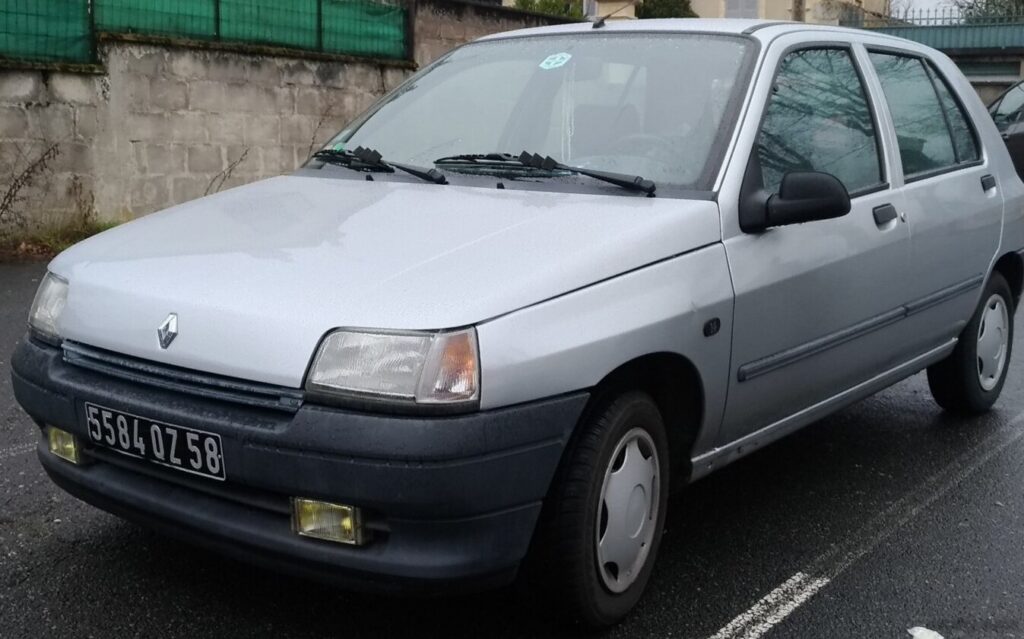
The Renault Clio I (Phase I) 1.8 i RSi, produced between 1994 and 1998, represented a performance-oriented variant within the first generation of the Clio (Type X/B, codenamed B/C57). Positioned as the flagship model in the Phase I range, the 1.8 RSi offered a significant power upgrade over the base models, targeting drivers seeking a more engaging and sporty driving experience. It was available in both 3-door and 5-door hatchback configurations, becoming a popular choice for those wanting a practical yet spirited small car. The Clio I platform, shared with the Renault Mégane I, was a pivotal model for Renault, modernizing their small car offerings and establishing a strong presence in the European supermini segment.
Powertrain & Engine Architecture
The heart of the 1.8 i RSi was the Renault F3P engine, an 1794 cc (109.48 cu. in.) inline-four cylinder gasoline engine. This engine differed significantly from the smaller displacement engines offered in the standard Clio range. The F3P featured a naturally aspirated configuration, delivering 109 horsepower (hp) at 5500 rpm and 155 Nm (114.32 lb-ft) of torque at 4250 rpm. This resulted in a power-to-liter ratio of 60.8 hp/l. The engine utilized a multi-port fuel injection system, contributing to improved fuel efficiency and throttle response compared to earlier carbureted designs. The valvetrain employed an overhead camshaft (OHC) configuration with two valves per cylinder. Lubrication was provided by a 5.3-liter (5.6 US qt) oil capacity, requiring an oil specification adhering to Renault’s standards for the period. Cooling was managed by a 6.4-liter (6.76 US qt) coolant capacity.
Transmission
While a five-speed manual transmission was the most common pairing for the 1.8 RSi, a four-speed automatic transmission was also offered, albeit less frequently. The automatic transmission was a conventional hydraulic unit, designed to provide smooth shifts but at the expense of some performance and fuel economy compared to the manual. The gear ratios were optimized for everyday driving, with a focus on providing adequate acceleration without sacrificing cruising comfort. The automatic version, while offering convenience, was often viewed as slightly diminishing the sporty character of the RSi.
Driving Characteristics
The 1.8 i RSi, particularly when equipped with the five-speed manual transmission, offered a noticeably more spirited driving experience than the lower-powered Clio variants. Acceleration from 0 to 100 km/h (0-62 mph) took approximately 8.9 seconds, while 0-60 mph was achieved in around 8.5 seconds. The top speed was rated at 195 km/h (121.17 mph). The engine’s torque delivery provided reasonable acceleration in everyday driving situations, with a noticeable power increase at higher engine speeds. The automatic transmission version experienced a slight reduction in performance due to the inherent losses within the torque converter and the less direct gear selection. Handling was generally considered good for a supermini of its era, with responsive steering and a relatively stable chassis. However, the suspension setup, while adequate, was not as firm or focused as some of its more dedicated hot hatch competitors.
Equipment & Trim Levels
The 1.8 i RSi came with a higher level of standard equipment compared to the base Clio models. Interior features typically included upgraded upholstery, often featuring a sporty cloth pattern, and a more comprehensive instrument cluster. Power steering was standard, enhancing ease of maneuverability. Optional extras included features such as air conditioning, electric windows, and a sunroof. The dashboard configuration was generally similar to other Clio Phase I models, but the RSi often featured unique trim accents and badging. The exterior styling was also differentiated by features such as alloy wheels, a rear spoiler, and sometimes, color-coded bumpers and side skirts. The RSi trim was designed to appeal to buyers who wanted a well-equipped and stylish small car with a performance edge.
Chassis & Braking
The Clio I 1.8 RSi utilized a front-wheel-drive layout with a relatively simple suspension setup. The front suspension consisted of a MacPherson strut design, while the rear suspension employed a torsion beam axle. This configuration provided a good balance between ride comfort and handling. The braking system featured ventilated discs on the front wheels and discs on the rear, providing adequate stopping power for the vehicle’s weight and performance. An Anti-lock Braking System (ABS) was often included as standard equipment, enhancing safety and control during emergency braking situations. The steering system utilized a rack and pinion setup with hydraulic power assistance, offering precise and responsive steering feel. Tire size was typically 175/60 R14 H, mounted on 14-inch wheels.
Market Reception & Comparison
The Renault Clio I 1.8 i RSi was generally well-received by automotive critics, who praised its performance, handling, and overall value. It was often compared to other sporty superminis of the era, such as the Peugeot 205 GTI and the Volkswagen Polo GTI. While not as overtly focused on performance as some of its rivals, the Clio RSi offered a more balanced package, combining practicality, comfort, and a respectable level of performance. Fuel economy was rated at 8.1 l/100 km (29 US mpg, 34.9 UK mpg), which was reasonable for a car of its class and performance level. Reliability was generally considered good, although some owners reported minor issues with the engine’s cooling system and the automatic transmission. Compared to the lower-powered Clio variants, the 1.8 RSi commanded a higher price, reflecting its increased performance and equipment levels.
Technical Specifications
| Brand | Renault |
| Model | Clio |
| Generation | Clio I (Phase I) |
| Type (Engine) | 1.8 i RSi (109 Hp) |
| Start of production | 1994 |
| End of production | 1998 |
| Powertrain Architecture | Internal Combustion engine |
| Body type | Hatchback |
| Seats | 5 |
| Doors | 3/5 |
| Fuel consumption (combined) | 8.1 l/100 km (29 US mpg, 34.9 UK mpg) |
| Fuel Type | Petrol (Gasoline) |
| Acceleration 0 – 100 km/h | 8.9 sec |
| Acceleration 0 – 62 mph | 8.9 sec |
| Acceleration 0 – 60 mph | 8.5 sec |
| Maximum speed | 195 km/h (121.17 mph) |
| Weight-to-power ratio | 8.8 kg/Hp |
| Weight-to-torque ratio | 6.2 kg/Nm |
| Power | 109 Hp @ 5500 rpm |
| Torque | 155 Nm @ 4250 rpm (114.32 lb.-ft. @ 4250 rpm) |
| Engine layout | Front, Transverse |
| Engine Model/Code | F3P |
| Engine displacement | 1794 cm3 (109.48 cu. in.) |
| Number of cylinders | 4 |
| Engine configuration | Inline |
| Cylinder Bore | 82.7 mm (3.26 in.) |
| Piston Stroke | 83.5 mm (3.29 in.) |
| Compression ratio | 9.8:1 |
| Number of valves per cylinder | 2 |
| Fuel injection system | Multi-port manifold injection |
| Engine aspiration | Naturally aspirated |
| Valvetrain | OHC |
| Engine oil capacity | 5.3 l (5.6 US qt | 4.66 UK qt) |
| Coolant | 6.4 l (6.76 US qt | 5.63 UK qt) |
| Kerb Weight | 955 kg (2105.41 lbs.) |
| Max. weight | 1400 kg (3086.47 lbs.) |
| Trunk (boot) space – minimum | 265 l (9.36 cu. ft.) |
| Trunk (boot) space – maximum | 1055 l (37.26 cu. ft.) |
| Fuel tank capacity | 43 l (11.36 US gal | 9.46 UK gal) |
| Length | 3709 mm (146.02 in.) |
| Width | 1616 mm (63.62 in.) |
| Height | 1395 mm (54.92 in.) |
| Wheelbase | 2472 mm (97.32 in.) |
| Front track | 1358 mm (53.46 in.) |
| Rear track | 1324 mm (52.13 in.) |
| Drive wheel | Front wheel drive |
| Number of gears | 5 (manual) / 4 (automatic) |
| Front brakes | Ventilated discs |
| Rear brakes | Disc |
| Tires size | 175/60 R14 H |
Legacy
The Renault Clio I 1.8 i RSi remains a popular choice among classic car enthusiasts and collectors. Its combination of practicality, performance, and affordability has ensured its continued presence on the used car market. The F3P engine, while not without its quirks, is generally considered reliable when properly maintained. However, potential buyers should be aware of potential issues with the cooling system and the automatic transmission. The 1.8 RSi represents a significant milestone in the Clio’s history, establishing the model as a credible contender in the competitive supermini segment and paving the way for future performance-oriented Clio variants.
