
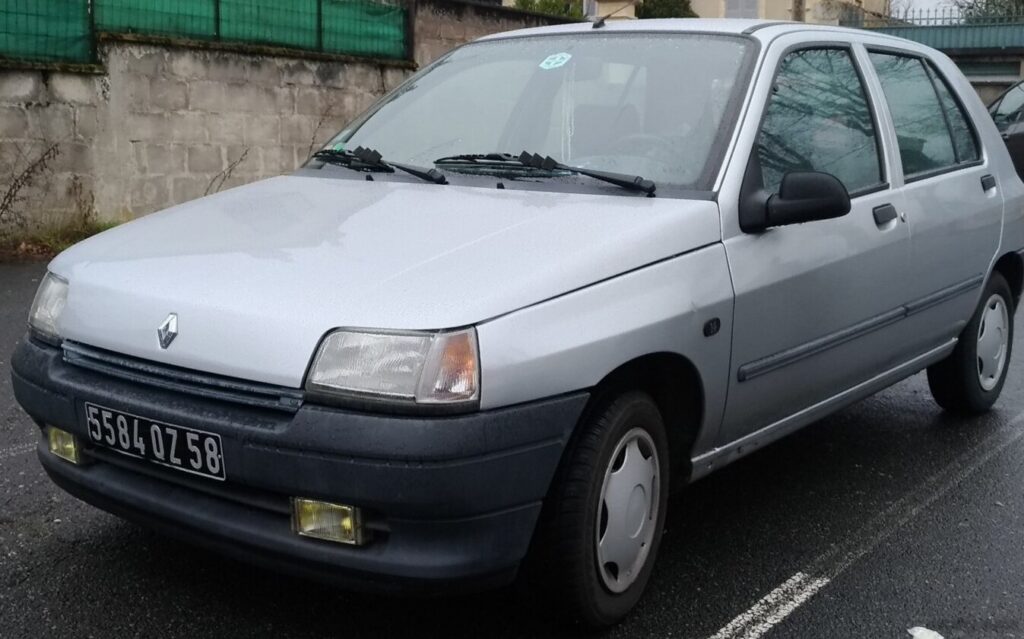
The Renault Clio I (Phase I) 1.8i 16V, produced between 1991 and 1998, represented a significant step up in performance and sophistication for Renault’s supermini. Positioned as the top-of-the-line variant within the Phase I Clio range, it offered a more engaging driving experience than the lower-displacement models. This model was a key component of the broader Clio I generation (designated X5/3), built on Renault’s small-family-car platform, and aimed at buyers seeking a sporty and well-equipped hatchback. The 1.8i 16V was available in both three-door and five-door body styles, catering to a wider range of customer needs.
Powertrain & Engine Architecture
The heart of the Clio 1.8i 16V is the Renault F7P engine, a 1.8-liter (1764 cc) inline-four cylinder gasoline engine. This engine is notable for its dual overhead camshafts (DOHC) and four valves per cylinder, contributing to its higher power output. The F7P engine utilizes multi-port fuel injection, delivering fuel directly into the intake ports, optimizing combustion efficiency. The engine produced 135 horsepower (hp) and 122 lb-ft of torque. This engine code, F7P, was a mainstay in several Renault models during the 1990s, known for its relative reliability and tuneability.
While a five-speed manual transmission was the most common pairing for the 1.8i 16V, an optional four-speed automatic transmission was also available. This automatic gearbox, while offering convenience, did impact the car’s acceleration and fuel economy compared to the manual version. The automatic transmission featured standard torque converter technology and was designed for smooth, if not particularly sporty, gear changes. The gear ratios were optimized for everyday driving, prioritizing comfort and fuel efficiency over outright performance.
Engine Details
The F7P engine’s valvetrain is a key element of its performance. The DOHC configuration allows for precise control of valve timing, maximizing airflow into and out of the cylinders. This, combined with the four valves per cylinder, contributes to the engine’s ability to produce high power for its displacement. The engine block is constructed from cast iron, providing durability, while the cylinder head is made of aluminum alloy, reducing weight. The engine requires 6.5 liters (6.87 US quarts) of engine oil, typically specified to Renault’s standards, and has a cooling system capacity of 7 liters (7.4 US quarts).
Driving Characteristics
The Clio 1.8i 16V offered a noticeably more spirited driving experience than its lower-powered siblings. Acceleration from 0 to 62 mph (0-100 km/h) took approximately 8.9 seconds, making it one of the quickest cars in its class at the time. The engine delivered a relatively linear power curve, with peak torque available across a broad range of engine speeds. The five-speed manual transmission allowed drivers to fully exploit the engine’s potential, while the optional automatic transmission provided a more relaxed driving experience, albeit with some performance compromise.
Compared to the 1.4-liter and 1.6-liter versions of the Clio, the 1.8i 16V felt significantly more responsive, particularly at higher speeds. The increased power allowed for confident overtaking maneuvers and made the car more enjoyable to drive on winding roads. However, the Clio’s relatively lightweight chassis and front-wheel-drive configuration meant that the power could sometimes overwhelm the available grip, especially in wet conditions. The automatic transmission, while convenient, resulted in slightly slower acceleration times and a less engaging driving experience.
Equipment & Trim Levels
The 1.8i 16V typically came with a higher level of standard equipment than the lower-spec Clio models. This included features such as power steering, central locking, electric front windows, and an upgraded interior trim. Depending on the market and optional packages selected, additional features could include alloy wheels, a sunroof, air conditioning, and a more sophisticated audio system. Interior upholstery was typically cloth, with options for upgraded materials and colors. The dashboard layout was functional and well-designed, with clear instrumentation and easy-to-use controls.
The trim levels for the 1.8i 16V varied depending on the country. In some markets, it was offered as a single, well-equipped trim level, while in others, there were multiple options available, allowing buyers to customize their car with a range of features. Common optional extras included a rear wash/wipe, upgraded speakers, and metallic paint finishes.
Chassis & Braking
The Clio I (Phase I) featured a relatively simple but effective chassis design. The front suspension utilized a MacPherson strut setup, while the rear suspension employed a torsion beam axle. This configuration provided a good balance between ride comfort and handling. The 1.8i 16V models typically featured a slightly stiffer suspension setup than the lower-powered versions, further enhancing handling performance. Front brakes were ventilated discs, providing ample stopping power, while rear brakes were typically solid discs. The steering system was a rack-and-pinion setup with hydraulic power assistance, offering precise and responsive steering feel.
The standard tire size for the 1.8i 16V was 185/55 R15, mounted on 15-inch steel or alloy wheels. The wheels had a 5-bolt pattern. The curb weight of the vehicle was approximately 955 kg (2105.41 lbs), contributing to its relatively nimble handling characteristics.
Market Reception & Comparison
The Renault Clio 1.8i 16V was generally well-received by automotive critics. It was praised for its lively performance, comfortable ride, and well-equipped interior. However, some critics noted that the automatic transmission could feel sluggish and that the car’s handling could be somewhat unpredictable in wet conditions. Compared to its rivals, such as the Peugeot 205 and the Citroën Saxo, the Clio 1.8i 16V offered a compelling combination of performance, practicality, and value. Fuel economy was reasonable for a car of its class, averaging around 30-35 mpg in mixed driving conditions. Reliability was generally good, although some owners reported minor issues with the electrical system.
Technical Specifications
| Brand | Renault |
| Model | Clio I (Phase I) |
| Type (Engine) | 1.8i 16V (135 Hp) |
| Start of production | 1991 |
| End of production | 1998 |
| Powertrain Architecture | Internal Combustion engine |
| Body type | Hatchback |
| Seats | 5 |
| Doors | 3/5 |
| Fuel Type | Petrol (Gasoline) |
| Acceleration 0 – 100 km/h | 8.9 sec |
| Acceleration 0 – 62 mph | 8.9 sec |
| Acceleration 0 – 60 mph | 8.5 sec |
| Maximum speed | 209 km/h (129.87 mph) |
| Weight-to-power ratio | 7.1 kg/Hp |
| Power | 135 Hp |
| Power per litre | 76.5 Hp/l |
| Engine layout | Front, Transverse |
| Engine Model/Code | F7P |
| Engine displacement | 1764 cm3 (107.65 cu. in.) |
| Number of cylinders | 4 |
| Engine configuration | Inline |
| Number of valves per cylinder | 4 |
| Fuel injection system | Multi-port manifold injection |
| Engine aspiration | Naturally aspirated engine |
| Valvetrain | DOHC |
| Engine oil capacity | 6.5 l (6.87 US qt | 5.72 UK qt) |
| Coolant | 7 l (7.4 US qt | 6.16 UK qt) |
| Kerb Weight | 955 kg (2105.41 lbs) |
| Max. weight | 1400 kg (3086.47 lbs) |
| Max load | 445 kg (981.06 lbs) |
| Trunk (boot) space – minimum | 265 l (9.36 cu. ft) |
| Trunk (boot) space – maximum | 1055 l (37.26 cu. ft) |
| Fuel tank capacity | 43 l (11.36 US gal | 9.46 UK gal) |
| Length | 3709 mm (146.02 in) |
| Width | 1616 mm (63.62 in) |
| Height | 1395 mm (54.92 in) |
| Wheelbase | 2472 mm (97.32 in) |
| Front track | 1358 mm (53.46 in) |
| Rear (Back) track | 1324 mm (52.13 in) |
| Drive wheel | Front wheel drive |
| Number of gears and type of gearbox | 5 gears, manual transmission |
| Front suspension | Spring Strut |
| Rear suspension | Torsion |
| Front brakes | Ventilated discs |
| Rear brakes | Disc |
| Steering type | Steering rack and pinion |
| Power steering | Hydraulic Steering |
| Tires size | 185/55 R15 V |
| Wheel rims size | 15 |
Legacy
The Renault Clio 1.8i 16V remains a popular choice among enthusiasts and classic car collectors. The F7P engine is known for its durability and relatively straightforward maintenance. While parts availability can be a challenge, many components are still readily available through specialist suppliers. The automatic transmission versions, while less desirable to performance enthusiasts, offer a comfortable and convenient driving experience. Today, well-maintained examples of the Clio 1.8i 16V command a reasonable price in the used car market, reflecting their enduring appeal and the growing interest in classic French hatchbacks.
