
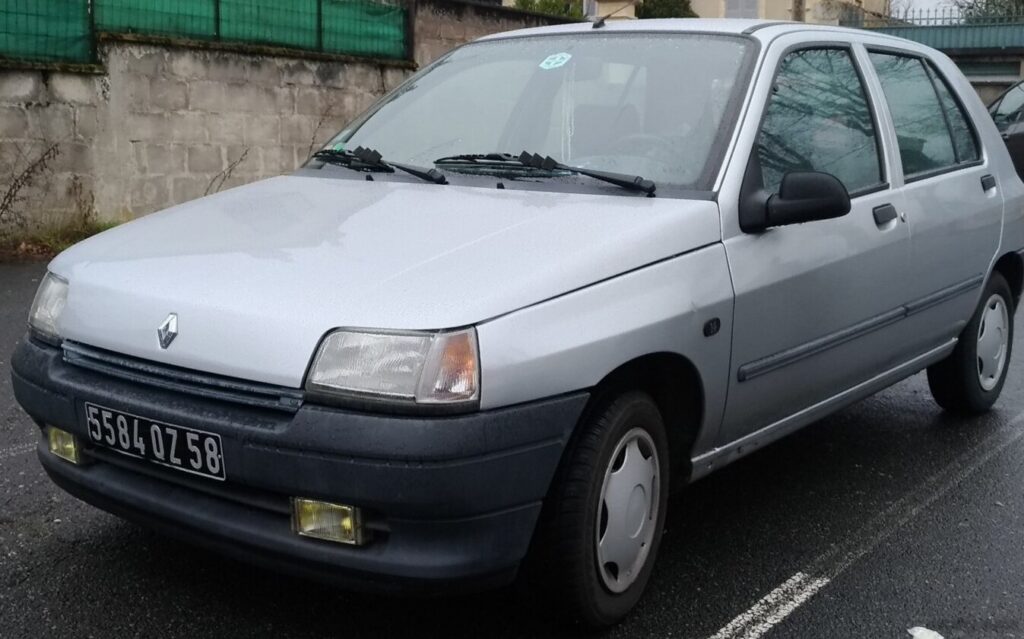
The Renault Clio I (Phase I) 2.0 (150 hp) Williams, produced between 1993 and 1997, represents a performance-oriented variant of the first-generation Renault Clio (also known as the Clio I). This model, built on the Renault 8/9 platform (often referred to internally as X67), was designed to homologate the Clio for Group N rallying and quickly gained a reputation as a highly capable and engaging hot hatch. The Williams edition was a limited-run model, intended to capitalize on Renault’s motorsport success and offer a more exciting driving experience than the standard Clio variants. It occupied the top performance tier of the Phase I Clio range, sitting above the 1.8 and 1.4 models.
Powertrain & Engine Architecture
The heart of the Clio Williams is the Renault F7R 2.0-liter inline-four cylinder engine. This engine, a naturally aspirated unit, was specifically tuned for higher output compared to the standard 2.0-liter found in other Clio models. It featured multi-port fuel injection and a double overhead camshaft (DOHC) valvetrain with four valves per cylinder. The engine’s bore and stroke measured 82.7 mm (3.26 in) and 93 mm (3.66 in) respectively, resulting in a displacement of 1998 cm³ (121.93 cu. in). A compression ratio of 10:1 was employed to maximize power. The F7R engine produced 150 hp at 6100 rpm and 175 Nm (129.07 lb-ft) of torque. The engine oil capacity was 6 liters (6.34 US qt / 5.28 UK qt), and Renault specified a particular oil grade for optimal performance and longevity.
The Clio Williams was exclusively offered with a five-speed manual transmission. This gearbox was chosen for its direct connection to the engine and its ability to handle the increased power output. The transmission’s gear ratios were optimized for both acceleration and cruising, providing a balance between performance and fuel efficiency. The drivetrain is front-wheel drive, a standard configuration for vehicles in this class.
Engine Code Specifics
The F7R engine code is central to understanding the Williams’ performance. While the base F7R engine was used in other Renault models, the Williams version benefited from internal engine component upgrades, including a revised cylinder head, higher-flow fuel injectors, and a more aggressive camshaft profile. These modifications contributed to the increased horsepower and torque figures. The engine was transversely mounted in the front of the vehicle, contributing to its balanced handling characteristics.
Driving Characteristics
The Clio Williams offered a significantly more engaging driving experience than its lower-powered siblings. The 150 hp engine provided brisk acceleration, with a 0-62 mph (0-100 km/h) time of 7.8 seconds and a top speed of 215 km/h (133.59 mph). The five-speed manual transmission allowed drivers to fully exploit the engine’s powerband. The gear ratios were well-matched, providing strong acceleration in each gear. Compared to the standard 1.4 and 1.8 liter Clios, the Williams felt considerably more responsive and eager to rev. The lighter weight (1010 kg / 2226.67 lbs) further enhanced its agility and handling. While the standard Clio models prioritized fuel economy and comfort, the Williams focused on providing a sporty and dynamic driving experience.
Equipment & Trim Levels
The Clio Williams was distinguished by its unique exterior and interior trim. Exterior features included a distinctive body kit, including front and rear spoilers, side skirts, and a rear wing. The car was typically finished in a striking shade of blue (often referred to as “Williams Blue”), although other colors were available in limited quantities. The interior featured sport seats with distinctive upholstery, often incorporating the Renault Sport logo. A leather-wrapped steering wheel and aluminum pedals were also standard features. Air conditioning and central locking were often included, but other options, such as power windows and a sunroof, were less common. The dashboard layout was similar to other Phase I Clio models, but the Williams featured unique instrument cluster graphics and additional gauges.
Chassis & Braking
The Clio Williams benefited from a revised suspension setup compared to the standard Clio. The front suspension utilized independent McPherson struts, while the rear suspension employed a torsion beam. This configuration provided a good balance between ride comfort and handling performance. The Williams also featured upgraded brakes, with ventilated discs on the front wheels and discs on the rear. An Anti-lock Braking System (ABS) was standard, enhancing safety and control. The steering system was a rack and pinion type with hydraulic power assistance, providing precise and responsive steering feel. The car rode on 15-inch wheels with 195/50 R15 tires, which provided good grip and handling.
Market Reception & Comparison
The Renault Clio Williams was widely praised by automotive critics for its performance, handling, and value. It was often compared favorably to other hot hatches of the era, such as the Peugeot 205 GTI and the Volkswagen Polo GTI. Critics noted the Williams’ responsive engine, precise handling, and well-balanced chassis. Fuel economy was reasonable for a performance car, and the Williams proved to be relatively reliable. Compared to the standard Clio models, the Williams offered a significantly more engaging driving experience, but at a higher price point. The 1.8-liter Clio, while offering more power than the base models, lacked the Williams’ focused performance and unique styling. The Williams quickly became a sought-after model among enthusiasts, and its limited production run has contributed to its collectibility today.
Technical Specifications
| Brand | Renault |
| Model | Clio |
| Generation | Clio I (Phase I) |
| Type (Engine) | 2.0 (150 Hp) Williams |
| Start of production | 1993 |
| End of production | 1997 |
| Powertrain Architecture | Internal Combustion engine |
| Body type | Hatchback |
| Seats | 5 |
| Doors | 2/3 |
| Fuel Type | Petrol (Gasoline) |
| Acceleration 0 – 100 km/h | 7.8 sec |
| Acceleration 0 – 62 mph | 7.8 sec |
| Acceleration 0 – 60 mph | 7.4 sec |
| Maximum speed | 215 km/h / 133.59 mph |
| Weight-to-power ratio | 6.7 kg/Hp, 148.5 Hp/tonne |
| Weight-to-torque ratio | 5.8 kg/Nm, 173.3 Nm/tonne |
| Power | 150 Hp @ 6100 rpm |
| Power per litre | 75.1 Hp/l |
| Torque | 175 Nm / 129.07 lb.-ft. |
| Engine layout | Front, Transverse |
| Engine Model/Code | F7R |
| Engine displacement | 1998 cm3 / 121.93 cu. in. |
| Number of cylinders | 4 |
| Engine configuration | Inline |
| Cylinder Bore | 82.7 mm / 3.26 in. |
| Piston Stroke | 93 mm / 3.66 in. |
| Compression ratio | 10:1 |
| Number of valves per cylinder | 4 |
| Fuel injection system | Multi-port manifold injection |
| Engine aspiration | Naturally aspirated engine |
| Valvetrain | DOHC |
| Engine oil capacity | 6 l / 6.34 US qt | 5.28 UK qt |
| Coolant | 7 l / 7.4 US qt | 6.16 UK qt |
| Kerb Weight | 1010 kg / 2226.67 lbs. |
| Fuel tank capacity | 43 l / 11.36 US gal | 9.46 UK gal |
| Drivetrain Architecture | Front wheel drive |
| Number of gears and type of gearbox | 5 gears, manual transmission +1 |
| Front suspension | Independent type McPherson |
| Rear suspension | Torsion |
| Front brakes | Ventilated discs |
| Rear brakes | Disc |
| Assisting systems | ABS (Anti-lock braking system) |
| Steering type | Steering rack and pinion |
| Power steering | Hydraulic Steering |
| Tires size | 195/50 R15 |
| Wheel rims size | 15 |
Legacy
The Renault Clio Williams remains a highly regarded and collectible hot hatch. The F7R engine, while not without its quirks, has proven to be relatively durable when properly maintained. Common issues include oil leaks and wear on the timing chain. Today, well-maintained examples command a premium in the used car market. The Clio Williams is celebrated for its engaging driving dynamics, its distinctive styling, and its connection to Renault’s motorsport heritage. It represents a high point in the development of the first-generation Clio and continues to be enjoyed by enthusiasts around the world. Its influence can be seen in subsequent Renault Sport models, which have continued to build on the Williams’ legacy of performance and handling.
