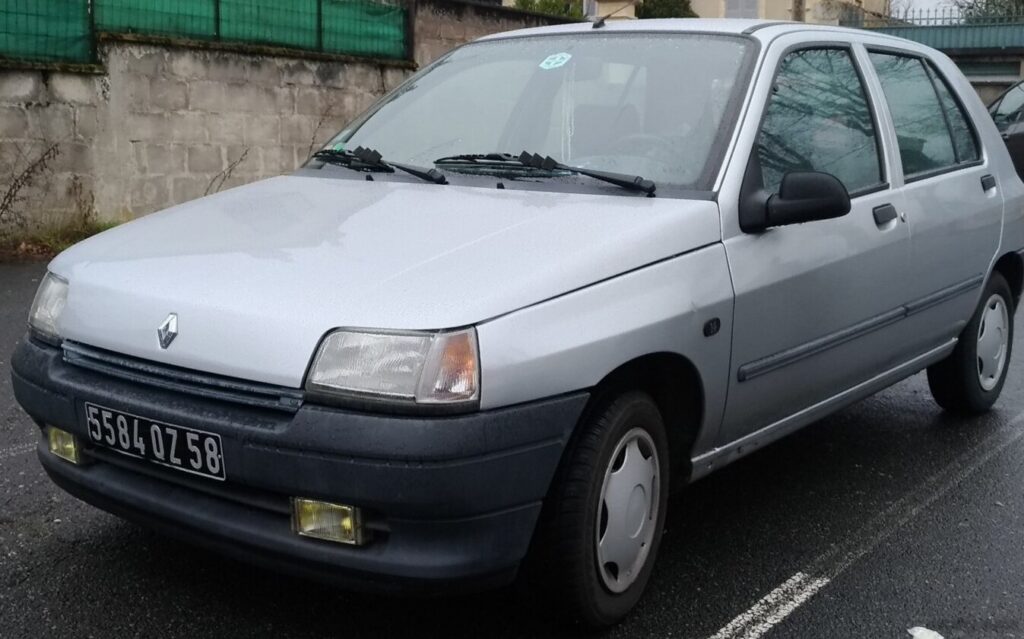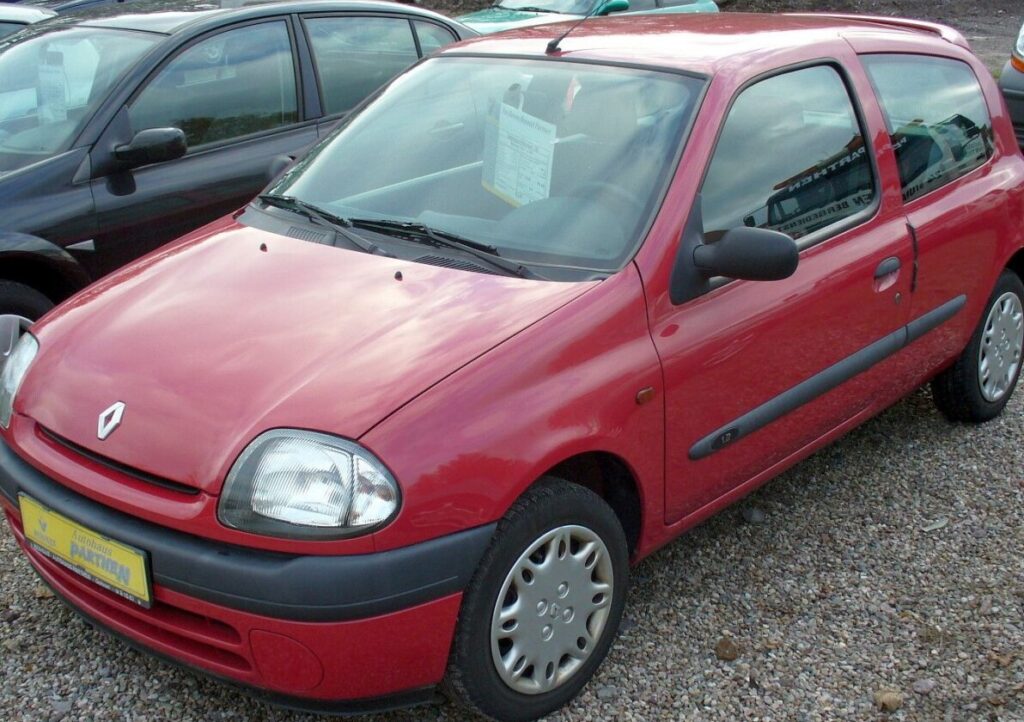
The Renault Clio II (Phase I) 1.4, producing 75 horsepower, was a mainstay of the Renault lineup from 1998 to 2001. This 3-door hatchback represented the entry point into the second generation of the Clio, a model that proved highly successful in the European supermini segment. Positioned as an affordable and practical option, the 1.4L variant served as a volume seller, appealing to buyers prioritizing economy and everyday usability over outright performance. It was built on the Renault 1HX0/B0 platform, shared with other Renault and Nissan models of the era.
Renault Clio II Phase I 1.4: An Overview
The Clio II marked a significant step forward for Renault, offering improved styling, interior space, and safety features compared to its predecessor. The Phase I models, produced from 1998-2001, featured a distinct design language and a range of engine options. The 1.4-liter engine, in its 75 hp guise, was specifically targeted at buyers seeking a reliable and economical city car. It occupied the lower end of the engine range, sitting below the more powerful 1.6-liter and sportier versions, and significantly below the diesel options.
Powertrain & Engine Architecture
The heart of the Clio II 1.4 was the Renault E7J engine, a 1390cc inline-four cylinder petrol engine. This engine utilized a multi-port fuel injection system, delivering fuel directly into the intake ports. The engine featured an overhead camshaft (OHC) valvetrain with two valves per cylinder. The E7J engine was known for its relative simplicity and durability, contributing to the Clio’s reputation for reliability. Compression ratio was set at 9.5:1. Engine oil capacity was 2.9 liters (3.06 US quarts), and coolant capacity was 5.5 liters (5.81 US quarts).
Crucially, the 1.4L engine was often paired with a JL5 4-speed automatic transmission. This transmission, while providing convenience, was a key differentiator from the more common 5-speed manual gearbox. The automatic transmission featured standard torque converter technology and was designed for smooth, if not particularly sporty, operation. The gear ratios were optimized for fuel efficiency and comfortable cruising, rather than rapid acceleration. First gear was relatively short, providing decent off-the-line acceleration, while higher gears were geared for lower engine speeds at highway speeds.
Driving Characteristics
The Clio II 1.4 Automatic offered a comfortable, but uninspiring, driving experience. With 75 hp and 84.08 lb-ft of torque, acceleration was modest. 0-60 mph took approximately 11.5 seconds, and 0-100 km/h took 12.1 seconds. Top speed was rated at 105.63 mph (170 km/h). The automatic transmission contributed to a smooth ride, but also resulted in some power loss compared to the manual version. The engine felt strained when pushed hard, particularly when overtaking or climbing hills. The automatic transmission’s shift points were programmed for economy, meaning the engine often lacked the immediate response of a manual gearbox. The steering was light and easy, making it well-suited for urban driving, but lacked significant feedback.
Compared to the 1.6-liter versions of the Clio II, the 1.4 Automatic felt noticeably slower and less refined. The 1.6 offered a more responsive engine and a more engaging driving experience. However, the 1.4 prioritized fuel economy and affordability, making it a sensible choice for drivers who primarily used the car for commuting or short trips.
Equipment & Trim Levels
The Clio II 1.4 Automatic typically came with a relatively basic level of equipment, reflecting its position as the entry-level model. Standard features generally included power steering, central locking, and an immobilizer. Interior upholstery was typically cloth, and the dashboard featured a simple, functional design. Air conditioning was often an optional extra, as were electric windows and a radio/cassette player. Higher trim levels, such as the “RT” or “Campus” variants, added features like alloy wheels, upgraded interior trim, and additional safety equipment.
The 3-door body style itself was a defining characteristic, offering a sportier appearance than the 5-door version. However, it also meant reduced practicality, particularly for rear passengers. The rear seats could be folded down to increase luggage space, but the overall cargo capacity was limited compared to larger hatchbacks.
Chassis & Braking
The Clio II 1.4 Automatic utilized a MacPherson strut independent suspension at the front and a torsion beam suspension at the rear. This setup provided a reasonable balance between comfort and handling. The suspension was tuned for a softer ride, prioritizing comfort over sporty handling. The front brakes were discs, while the rear brakes were drums. Anti-lock Braking System (ABS) was often included as standard equipment, enhancing safety. The steering was a rack and pinion system with hydraulic power assistance, providing light and easy steering.
The relatively light weight of the Clio II (940 kg / 2072.35 lbs) helped to offset the modest power output of the 1.4-liter engine. The weight distribution was reasonably balanced, contributing to predictable handling characteristics.
Market Reception & Comparison
The Clio II 1.4 Automatic was generally well-received by critics as a practical and affordable supermini. It was praised for its fuel economy (8.8 l/100 km urban, 5.6 l/100 km extra urban – equivalent to 26.7 US mpg and 42 US mpg respectively) and its reliability. However, it was also criticized for its lack of performance and its somewhat dated automatic transmission. Compared to rivals like the Peugeot 206 and the Volkswagen Polo, the Clio II 1.4 Automatic offered a competitive price point but lacked the refinement and driving dynamics of some of its competitors.
The automatic transmission version, while convenient, was often seen as a compromise. The manual transmission offered better fuel economy and a more engaging driving experience. However, the automatic appealed to buyers who preferred the ease of use and convenience of an automatic gearbox.
Technical Specifications
| Engine Type | Inline-4 Cylinder Petrol |
| Engine Displacement | 1390 cc (84.82 cu in) |
| Engine Code | E7J |
| Power Output | 75 hp @ 5500 rpm |
| Torque Output | 114 Nm @ 4250 rpm (84.08 lb-ft @ 4250 rpm) |
| Fuel Injection | Multi-port Fuel Injection |
| Valvetrain | OHC (2 valves per cylinder) |
| Transmission | 4-speed Automatic (JL5) |
| Drive Type | Front-Wheel Drive |
| Kerb Weight | 940 kg (2072.35 lbs) |
| Maximum Weight | 1480 kg (3262.84 lbs) |
| Fuel Tank Capacity | 50 liters (13.21 US gal) |
| 0-60 mph | 11.5 sec (Calculated) |
| 0-100 km/h | 12.1 sec |
| Top Speed | 170 km/h (105.63 mph) |
Legacy
The Renault Clio II 1.4 Automatic, while not a performance icon, remains a relatively common sight on European roads today. The E7J engine is known for its durability, and many examples have exceeded 200,000 kilometers. The automatic transmission, while not the most sophisticated, is generally reliable if properly maintained. In the used car market, these Clios are valued for their affordability and practicality. They represent a sensible choice for first-time car buyers or those seeking a cheap and reliable city car. However, potential buyers should be aware of the age-related issues common to older vehicles, such as corrosion and wear and tear on suspension components. The 1.4 Automatic variant, while not the most desirable Clio II, continues to offer a budget-friendly and dependable transportation option.