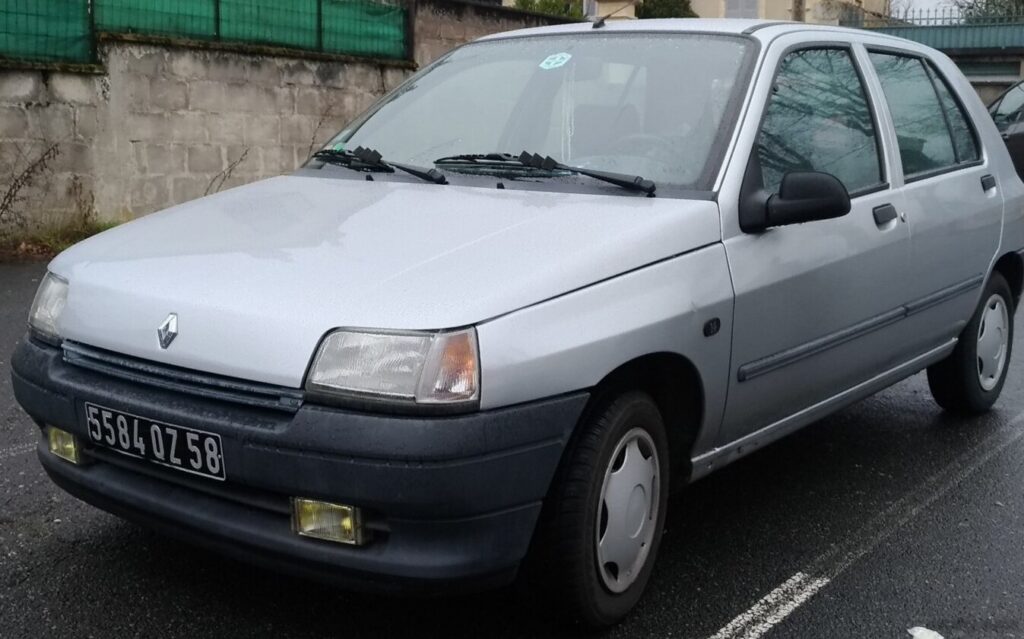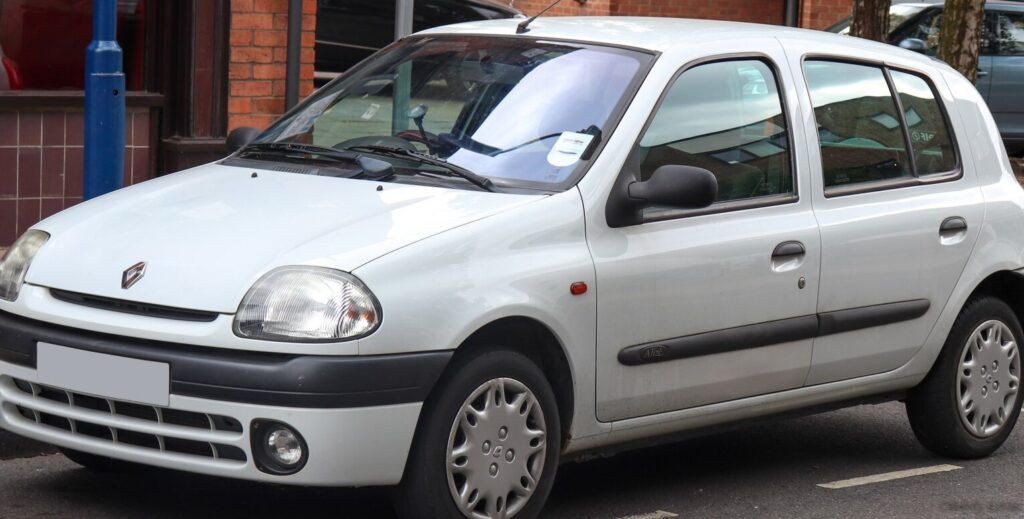
The Renault Clio II (Phase I) 1.6 Automatic, produced between 1998 and 2000, represented a key entry point into the second generation of Renault’s popular supermini. Part of the 1HX0/A3 platform family, this five-door hatchback offered a blend of practicality, affordability, and ease of use, targeting buyers seeking a comfortable and convenient urban vehicle. The 1.6L engine paired with an automatic transmission distinguished it from other variants in the Clio II range, which included smaller displacement engines and manual transmission options, as well as performance-oriented models like the Clio Renault Sport.
The 1.6L Automatic: Positioning in the Clio II Lineup
Within the Clio II Phase I range, the 1.6L Automatic occupied a mid-range position. Below it sat the 1.2L and 1.4L 16V models, which prioritized fuel economy and lower purchase price. Above it were the more powerful 1.8L 16V and 2.0L 16V versions, offering increased performance, and the sporty Clio Renault Sport models. The 1.6 Automatic was designed to appeal to drivers who preferred the convenience of an automatic gearbox and a reasonable level of performance without the higher cost of the top-tier trims. It was particularly popular with drivers in urban environments and those less concerned with outright speed.
Powertrain & Engine Architecture
The heart of the Clio II 1.6 Automatic was the Renault K7M engine, a 1.6-liter (1598 cm3) inline four-cylinder gasoline engine. This engine featured a naturally aspirated configuration, meaning it did not utilize a turbocharger or supercharger. It employed multi-port fuel injection, delivering fuel directly into the intake ports, and a double overhead camshaft (DOHC) valvetrain with two valves per cylinder. The K7M engine produced 90 horsepower (hp) at 5250 rpm and 131 Newton-meters (96.62 lb-ft) of torque at 2500 rpm. The compression ratio was set at 9.5:1.
The engine was mated to a four-speed automatic transmission. This transmission, while providing ease of driving, was a relatively conventional design for the period. It lacked the more advanced features found in some contemporary automatic gearboxes, such as adaptive shift programs. The transmission’s gear ratios were tuned for a balance between acceleration and fuel efficiency, prioritizing smooth operation over sporty performance. The engine oil capacity was 3.7 liters (3.91 US qt | 3.26 UK qt), and the coolant capacity was 5.5 liters (5.81 US qt | 4.84 UK qt).
Driving Characteristics
The driving experience in the Clio II 1.6 Automatic was characterized by its smoothness and ease of use. Acceleration from 0 to 100 km/h (0-62 mph) took approximately 12.9 seconds, while 0-60 mph was achieved in around 12.3 seconds. The top speed was rated at 175 km/h (108.74 mph). Compared to the manual transmission versions of the 1.6L engine, the automatic variant experienced a slight performance deficit due to the inherent power losses within the torque converter and the less aggressive gear ratios. However, the automatic transmission provided a more relaxed driving experience, particularly in stop-and-go traffic.
The automatic transmission’s shift points were generally well-timed for everyday driving, but it could sometimes feel hesitant during quick acceleration maneuvers. The engine delivered adequate power for typical urban and highway driving, but it lacked the punch of the higher-output 1.8L and 2.0L models. The weight-to-power ratio of 11.1 kg/hp and the weight-to-torque ratio of 7.6 kg/Nm reflected the car’s moderate performance capabilities.
Equipment & Trim Levels
The Clio II 1.6 Automatic typically came equipped with a reasonable level of standard features. These included power steering, central locking, electric front windows, and an adjustable steering column. Interior upholstery was typically cloth, with a relatively simple dashboard layout. Optional extras available for this trim level included air conditioning, alloy wheels, a radio/cassette player, and upgraded interior trim. Safety features included ABS (Anti-lock Braking System), which was becoming increasingly common on European vehicles during this period. The specific trim level (e.g., Expression, Dynamique) influenced the standard equipment offered.
Chassis & Braking
The Clio II 1.6 Automatic utilized a front-wheel-drive layout with independent front suspension employing a McPherson strut design. The rear suspension featured a coil spring and torsion beam setup. This suspension configuration provided a comfortable ride quality, although it wasn’t particularly sporty. The front brakes were disc brakes, while the rear brakes were drum brakes. This combination was typical for vehicles in this price range and weight class. The steering system was a rack and pinion type with hydraulic power assistance, providing light and precise steering feel. Tire sizes varied, with common options including 165/60 R14, 165/65 R14, and 175/65 R14.
Market Reception & Comparison
The Clio II 1.6 Automatic received generally positive reviews from automotive critics. It was praised for its comfortable ride, ease of use, and practicality. However, some critics noted that the automatic transmission detracted slightly from the car’s performance and that the interior was somewhat basic compared to some competitors. Fuel economy was considered reasonable for the time, with urban fuel consumption around 10.5 l/100 km (22.4 US mpg) and extra-urban consumption around 6 l/100 km (39.2 US mpg). Compared to the manual transmission versions, the automatic variant typically experienced slightly lower fuel economy. In terms of reliability, the K7M engine was generally considered to be a robust and dependable unit, although regular maintenance was essential.
Technical Specifications
| Engine Model/Code | K7M |
| Engine Displacement | 1598 cm3 (97.52 cu. in.) |
| Number of Cylinders | 4, Inline |
| Power | 90 Hp @ 5250 rpm |
| Torque | 131 Nm @ 2500 rpm (96.62 lb.-ft. @ 2500 rpm) |
| Fuel Injection System | Multi-port manifold injection |
| Valvetrain | DOHC |
| Compression Ratio | 9.5:1 |
| Transmission | 4-speed Automatic |
| Kerb Weight | 1000 kg (2204.62 lbs.) |
| Maximum Speed | 175 km/h (108.74 mph) |
| 0-100 km/h | 12.9 sec |
| Fuel Consumption (Urban) | 10.5 l/100 km (22.4 US mpg) |
| Fuel Consumption (Extra Urban) | 6 l/100 km (39.2 US mpg) |
| Fuel Tank Capacity | 50 l (13.21 US gal | 11 UK gal) |
| Trunk Space (Minimum) | 255 l (9.01 cu. ft.) |
| Trunk Space (Maximum) | 1035 l (36.55 cu. ft.) |
Legacy
The Renault Clio II 1.6 Automatic, while not the most exciting variant in the range, proved to be a popular and reliable choice for many buyers. The K7M engine, when properly maintained, is known for its longevity. Today, these cars are relatively affordable on the used market, making them attractive options for budget-conscious buyers seeking a practical and economical hatchback. However, potential buyers should be aware that older examples may require maintenance to address age-related issues, such as worn suspension components and potential corrosion. The four-speed automatic transmission, while reliable, is not as fuel-efficient or refined as more modern automatic gearboxes. Despite these considerations, the Clio II 1.6 Automatic remains a testament to Renault’s ability to produce a well-rounded and dependable vehicle.