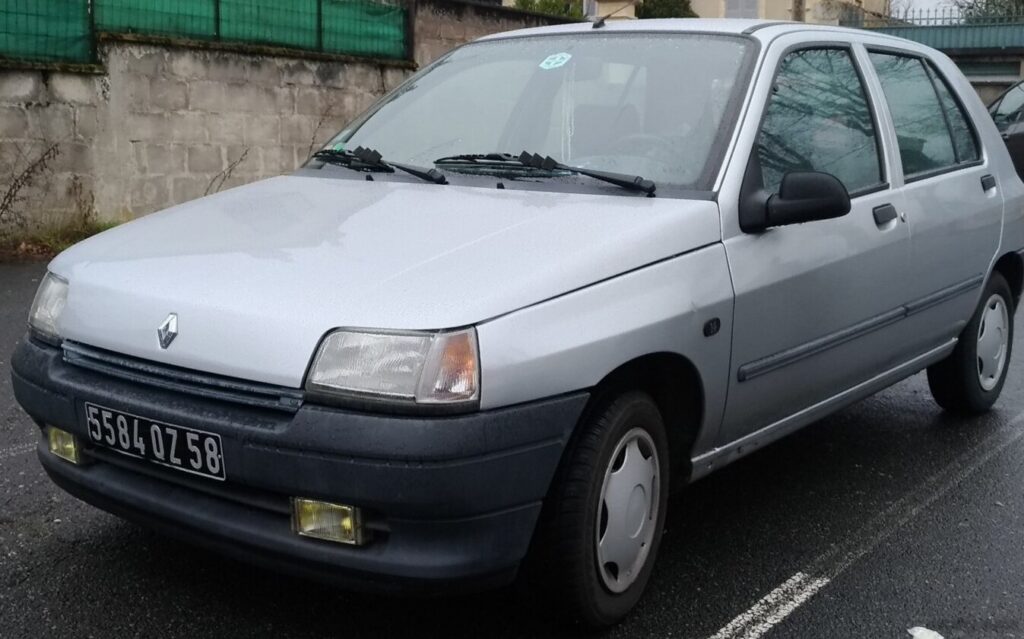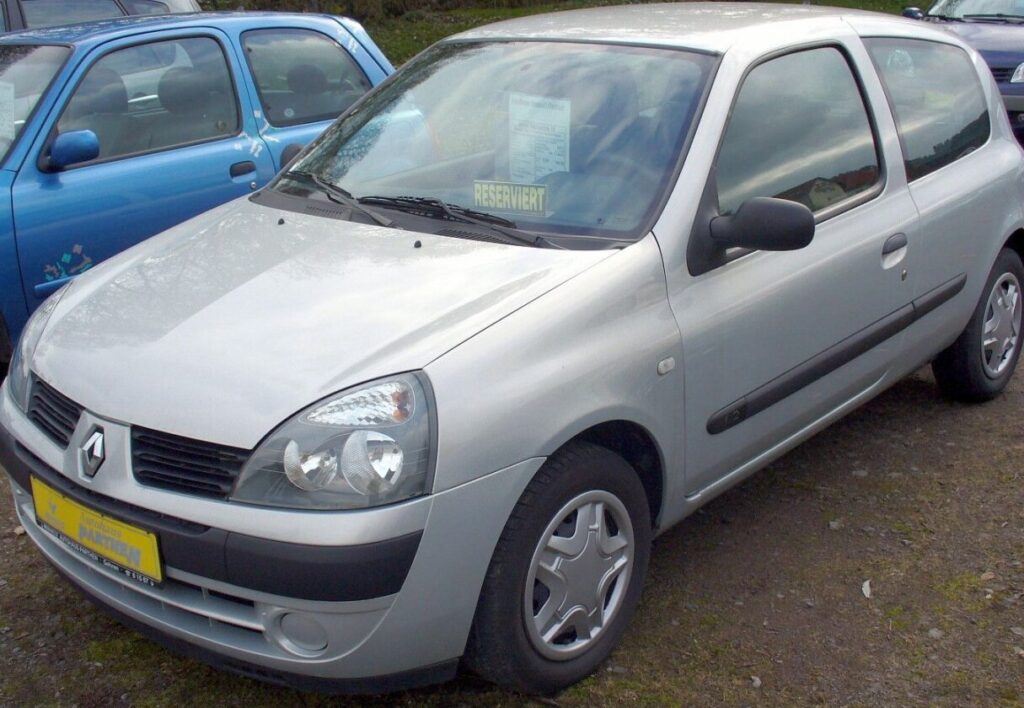
The Renault Clio II Phase II, produced from 2001 to 2003, represented a significant refresh of Renault’s popular supermini. Within the Phase II range, the 3-door 1.2 16V (75 hp) variant equipped with the “Quickshift” automated manual transmission occupied a key position as an entry-level offering, aimed at buyers prioritizing fuel efficiency and ease of use over outright performance. This model was built on the 1HX0/A3 platform, shared with other Renault and Nissan vehicles of the era, and served as a practical and affordable option in the competitive European small car market.
The 1.2 16V Quickshift: Positioning and Target Audience
The 1.2 16V Quickshift trim sat at the lower end of the Clio II Phase II lineup. Above it were models with larger engines, such as the 1.4 16V and the sportier 1.6 16V, offering increased power and performance. Compared to the diesel options, like the 1.9 dCi, the 1.2 16V prioritized refinement and a smoother driving experience, albeit with lower fuel economy. The target audience for this variant was primarily urban drivers, young drivers, or those seeking a cost-effective and easy-to-drive vehicle for daily commuting. The “Quickshift” transmission, while not a traditional automatic, aimed to provide the convenience of automatic gear changes without the efficiency penalty of a torque converter automatic.
Powertrain & Engine Architecture
The heart of the Clio II 1.2 16V Quickshift is the D4F engine, a 1149 cc (70.12 cubic inches) inline-four cylinder gasoline engine. This engine utilizes a multi-point fuel injection system and a double overhead camshaft (DOHC) valvetrain with four valves per cylinder. The 16-valve configuration contributes to improved breathing and a relatively high power output for its displacement. The engine produces 75 horsepower at 5500 rpm and 105 Nm (77.44 lb-ft) of torque at 3500 rpm. The compression ratio is 9.8:1.
The “Quickshift” transmission is a five-speed automated manual gearbox. Unlike a traditional automatic transmission with a torque converter, Quickshift uses a conventional manual gearbox operated by actuators. This system allows the driver to select gears manually via buttons on the steering wheel or leave it in automatic mode. The system offers quicker shifts than a driver could typically achieve with a manual transmission, but can sometimes exhibit jerky or hesitant behavior, particularly at lower speeds. The transmission’s control unit manages clutch engagement and gear selection, aiming for smooth transitions while maximizing fuel efficiency.
Engine Specifications (D4F)
Engine Oil Capacity: 4 liters (4.23 US qt | 3.52 UK qt)
Engine Oil Specification: (Refer to Renault service documentation)
Coolant Capacity: 5 liters (5.28 US qt | 4.4 UK qt)
Driving Characteristics
The 1.2 16V Quickshift offers a modest driving experience. Acceleration from 0 to 100 km/h (0-62 mph) takes approximately 14.6 seconds, and the top speed is around 170 km/h (105.63 mph). The engine feels relatively strained when accelerating hard, and the Quickshift transmission can sometimes feel slow to respond to driver inputs. However, in normal driving conditions, the transmission provides smooth and convenient gear changes. The gear ratios are optimized for fuel efficiency rather than outright performance. Compared to the 1.4 or 1.6 liter versions, the 1.2 feels noticeably less powerful, especially when carrying passengers or luggage. The Quickshift transmission, while convenient, doesn’t offer the same level of driver engagement as a traditional manual gearbox.
Equipment & Trim Levels
The Clio II Phase II 1.2 16V Quickshift typically came equipped with a reasonable level of standard features for its price point. These included power steering, central locking, electric front windows, and an adjustable steering column. Safety features included ABS (Anti-lock Braking System) and driver and passenger airbags. Interior upholstery was typically cloth, with a relatively simple dashboard layout. Optional extras included air conditioning, alloy wheels, a CD player, and metallic paint. Higher trim levels within the Phase II range offered additional features such as climate control, upgraded audio systems, and more luxurious interior trim.
Chassis & Braking
The Clio II 1.2 16V Quickshift utilizes an independent McPherson strut suspension system at the front, providing a comfortable ride and decent handling. The rear suspension is a semi-independent beam with a stabilizer bar, which helps to reduce body roll during cornering. The front brakes are ventilated discs, offering good stopping power, while the rear brakes are drums. This configuration was typical for vehicles in this weight class and price range. The steering is a hydraulic rack and pinion system, providing precise and responsive steering feel. Tire sizes typically ranged from 175/65 R14 to 185/55 R15, depending on the trim level and optional equipment.
Market Reception & Comparison
The Clio II 1.2 16V Quickshift was generally well-received by critics as a practical and affordable small car. It was praised for its fuel efficiency, comfortable ride, and ease of use. However, the Quickshift transmission received mixed reviews, with some critics finding it jerky and unresponsive. Compared to other trims in the Clio II lineup, the 1.2 16V offered the best fuel economy, but the lowest performance. Its fuel consumption figures of 5.8 l/100 km (40.6 US mpg) combined were competitive for its class. Reliability was generally good, although the Quickshift transmission could be prone to occasional issues. Compared to rivals like the Ford Fiesta and Volkswagen Polo, the Clio II offered a stylish design and a comfortable interior.
Technical Specifications
| Body Type | Hatchback, 3 Doors, 5 Seats |
| Engine Displacement | 1149 cm3 (70.12 cu. in.) |
| Engine Model/Code | D4F |
| Number of Cylinders | 4, Inline |
| Power | 75 Hp @ 5500 rpm |
| Torque | 105 Nm @ 3500 rpm (77.44 lb.-ft. @ 3500 rpm) |
| Fuel Consumption (Urban) | 7.6 l/100 km (30.9 US mpg, 37.2 UK mpg, 13.2 km/l) |
| Fuel Consumption (Extra Urban) | 4.8 l/100 km (49 US mpg, 58.9 UK mpg, 20.8 km/l) |
| Fuel Consumption (Combined) | 5.8 l/100 km (40.6 US mpg, 48.7 UK mpg, 17.2 km/l) |
| CO2 Emissions | 137 g/km |
| Acceleration 0-100 km/h | 14.6 sec |
| Acceleration 0-62 mph | 14.6 sec |
| Maximum Speed | 170 km/h (105.63 mph) |
| Kerb Weight | 920 kg (2028.25 lbs.) |
| Max. Weight | 1460 kg (3218.75 lbs.) |
| Trunk Space (Minimum) | 255 l (9.01 cu. ft.) |
| Trunk Space (Maximum) | 1037 l (36.62 cu. ft.) |
| Fuel Tank Capacity | 50 l (13.21 US gal | 11 UK gal) |
| Transmission | 5 gears, automatic transmission (Quickshift) |
Legacy
The Renault Clio II 1.2 16V Quickshift, while not the most powerful or engaging version of the Clio II, remains a relatively reliable and affordable option in the used car market. The D4F engine is known for its durability, and the Quickshift transmission, while sometimes problematic, can be relatively inexpensive to repair. These cars are now typically found with higher mileage and require regular maintenance. The 1.2 16V Quickshift represents a practical and economical choice for those seeking a small, fuel-efficient hatchback for urban driving. Its simplicity and affordability continue to make it a popular choice among budget-conscious buyers.