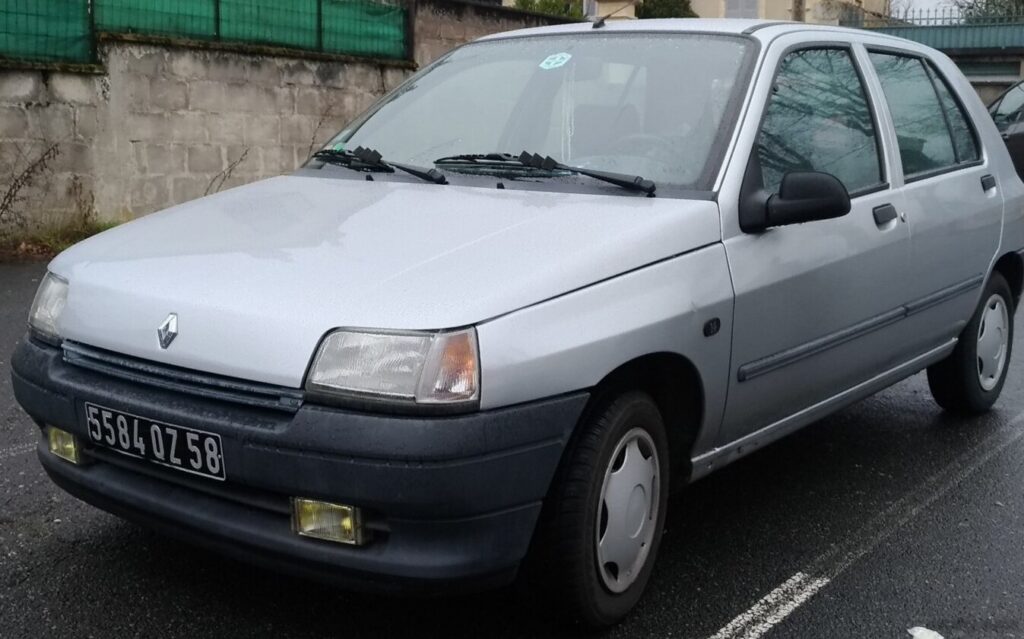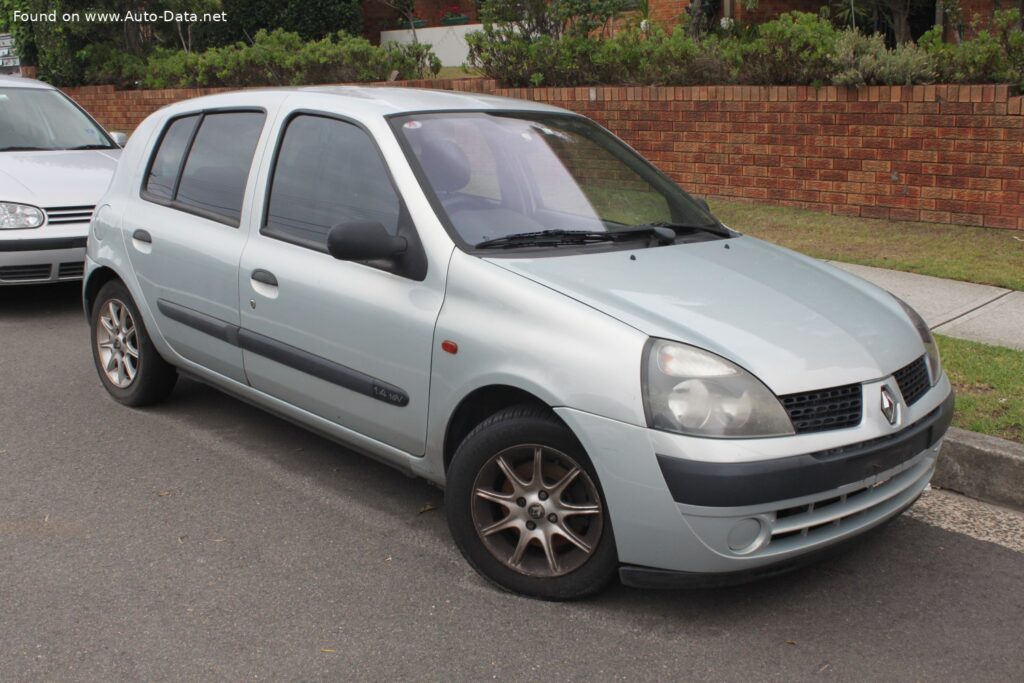
The Renault Clio II Phase II, produced from 2001 to 2003, represented a significant refresh of Renault’s popular supermini. Among the various engine and transmission combinations offered, the 1.2 16V (75 hp) variant paired with the “Quickshift” automated manual transmission holds a specific place in the lineup. This configuration was primarily aimed at buyers seeking a fuel-efficient and easy-to-drive city car, offering a compromise between the fully manual gearbox and more expensive automatic options. The Clio II, built on the 1HX0/A3 platform, was a mainstay in the European small car market, and this particular version catered to a segment prioritizing practicality and affordability.
The 1.2 16V Quickshift: Positioning and Target Audience
The 1.2 16V Quickshift trim occupied the entry to mid-level position within the Clio II Phase II range. It sat below the more powerful 1.4 16V and 1.6 16V gasoline engines, as well as the diesel-powered 1.9 dCi and 1.5 dCi options. Compared to these alternatives, the 1.2 16V offered lower running costs and a simpler driving experience, making it attractive to first-time car buyers, city commuters, and those seeking a reliable and economical vehicle. It was positioned as a step up from the base-level engine options, offering a slightly more refined experience without the higher price tag of the more potent models.
Powertrain & Engine Architecture
The heart of this Clio variant is the D4F engine, a 1.2-liter (1149 cc) inline-four cylinder gasoline engine. This engine utilizes a multi-port fuel injection system and a double overhead camshaft (DOHC) valvetrain with four valves per cylinder. The D4F engine is known for its relatively simple design and durability. It produces a maximum power output of 75 horsepower (55 kW) at 5500 rpm and 105 Nm (77.44 lb-ft) of torque at 3500 rpm. The compression ratio is 9.8:1. The engine’s power per liter is 65.3 hp/l.
The “Quickshift” transmission is a key feature of this variant. It’s technically an automated manual transmission (AMT), meaning it’s a conventional manual gearbox with electronically controlled actuation of the clutch and gear changes. Unlike a traditional automatic transmission with a torque converter, the Quickshift uses a robotic system to shift gears, offering improved fuel efficiency compared to conventional automatics. However, it’s often characterized by slightly slower and less smooth gear changes than a traditional automatic, particularly during low-speed maneuvers. The gearbox has 5 forward gears.
Engine Specifications (D4F)
The D4F engine is a naturally aspirated engine, meaning it doesn’t utilize a turbocharger or supercharger. This contributes to its simplicity and reliability, but also limits its overall performance. The engine oil capacity is 4 liters (4.23 US qt / 3.52 UK qt), and the coolant capacity is 5 liters (5.28 US qt / 4.4 UK qt). Regular oil changes using the manufacturer-specified oil are crucial for maintaining the engine’s longevity.
Driving Characteristics
The 1.2 16V Quickshift Clio II delivers modest performance. Acceleration from 0 to 100 km/h (0-62 mph) takes approximately 14.6 seconds, and the top speed is around 170 km/h (105.63 mph). The Quickshift transmission, while offering fuel efficiency, doesn’t provide the seamless shifts of a traditional automatic. Gear changes can be noticeable, and the system sometimes exhibits a slight hesitation, especially during uphill climbs or when requiring quick acceleration. The gear ratios are optimized for fuel economy rather than outright performance. In city driving, the Quickshift is perfectly adequate, providing a comfortable and convenient driving experience. However, on highways or when overtaking, the engine can feel strained, and the transmission’s slower shifts become more apparent. Compared to the 1.4 or 1.6 liter versions, this variant feels significantly less powerful, but it compensates with better fuel economy.
Equipment & Trim Levels
The 1.2 16V Quickshift typically came equipped with a reasonable level of standard features for its price point. These generally included power steering, central locking, front airbags, and an AM/FM radio. Interior upholstery was typically cloth, and the dashboard featured a functional, if somewhat basic, design. Optional extras available for this trim included air conditioning, electric front windows, and alloy wheels. Higher trim levels within the Clio II range offered more luxurious features such as leather upholstery, automatic climate control, and upgraded audio systems, but these were not typically found on the base 1.2 16V Quickshift model.
Chassis & Braking
The Clio II’s chassis features an independent McPherson strut suspension at the front and a semi-dependent beam with a stabilizer bar at the rear. This setup provides a comfortable ride quality, particularly on smoother roads. The front brakes are ventilated discs, while the rear brakes are drums. ABS (Anti-lock Braking System) was standard equipment, enhancing safety. The weight-to-power ratio is 12.5 kg/hp, and the weight-to-torque ratio is 9 kg/Nm. The curb weight of the vehicle is 940 kg (2072.35 lbs), and the maximum weight is 1480 kg (3262.84 lbs).
Market Reception & Comparison
The 1.2 16V Quickshift Clio II received generally positive reviews for its fuel efficiency and affordability. Critics praised its practicality and ease of use, making it a popular choice for urban drivers. However, the Quickshift transmission was often criticized for its less-than-smooth operation and slower shift times compared to traditional automatics. In terms of fuel economy, the 1.2 16V Quickshift achieves approximately 5.8 l/100 km (40.6 US mpg / 48.7 UK mpg) on a combined cycle, making it one of the most economical options in the Clio II range. Compared to the 1.4 16V, the 1.2 16V offers slightly better fuel economy but significantly less performance. The diesel variants, while more expensive to purchase, offered even better fuel economy and more torque.
Technical Specifications
| Brand | Renault |
| Model | Clio II Phase II |
| Engine Type | 1.2 16V Gasoline |
| Engine Code | D4F |
| Displacement | 1149 cc (70.12 cu. in.) |
| Power | 75 hp @ 5500 rpm |
| Torque | 105 Nm (77.44 lb-ft) @ 3500 rpm |
| Transmission | 5-speed Automated Manual (“Quickshift”) |
| Drive Type | Front-Wheel Drive |
| Fuel Consumption (Urban) | 7.6 l/100 km (30.9 US mpg) |
| Fuel Consumption (Extra Urban) | 4.8 l/100 km (49 US mpg) |
| Fuel Consumption (Combined) | 5.8 l/100 km (40.6 US mpg) |
| CO2 Emissions | 137 g/km |
| Curb Weight | 940 kg (2072.35 lbs) |
| Maximum Speed | 170 km/h (105.63 mph) |
| 0-100 km/h | 14.6 sec |
| Fuel Tank Capacity | 50 l (13.21 US gal) |
| Trunk Space (Min) | 255 l (9.01 cu. ft.) |
| Trunk Space (Max) | 1037 l (36.62 cu. ft.) |
Legacy
The 1.2 16V Quickshift Clio II, while not the most exciting variant in the range, proved to be a reliable and economical choice for many buyers. The D4F engine is generally considered durable, and with regular maintenance, can provide many years of service. On the used car market today, these Clios are often available at very affordable prices. The Quickshift transmission, however, can be a potential source of issues, and prospective buyers should carefully inspect its operation before purchasing. Parts availability is generally good, and the Clio II remains a popular choice for those seeking a cheap and cheerful city car. Its simplicity and relatively low running costs continue to make it an attractive option for budget-conscious drivers.