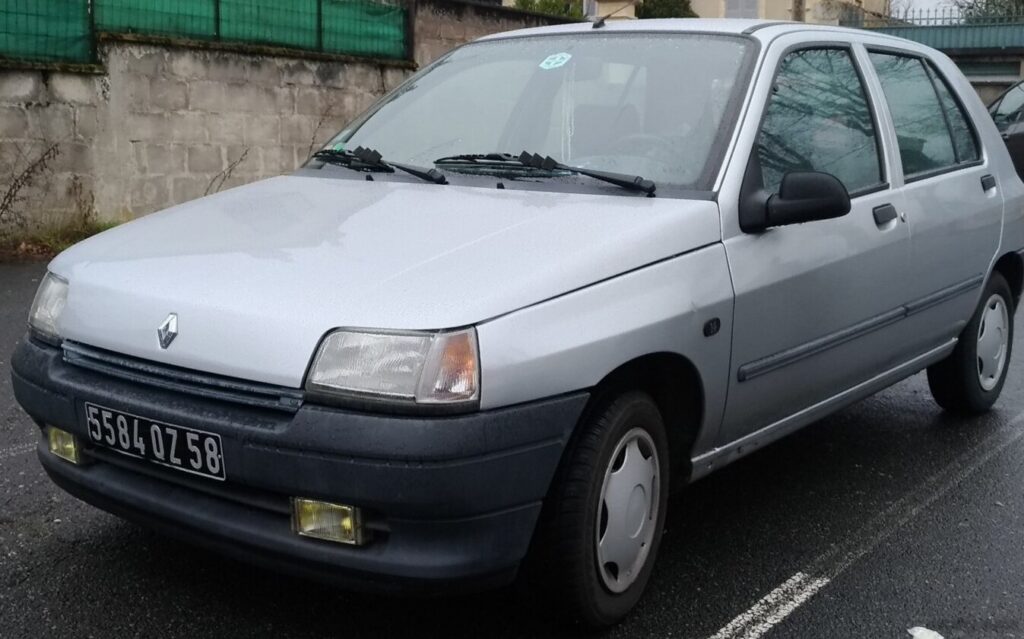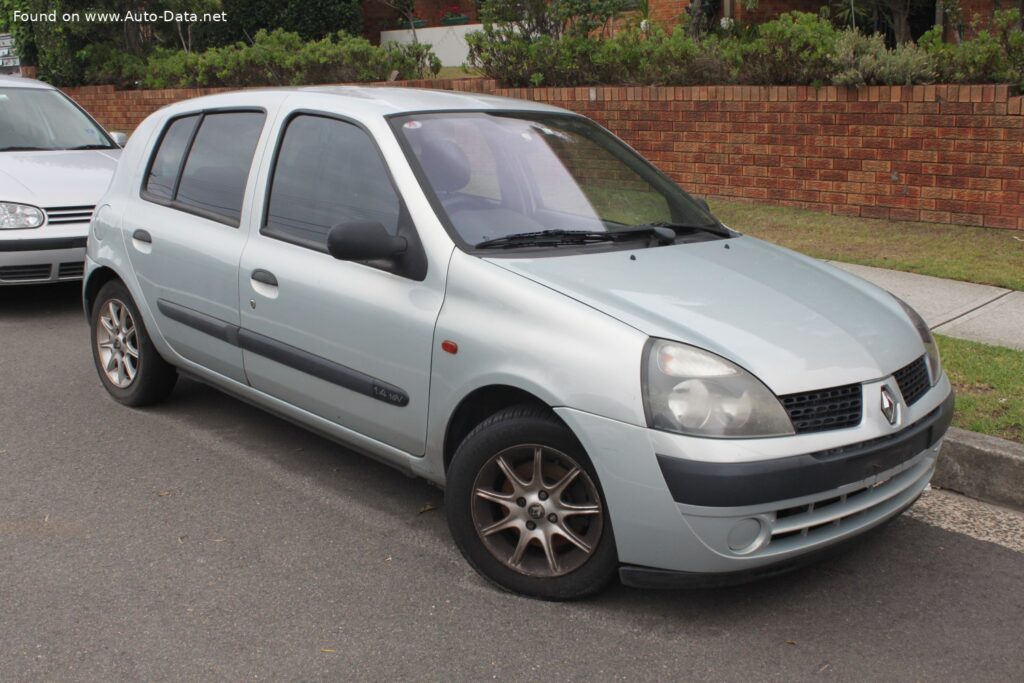
The Renault Clio II Phase II, produced from 2001 to 2003, represented a significant refresh of Renault’s popular supermini. Within the Phase II range, the 5-door 1.2-liter (60 hp) variant occupied the entry-level position, serving as the most affordable and fuel-efficient option for buyers. This model was built on the Renault 1HX0/B9K platform, shared with other small Renault and Nissan vehicles of the era. It aimed to provide practical, economical transportation for urban commuters and small families, prioritizing affordability over outright performance.
The 1.2L 60 hp Clio II: Positioning and Target Audience
The 1.2L 60 hp Clio II was deliberately positioned as the base model within the Phase II lineup. Above it sat variants with larger engines, such as the 1.4 16V and the more powerful 1.6 16V, offering increased performance at a higher price point. Compared to these, the 1.2L model traded speed for economy and lower running costs. It was aimed at first-time car buyers, those on a tight budget, or individuals primarily using the vehicle for short, urban journeys. The 5-door configuration further enhanced its practicality, making it suitable for families with young children or those needing easy access to the rear seats.
Powertrain & Engine Architecture
The heart of the 1.2L Clio II was the Renault D7F engine, a naturally aspirated, inline-four cylinder petrol engine with a displacement of 1149 cc (70.12 cubic inches). This engine utilized a multi-port fuel injection system and an overhead camshaft (OHC) valvetrain with two valves per cylinder. The D7F engine was known for its simplicity and reliability, although it wasn’t a powerhouse in terms of performance. It produced a maximum power output of 60 hp (44.7 kW) at 5250 rpm and a peak torque of 93 Nm (68.59 lb-ft) at 2500 rpm.
While a five-speed manual transmission was the most common pairing for this engine, a four-speed automatic transmission was also offered, albeit less frequently. This automatic gearbox, a Renault-sourced unit, was designed for smooth, comfortable operation rather than sporty responsiveness. It featured a traditional torque converter and hydraulic control system. The automatic version, while offering convenience, resulted in slightly reduced fuel economy and acceleration compared to the manual counterpart.
Driving Characteristics
The 1.2L 60 hp Clio II, particularly in automatic guise, was not designed for spirited driving. Acceleration from 0 to 100 km/h (0-62 mph) took approximately 15 seconds, and its top speed was around 158 km/h (98.18 mph). The engine felt strained at higher speeds, and overtaking required careful planning. The automatic transmission, while smooth, had relatively long shift times and a tendency to hunt for gears on inclines. However, within its intended environment – urban streets and slower-speed roads – the 1.2L Clio II proved to be perfectly adequate. The light steering and compact dimensions made it easy to maneuver in tight spaces, and the comfortable suspension absorbed bumps reasonably well. The gear ratios in the automatic transmission were optimized for fuel efficiency rather than rapid acceleration, contributing to its respectable combined fuel economy of 6.0 l/100 km (39.2 US mpg).
Equipment & Trim Levels
As the entry-level model, the 1.2L Clio II typically came with a relatively basic level of equipment. Standard features generally included power steering, central locking, front electric windows, and an adjustable steering column. Safety features included ABS (Anti-lock Braking System) and driver and passenger airbags. Interior upholstery was typically cloth, and the dashboard featured a simple, functional design. Optional extras included air conditioning, alloy wheels, a radio/CD player, and rear electric windows. Higher trim levels, such as the “Expression” or “Dynamique” variants, added more features as standard, but the base 1.2L model focused on providing essential transportation at an affordable price.
Chassis & Braking
The Clio II utilized a McPherson strut independent suspension system at the front, providing a comfortable ride and decent handling. The rear suspension employed a semi-independent beam axle with a stabilizer bar, which helped to reduce body roll during cornering. The front brakes were disc brakes, offering good stopping power, while the rear brakes were drum brakes, a cost-saving measure common in entry-level models. The 1.2L variant, being the lightest in the range, benefited from a slightly more agile feel compared to its higher-powered siblings. The steering was a hydraulic rack and pinion system, providing light and precise control.
Market Reception & Comparison
The 1.2L Clio II received generally positive reviews for its fuel efficiency, affordability, and practicality. Critics praised its ease of driving and maneuverability, making it well-suited for urban environments. However, the engine’s lack of power was a common criticism, particularly when compared to the more potent variants in the range. In terms of fuel economy, the 1.2L model outperformed the 1.4L and 1.6L versions, achieving a combined fuel consumption of 6.0 l/100 km (39.2 US mpg). Reliability was generally good, with the D7F engine proving to be a durable and long-lasting unit. Compared to competitors such as the Ford Fiesta and Volkswagen Polo, the Clio II offered a compelling combination of value, practicality, and fuel efficiency.
Technical Specifications
| Engine Type | Inline-4, Petrol |
| Engine Displacement | 1149 cc (70.12 cu in) |
| Engine Code | D7F |
| Power Output | 60 hp (44.7 kW) @ 5250 rpm |
| Torque Output | 93 Nm (68.59 lb-ft) @ 2500 rpm |
| Fuel Injection | Multi-port |
| Valvetrain | OHC, 2 valves/cylinder |
| Transmission | 4-speed Automatic (Optional) |
| Drive Type | Front-wheel drive |
| Kerb Weight | 900 kg (1984.16 lbs) |
| Maximum Speed | 158 km/h (98.18 mph) |
| 0-100 km/h | 15 seconds |
| Fuel Consumption (Urban) | 7.9 l/100 km (29.8 US mpg) |
| Fuel Consumption (Extra Urban) | 4.9 l/100 km (48 US mpg) |
| Fuel Consumption (Combined) | 6.0 l/100 km (39.2 US mpg) |
| CO2 Emissions | 143 g/km |
| Fuel Tank Capacity | 50 liters (13.21 US gal) |
Legacy
The 1.2L Clio II, particularly the automatic version, has proven to be a relatively reliable and affordable used car option. The D7F engine is known for its durability, and maintenance costs are generally low. However, potential buyers should be aware of the engine’s limited power output and the automatic transmission’s somewhat sluggish performance. Parts availability is generally good, as the Clio II was a popular model. Today, these cars are often sought after by those looking for a cheap and cheerful runabout for short journeys or as a first car. While not a performance icon, the 1.2L Clio II Phase II remains a testament to Renault’s ability to produce practical, economical, and reliable vehicles.