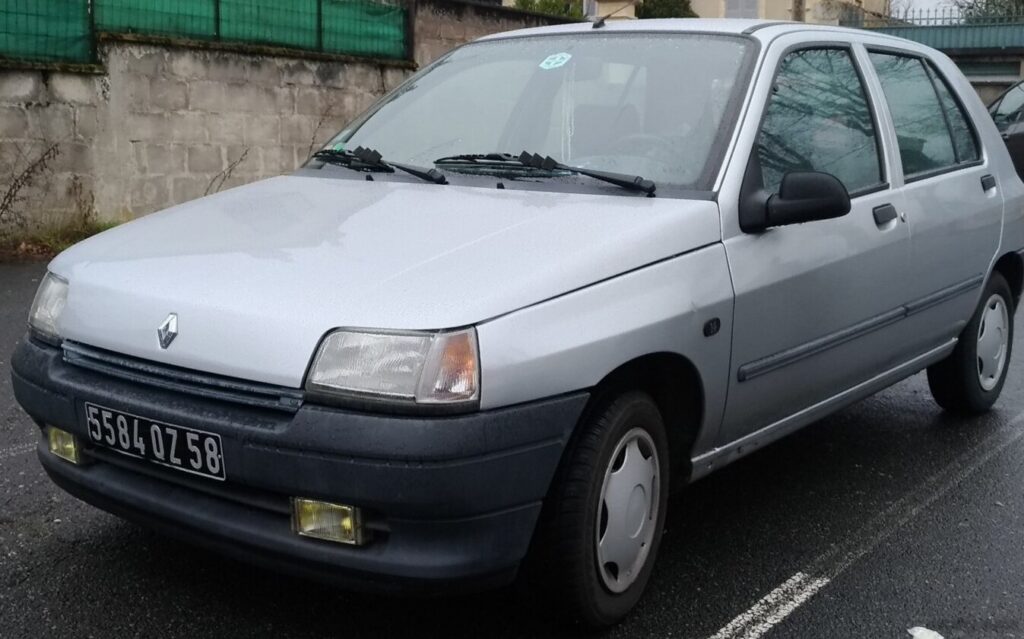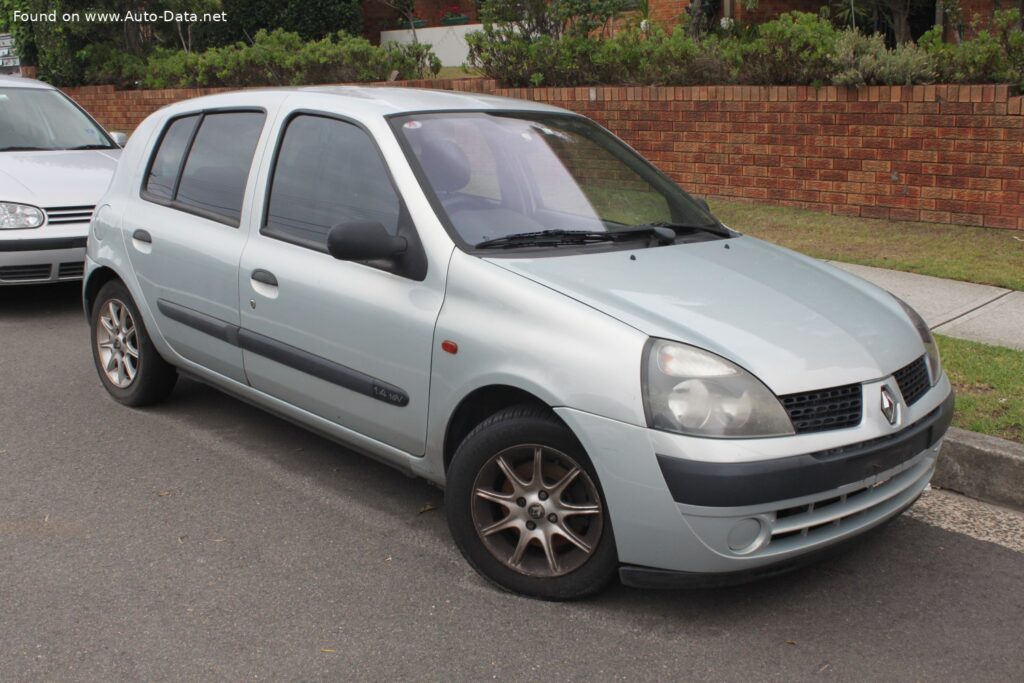
The Renault Clio II Phase II, produced from 2001 to 2003, represented a significant refresh of Renault’s popular supermini. Among the various engine and transmission combinations offered, the 5-door 1.4 16V (98 hp) automatic variant occupied a crucial position as an accessible, comfortable, and practical option for buyers prioritizing ease of use over outright performance. This model was built on the 1HX0/A3 platform, shared with other Renault and Nissan vehicles of the era, and aimed to provide a balance between affordability, fuel efficiency, and everyday usability.
The 1.4 16V Automatic: Positioning and Target Audience
The 1.4 16V automatic trim level was generally considered a mid-range offering within the Clio II Phase II lineup. It sat above the base 1.2 8V models, which were focused on absolute affordability, and below the sportier 1.6 16V and 2.0 16V variants, as well as the diesel options. The target audience for this specific configuration was families, commuters, and drivers who preferred the convenience of an automatic transmission and didn’t require the extra power offered by the higher-spec engines. It was marketed towards those seeking a reliable and easy-to-drive vehicle for daily use.
Powertrain & Engine Architecture
The heart of this Clio variant is the Renault K4J engine, a 1.4-liter inline-four cylinder gasoline engine. This engine, displacing 1390 cm³ (84.82 cubic inches), features a 10:1 compression ratio and a dual overhead camshaft (DOHC) valvetrain with four valves per cylinder. The K4J is a naturally aspirated engine, meaning it doesn’t utilize a turbocharger or supercharger. Fuel delivery is managed by a multi-port manifold injection system. The engine produces a maximum power output of 98 hp at 6000 rpm and 127 Nm (93.67 lb-ft) of torque at 3750 rpm. Power per liter is rated at 70.5 hp/l.
Paired with the K4J engine is a four-speed automatic transmission. This transmission, while providing convenience, is a relatively simple design compared to modern automatics. It features traditional hydraulic control and lacks the efficiency and responsiveness of more advanced transmissions like continuously variable transmissions (CVTs) or those with more gear ratios. The gear ratios are tuned for comfortable cruising and adequate acceleration, prioritizing smooth shifts over sporty performance.
Engine Code Specifics
The K4J engine code is commonly found in various Renault and Nissan models from the late 1990s and early 2000s. It’s known for its generally robust design, but can be susceptible to issues like oil leaks and occasional sensor failures with age. Regular maintenance, including oil changes and timing belt replacements, is crucial for ensuring its longevity.
Driving Characteristics
The 1.4 16V automatic Clio delivers a comfortable, if not particularly exciting, driving experience. Acceleration from 0-100 km/h (0-62 mph) takes approximately 12.9 seconds, and 0-60 mph is achieved in around 12.3 seconds. The top speed is rated at 180 km/h (111.85 mph). Compared to the manual transmission version of the same engine, the automatic suffers a slight performance penalty due to the inherent inefficiencies of the transmission. The four-speed automatic also means the engine tends to operate at higher RPMs during highway cruising, potentially leading to increased fuel consumption and noise levels compared to a manual or a higher-gear automatic.
The automatic transmission’s shift points are programmed for smooth transitions, but can sometimes feel hesitant during quick acceleration or when attempting to overtake. The overall driving experience is best described as relaxed and undemanding, making it well-suited for urban driving and longer journeys where comfort is prioritized.
Equipment & Trim Levels
The 1.4 16V automatic variant of the Clio II Phase II typically came equipped with a reasonable level of standard features. These generally included power steering, central locking, electric front windows, and an adjustable steering column. Interior upholstery was typically cloth, with a relatively simple dashboard layout. Optional extras available for this trim level included air conditioning, alloy wheels, a CD player, and upgraded interior trim materials. Safety features, such as ABS (Anti-lock Braking System), were often standard, but the availability of airbags could vary depending on the specific market and year of production.
Chassis & Braking
The Clio II Phase II utilized an independent McPherson strut suspension system at the front, providing a comfortable ride and decent handling characteristics. The rear suspension employed a semi-dependent beam with a stabilizer bar, which helped to reduce body roll during cornering. Braking duties were handled by disc brakes at the front and drum brakes at the rear. The hydraulic steering system provided adequate assistance, making it easy to maneuver in tight spaces. Tire sizes typically ranged from 175/65 R14 to 185/55 R15, depending on the wheel size.
Market Reception & Comparison
The 1.4 16V automatic Clio was generally well-received by critics as a practical and affordable option. It was praised for its comfortable ride, ease of use, and relatively low running costs. However, it was often criticized for its lack of performance and the somewhat dated feel of the four-speed automatic transmission. Compared to the 1.6 16V and 2.0 16V models, the 1.4 offered significantly less power and a less engaging driving experience. However, it also offered better fuel economy, with combined fuel consumption figures of around 7.3 l/100 km (32.2 US mpg, 38.7 UK mpg). The diesel variants offered even better fuel economy, but at the expense of refinement and performance.
Technical Specifications
| Brand | Renault |
| Model | Clio |
| Generation | Clio II (Phase II, 2001) 5-door |
| Type (Engine) | 1.4 16V (98 Hp) Automatic |
| Start of production | 2001 |
| End of production | 2003 |
| Engine Model/Code | K4J |
| Engine displacement | 1390 cm3 (84.82 cu. in.) |
| Number of cylinders | 4 |
| Power | 98 Hp @ 6000 rpm |
| Torque | 127 Nm @ 3750 rpm (93.67 lb.-ft. @ 3750 rpm) |
| Fuel consumption (urban) | 10 l/100 km (23.5 US mpg, 28.2 UK mpg) |
| Fuel consumption (extra urban) | 5.8 l/100 km (40.6 US mpg, 48.7 UK mpg) |
| Fuel consumption (combined) | 7.3 l/100 km (32.2 US mpg, 38.7 UK mpg) |
| CO2 emissions | 174 g/km |
| Acceleration 0-100 km/h | 12.9 sec |
| Acceleration 0-62 mph | 12.9 sec |
| Maximum speed | 180 km/h (111.85 mph) |
| Kerb Weight | 1030 kg (2270.76 lbs.) |
| Fuel tank capacity | 50 l (13.21 US gal, 11 UK gal) |
| Transmission | 4-speed automatic |
Legacy
The Renault Clio II, including the 1.4 16V automatic variant, remains a relatively common sight on European roads today. The K4J engine, while not known for being exceptionally powerful, is generally considered reliable when properly maintained. The four-speed automatic transmission, however, is often the first component to fail, and finding replacement parts can sometimes be challenging. In the used car market, these Clios are typically very affordable, making them attractive to first-time buyers or those seeking a cheap and cheerful runabout. Their simplicity and relatively low maintenance costs contribute to their continued popularity, despite their age and the availability of more modern alternatives.