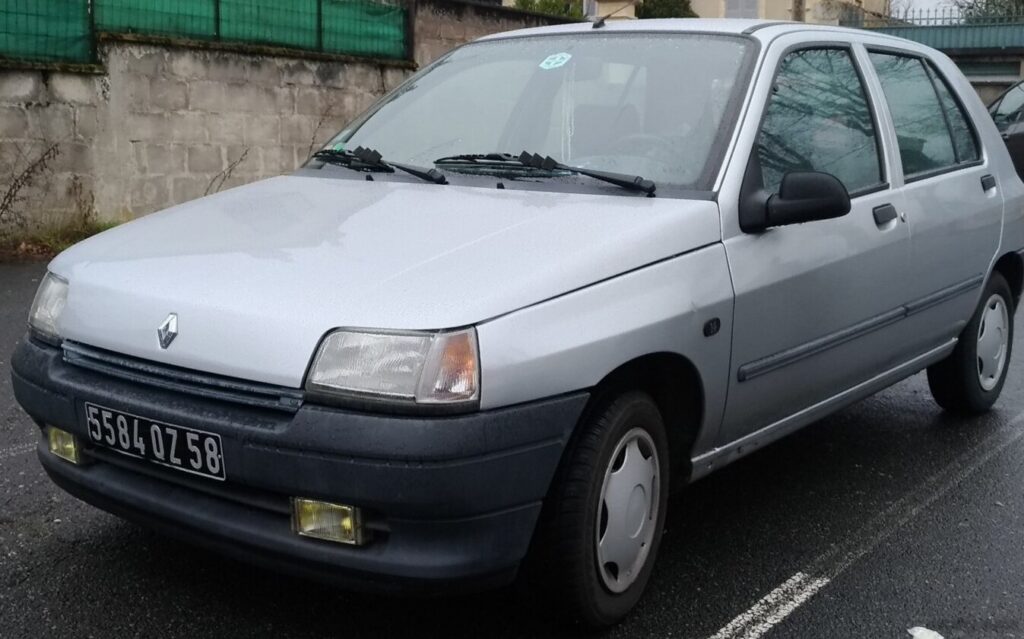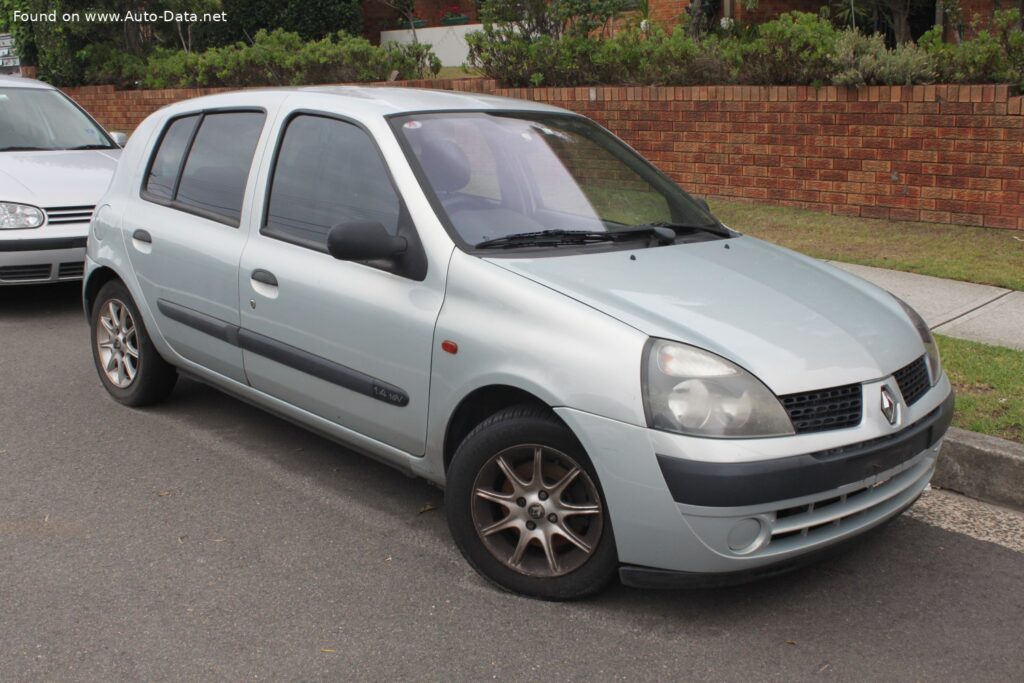
The Renault Clio II Phase II, produced from 2001 to 2003, represented a significant refresh of Renault’s popular supermini. Within the Phase II range, the 5-door 1.6 16V variant, producing 107 horsepower, occupied a mid-range position in the lineup. It offered a balance between performance, fuel economy, and equipment levels, appealing to buyers seeking a practical and reasonably spirited hatchback. This model was built on the Renault 1HX0/B platform, shared with other Renault and Nissan vehicles of the era.
Renault Clio II Phase II (2001-2003) 1.6 16V: An Overview
The 1.6 16V model aimed to provide a more engaging driving experience than the base 1.2 and 1.4 liter engines, while remaining more affordable and fuel-efficient than the sportier Clio Renault Sport models. It was positioned as a step up for those wanting more power for highway driving or carrying a full load of passengers. The Phase II update brought subtle styling changes, improved interior materials, and refinements to the engine and chassis compared to the earlier Phase I models.
Powertrain & Engine Architecture
At the heart of the Clio II 1.6 16V lies the K4M engine, a 1.6-liter (1598 cc) inline-four cylinder gasoline engine. This engine is characterized by its dual overhead camshafts (DOHC) and four valves per cylinder, contributing to its relatively high output for its displacement. The K4M engine utilizes a multi-port fuel injection system, delivering fuel directly into the intake ports. This system, common for its time, provided a good balance between efficiency and performance. The engine produces 107 hp at 5750 rpm and 148 Nm (109.16 lb-ft) of torque at 3750 rpm. The compression ratio is 10:1.
The engine is transversely mounted at the front of the vehicle, driving the front wheels. While a five-speed manual transmission was the most common pairing, a four-speed automatic transmission was also offered, though less frequently chosen. The automatic transmission, while providing convenience, did impact acceleration and fuel economy compared to the manual version. The automatic transmission featured standard torque converter technology and was designed for smooth, comfortable shifts rather than sporty performance.
Driving Characteristics
The 1.6 16V Clio II offered a noticeable improvement in performance over the lower-displacement engines. Acceleration from 0-100 km/h (0-62 mph) took approximately 9.6 seconds, and top speed was rated at 193 km/h (119.92 mph). While not a particularly fast car by modern standards, it provided adequate power for everyday driving and overtaking maneuvers. The engine felt responsive in the mid-range, making it suitable for both city and highway use.
The automatic transmission, while convenient, did detract from the driving experience. Gear changes were not particularly quick or crisp, and the transmission tended to hunt for gears on inclines. The manual transmission version offered a more engaging and efficient driving experience, allowing the driver to fully utilize the engine’s power. The Clio II’s suspension, consisting of an independent McPherson strut front suspension and a semi-independent beam rear suspension, provided a comfortable ride, although it wasn’t particularly sporty in its handling characteristics.
Equipment & Trim Levels
The 1.6 16V model typically came equipped with a reasonable level of standard features. These included power steering, central locking, electric front windows, and an adjustable steering column. Higher trim levels, such as the “Expression” or “Dynamique” variants, added features like air conditioning, alloy wheels, a CD player, and upgraded interior trim. Interior upholstery was typically cloth, with options for different patterns and colors. The dashboard layout was functional and straightforward, with easy-to-read gauges and controls.
Optional extras included a sunroof, rear electric windows, and metallic paint. Safety features were relatively basic for the time, consisting of ABS (Anti-lock Braking System) and driver and passenger airbags. The 5-door configuration offered increased practicality compared to the 3-door version, providing easier access to the rear seats and a more spacious interior.
Chassis & Braking
The Clio II 1.6 16V utilized a front-wheel-drive chassis with a McPherson strut suspension at the front and a torsion beam suspension at the rear. The front suspension incorporated a stabilizer bar to reduce body roll during cornering. The braking system consisted of ventilated discs at the front and drum brakes at the rear. ABS was standard, providing improved braking performance and stability, especially on slippery surfaces. The steering was a hydraulic power-assisted rack and pinion system, offering a reasonable level of feel and precision.
The kerb weight of the vehicle was approximately 1040 kg (2292.81 lbs), contributing to its relatively nimble handling. Tire size was typically 185/55 R15, mounted on 6J x 15 inch steel or alloy wheels.
Market Reception & Comparison
The Renault Clio II 1.6 16V was generally well-received by automotive critics. It was praised for its willing engine, comfortable ride, and practical interior. However, the automatic transmission was often criticized for its sluggishness. Compared to other superminis of the time, such as the Ford Fiesta and Volkswagen Polo, the Clio II offered a good balance of features and value. The 1.6 16V variant provided a noticeable performance advantage over the base models, making it a popular choice for buyers who wanted a bit more power.
Fuel economy was respectable, with combined fuel consumption figures of around 7.0 l/100 km (33.6 US mpg). Reliability was generally good, although some owners reported issues with the electronic ignition system and the automatic transmission. The Clio II 1.6 16V offered a more refined and enjoyable driving experience than the lower-powered models, making it a compelling option in the competitive supermini segment.
Technical Specifications
| Engine Model/Code | K4M |
| Engine Displacement | 1598 cm3 (97.52 cu. in.) |
| Number of Cylinders | 4, Inline |
| Power | 107 Hp @ 5750 rpm |
| Torque | 148 Nm (109.16 lb.-ft.) @ 3750 rpm |
| Fuel Injection System | Multi-port manifold injection |
| Compression Ratio | 10:1 |
| Valvetrain | DOHC |
| Kerb Weight | 1040 kg (2292.81 lbs.) |
| Maximum Speed | 193 km/h (119.92 mph) |
| Acceleration 0-100 km/h | 9.6 sec |
| Fuel Consumption (Combined) | 7.0 l/100 km (33.6 US mpg) |
| Fuel Tank Capacity | 50 l (13.21 US gal) |
| Trunk Space (Minimum) | 255 l (9.01 cu. ft.) |
| Trunk Space (Maximum) | 1037 l (36.62 cu. ft.) |
Legacy
The Renault Clio II 1.6 16V remains a relatively common sight on European roads today, testament to its durability and practicality. The K4M engine is known for its robustness and relatively simple maintenance requirements. While not a particularly collectible model, well-maintained examples are sought after by enthusiasts and those looking for an affordable and reliable used car. The automatic transmission versions tend to be less desirable due to their lower performance and potential for issues. Overall, the Clio II 1.6 16V represents a solid and dependable supermini that provided a good balance of performance, economy, and practicality for its time.