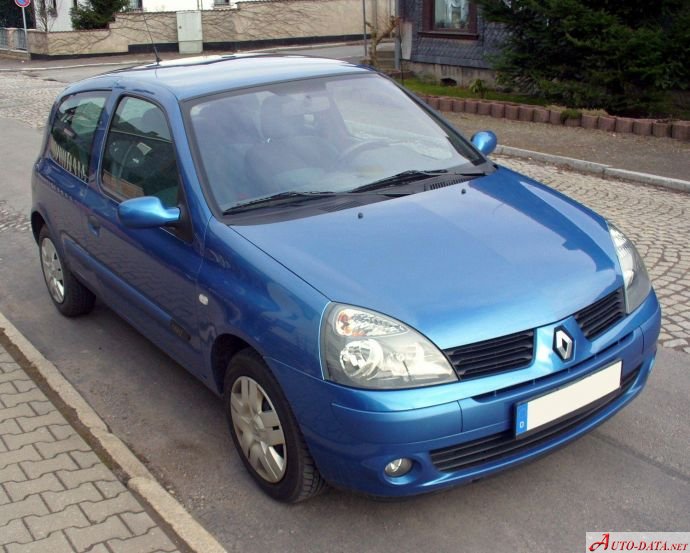
The Renault Clio II Phase III, produced from 2003 to 2006, represented a significant refresh of Renault’s popular supermini. Within the Phase III range, the 3-door 1.4 16V model, producing 98 horsepower, occupied a crucial position as a mainstream offering. It was designed to appeal to buyers seeking a balance between affordability, practicality, and reasonable performance. This variant was positioned as a step up from the base 1.2-liter engine, offering more power and refinement, while remaining more accessible than the sportier and more expensive versions like the Clio Renault Sport.
The 1.4 16V Engine and its Role in the Clio II Lineup
The 1.4 16V engine, designated the K4J engine code, was a key component of Renault’s engine family during the early 2000s. It represented a move towards increased power output and improved efficiency compared to earlier 8-valve designs. In the Clio II Phase III, this engine was offered as a mid-range option, bridging the gap between the entry-level 1.2 16V and the more powerful 1.6 16V. The 1.4 16V was particularly popular with buyers who frequently drove on motorways or carried passengers regularly, as its extra power made these situations less strained.
Powertrain & Engine Architecture
The K4J engine is a 1390cc (84.82 cubic inches) inline-four cylinder engine featuring a double overhead camshaft (DOHC) valvetrain and four valves per cylinder. This 16-valve configuration allowed for improved breathing and higher engine speeds, contributing to the engine’s 98 hp output at 6000 rpm and 127 Nm (93.67 lb-ft) of torque at 3750 rpm. The engine utilized a multi-port fuel injection system, delivering fuel directly into the intake ports, optimizing combustion efficiency. The compression ratio was set at 10:1. Engine oil capacity was 4.9 liters (5.18 US quarts / 4.31 UK quarts) and required a specification adhering to Renault’s standards for the period.
Paired with the 1.4 16V engine was typically a five-speed manual transmission. However, the focus of this article is the variant equipped with a four-speed automatic transmission. This automatic gearbox, while providing convenience, was a significant factor in the car’s overall performance and driving experience. It was a conventional hydraulic automatic, lacking the modern features of electronically controlled transmissions. The gear ratios were optimized for fuel efficiency and smooth operation, but at the expense of outright acceleration.
Driving Characteristics
The 1.4 16V automatic Clio II offered a comfortable and predictable driving experience. Acceleration from 0-62 mph (0-100 km/h) took approximately 10.5 seconds, which was noticeably slower than the manual version. The automatic transmission, while convenient, resulted in some power loss and a less engaging driving experience. The gear changes were generally smooth, but could feel somewhat hesitant during quick acceleration or when attempting to overtake. The power delivery was linear, with a usable amount of torque available from mid-range revs. The car felt most at home in urban environments and on relatively flat roads. Hill climbs, particularly with a full load, required the transmission to downshift frequently, impacting fuel economy.
Equipment & Trim Levels
The 1.4 16V automatic variant of the Clio II Phase III typically came equipped with a reasonable level of standard features. These included power steering, central locking, electric front windows, and an adjustable steering column. Interior upholstery was typically cloth, with a relatively simple dashboard layout. Air conditioning was often an optional extra, as were alloy wheels and a CD player. Higher trim levels, such as the “Expression” or “Dynamique” packages, added features like rear electric windows, a trip computer, and upgraded interior trim. Safety features included ABS (Anti-lock Braking System) and driver and passenger airbags.
Chassis & Braking
The Clio II Phase III utilized a McPherson strut front suspension with a coil spring and anti-roll bar, providing a comfortable ride and decent handling. The rear suspension employed a semi-independent beam with a stabilizer, offering a compromise between ride comfort and stability. The front brakes were disc brakes, while the rear brakes were drum brakes – a cost-saving measure common in this class of vehicle. The hydraulic power steering provided light and easy steering, making it ideal for city driving. Tire size was typically 175/65 R14, mounted on 6J x 15 inch steel or alloy wheels.
Market Reception & Comparison
The 1.4 16V automatic Clio II received generally positive reviews from automotive critics. It was praised for its comfortable ride, practical interior, and reasonable fuel economy. However, the automatic transmission was often criticized for its sluggish performance and lack of responsiveness compared to the manual gearbox. Fuel consumption was rated at 6.7 l/100 km (35.1 US mpg / 42.2 UK mpg) combined, which was competitive for its class. Compared to the 1.2 16V, the 1.4 offered a noticeable improvement in performance, while the 1.6 16V provided even more power but at a higher price point. The 1.9 TDI diesel variant offered superior fuel economy but came with a higher purchase price and potentially higher maintenance costs.
Technical Specifications
| Brand | Renault |
| Model | Clio II Phase III |
| Engine Type | 1.4 16V Petrol |
| Engine Code | K4J |
| Displacement | 1390 cm3 (84.82 cu. in.) |
| Power | 98 hp @ 6000 rpm |
| Torque | 127 Nm (93.67 lb-ft) @ 3750 rpm |
| Transmission | 4-speed Automatic |
| Drive | Front Wheel Drive |
| Fuel Consumption (Urban) | 9.2 l/100 km (25.6 US mpg) |
| Fuel Consumption (Extra Urban) | 5.3 l/100 km (44.4 US mpg) |
| Fuel Consumption (Combined) | 6.7 l/100 km (35.1 US mpg) |
| CO2 Emissions | 160 g/km |
| Kerb Weight | 980 kg (2160.53 lbs) |
| Maximum Speed | 185 km/h (114.95 mph) |
| 0-100 km/h | 10.5 sec |
| Fuel Tank Capacity | 50 l (13.21 US gal) |
| Trunk Space (Min) | 255 l (9.01 cu. ft.) |
| Trunk Space (Max) | 1037 l (36.62 cu. ft.) |
Legacy
The 1.4 16V automatic Renault Clio II Phase III has proven to be a relatively reliable and durable vehicle. The K4J engine is known for its longevity, provided it receives regular maintenance, including oil changes and timing belt replacements. The automatic transmission, while not the most sophisticated, is generally robust. Today, these cars are readily available on the used car market at affordable prices. They represent a practical and economical option for buyers seeking a small, reliable hatchback. However, potential buyers should be aware of potential issues such as corrosion, particularly on older examples, and the possibility of wear and tear on suspension components. The simplicity of the engine and transmission makes them relatively easy and inexpensive to repair, contributing to their continued appeal as a budget-friendly transportation option.