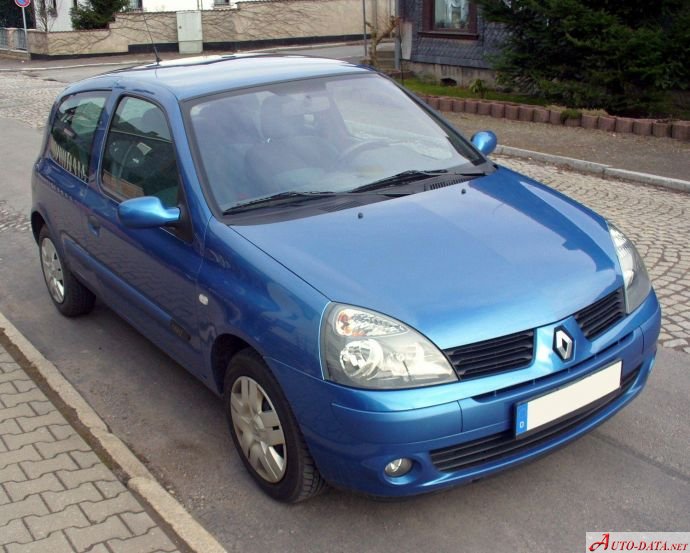
The Renault Clio II Phase III, produced from 2003 to 2006, represented a significant refresh of Renault’s popular supermini. Within this generation, the 3-door 1.5 dCi variant, producing 82 horsepower, occupied the position of an economy-focused model. It was designed to appeal to buyers prioritizing fuel efficiency and affordability, serving as a stepping stone into the Clio range. This variant was positioned below the more powerful petrol engines and higher-specification diesel models, offering a practical and cost-effective option in the competitive European small car market. The Clio II, built on the 1HX0/A3 platform, continued Renault’s tradition of providing a stylish and well-equipped vehicle in its segment.
The 1.5 dCi 82 Hp Engine: Powertrain & Engine Architecture
The heart of this Clio variant is the Renault K9K 1.5 dCi engine. This is a four-cylinder, inline diesel engine with a displacement of 1461 cc (89.16 cubic inches). The K9K engine family is known for its robust design and relatively simple mechanics, contributing to its longevity and ease of maintenance. This particular iteration, producing 82 hp at 4000 rpm and 185 Nm (136.45 lb-ft) of torque at 2000 rpm, utilizes a second-generation common rail direct injection system. This system, supplied by Delphi, allowed for precise fuel delivery, optimizing combustion efficiency and reducing emissions. The engine features an overhead camshaft (OHC) valvetrain with two valves per cylinder. A turbocharger with an intercooler is employed to boost power and torque output, providing improved responsiveness compared to naturally aspirated diesel engines.
The 1.5 dCi engine was typically paired with a five-speed manual transmission. This transmission was chosen for its efficiency and suitability for the engine’s torque characteristics. The gear ratios were optimized to provide a balance between acceleration and fuel economy. While an automated manual transmission (Quickshift) was available on some Clio II models, it was not commonly paired with the 82 hp 1.5 dCi engine. The engine’s transverse mounting and front-wheel-drive configuration contribute to its compact footprint and efficient packaging within the Clio’s chassis.
Fuel Injection and Turbocharging
The Delphi common rail system operates at a high pressure, enabling finer atomization of the fuel and more complete combustion. This results in reduced particulate matter and nitrogen oxide emissions, helping the engine meet Euro 3 emission standards. The turbocharger, a variable geometry turbo (VGT) in some later iterations, provides boost across a wider range of engine speeds, minimizing turbo lag and improving driveability. The intercooler cools the compressed air from the turbocharger, increasing its density and further enhancing engine performance.
Driving Characteristics
The 1.5 dCi 82 hp Clio offered a driving experience focused on practicality and fuel efficiency rather than outright performance. Acceleration from 0 to 100 km/h (0-62 mph) took approximately 12.2 seconds, and top speed was around 175 km/h (108.74 mph). While not particularly quick, the engine provided sufficient power for everyday driving situations, including urban commutes and highway cruising. The torque output of 185 Nm was readily available from 2000 rpm, making it easy to maintain speed on inclines and overtake slower vehicles. Compared to the 1.4 16V petrol engine, the 1.5 dCi offered significantly better fuel economy and a more relaxed driving experience at highway speeds. However, it lacked the responsiveness and higher revving nature of the petrol engine. Compared to the more powerful 1.5 dCi 105 hp variant, the 82 hp version felt noticeably less energetic, particularly when fully loaded or driving uphill.
The five-speed manual transmission was generally well-matched to the engine, with gear ratios providing a good balance between acceleration and fuel economy. The clutch was relatively light, making it easy to operate in stop-and-go traffic. The steering was light and precise, contributing to the Clio’s nimble handling. Overall, the driving experience was characterized by its ease of use and focus on practicality.
Equipment & Trim Levels
The 1.5 dCi 82 hp Clio II Phase III was typically offered in a base or mid-range trim level. Standard equipment generally included power steering, central locking, electric front windows, and an adjustable steering column. Safety features included ABS (Anti-lock Braking System) and driver and passenger airbags. Interior upholstery was typically cloth, with a simple and functional dashboard layout. Optional extras included air conditioning, alloy wheels, a CD player, and rear electric windows. Higher trim levels might have added features such as a trip computer, remote central locking, and upgraded interior trim.
The 3-door body style was favored by buyers seeking a sportier appearance and easier parking in urban environments. The interior space was adequate for four adults, although rear legroom could be limited. The rear seats could be folded down to increase luggage capacity, providing greater versatility.
Chassis & Braking
The Clio II Phase III utilized a MacPherson strut front suspension and a coil spring rear suspension. This setup provided a good balance between ride comfort and handling. The front suspension featured an anti-roll bar to reduce body roll during cornering. The braking system consisted of ventilated discs on the front wheels and drum brakes on the rear wheels. This configuration was typical for vehicles in this weight class and provided adequate stopping power for everyday driving. The hydraulic power steering provided light and precise steering feel.
The Clio II’s chassis was relatively lightweight, contributing to its fuel efficiency and nimble handling. The weight-to-power ratio of 11.9 kg/hp and weight-to-torque ratio of 5.3 kg/Nm reflected the engine’s modest power output and respectable torque. The tires were typically 175/65 R14, providing a good balance between grip and ride comfort.
Market Reception & Comparison
The Renault Clio II Phase III 1.5 dCi 82 hp was generally well-received by critics for its fuel efficiency, affordability, and practicality. It was praised for its comfortable ride and nimble handling. However, some critics noted its lack of outright performance compared to higher-powered variants. Fuel economy figures of 4.2 l/100 km (56 US mpg) combined were highly competitive in its class. Reliability was generally good, although some owners reported issues with the common rail fuel injection system. Compared to other small diesel cars of the time, such as the Peugeot 206 HDi and the Volkswagen Polo TDI, the Clio offered a compelling combination of value and features.
Technical Specifications
| Brand | Renault |
| Model | Clio |
| Generation | Clio II (Phase III, 2003) |
| Engine Type | 1.5 dCi (82 Hp) |
| Production Years | 2003-2006 |
| Body Type | Hatchback, 3-door |
| Engine Code | K9K |
| Engine Displacement | 1461 cm3 (89.16 cu. in.) |
| Number of Cylinders | 4, Inline |
| Power | 82 Hp @ 4000 rpm |
| Torque | 185 Nm (136.45 lb.-ft.) @ 2000 rpm |
| Fuel Type | Diesel |
| Fuel Consumption (Urban) | 5.4 l/100 km (43.6 US mpg) |
| Fuel Consumption (Extra Urban) | 3.5 l/100 km (67.2 US mpg) |
| Fuel Consumption (Combined) | 4.2 l/100 km (56 US mpg) |
| CO2 Emissions | 110 g/km |
| Acceleration 0-100 km/h | 12.2 sec |
| Maximum Speed | 175 km/h (108.74 mph) |
| Kerb Weight | 975 kg (2149.51 lbs.) |
| Fuel Tank Capacity | 48 l (12.68 US gal) |
| Transmission | 5-speed Manual |
Legacy
The Renault Clio II 1.5 dCi 82 hp powertrain proved to be a reliable and durable unit. Many examples are still on the road today, testament to the engine’s robust design and relatively simple mechanics. While not known for its performance, it offered a practical and economical solution for everyday transportation. In the used car market, these Clios are often sought after by buyers looking for an affordable and fuel-efficient vehicle. Maintenance costs are generally low, and spare parts are readily available. The K9K engine, in its various iterations, continued to be used in other Renault and Nissan models for many years, further cementing its reputation as a dependable and economical diesel engine.