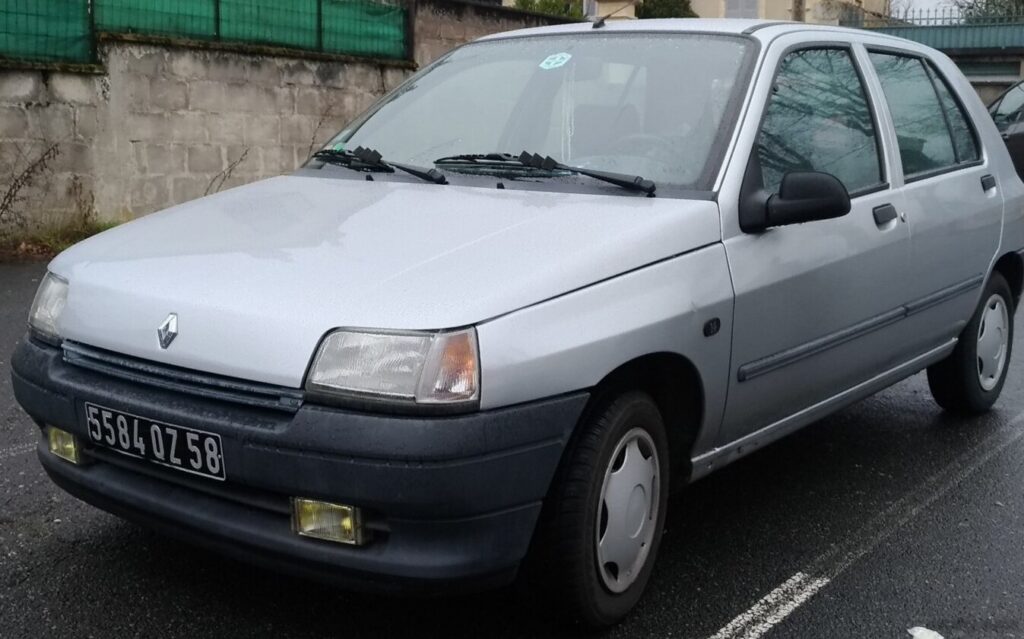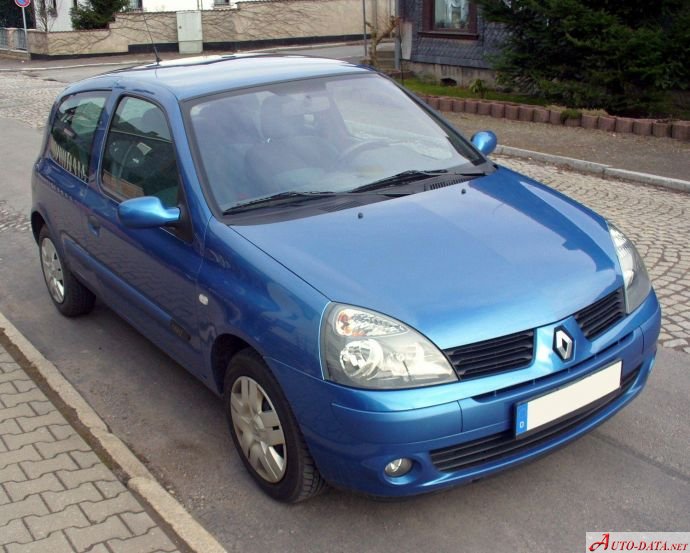
The Renault Clio II Phase III, produced from 2003 to 2006, represented a significant refresh of Renault’s popular supermini. Within this generation, the 3-door 1.6 16V (107 hp) Automatic variant occupied a middle-ground position in the lineup, offering a blend of performance and convenience aimed at buyers seeking a more refined driving experience than the base models, but without the cost of the sportier or diesel-powered options. This model was built on the 1HX0/A3 platform, shared with other Renault and Nissan vehicles of the era.
The 1.6 16V Automatic: Positioning and Target Audience
The 1.6 16V Automatic Clio II was designed to appeal to drivers who prioritized ease of use and comfort. It wasn’t marketed as a performance model, but rather as a practical and well-equipped hatchback suitable for daily commuting and urban driving. Compared to the base 1.2L and 1.4L engine options, the 1.6L offered noticeably more power and torque, making it more capable on highways and when fully loaded. However, it sat below the more powerful 2.0L 16V and the fuel-efficient 1.5 dCi diesel variants in terms of overall performance and running costs. The automatic transmission further broadened its appeal to those who preferred not to operate a manual gearbox, particularly in congested city environments.
Powertrain & Engine Architecture
The heart of this Clio variant is the Renault K4M engine, a 1.6-liter (1598 cm3) inline-four cylinder gasoline engine. This engine features a double overhead camshaft (DOHC) valvetrain with four valves per cylinder, contributing to its relatively high output for its displacement. The K4M engine utilizes multi-port fuel injection, delivering fuel directly into the intake ports. It produces 107 horsepower (hp) at 5750 rpm and 148 Newton-meters (109.16 lb-ft) of torque at 3750 rpm. The compression ratio is 10:1.
The engine is transversely mounted at the front of the vehicle. Paired with the K4M engine is a four-speed automatic transmission. This transmission, while providing convenience, is a relatively older design compared to more modern automatic gearboxes. It features standard torque converter technology and lacks the efficiency of newer transmissions with more gears. The gear ratios are tuned for smooth operation and acceptable acceleration, but don’t prioritize fuel economy or sporty performance. The transmission’s shift points are designed to balance drivability and engine efficiency.
Engine Specifications (K4M)
- Displacement: 1598 cm3 (97.52 cu. in.)
- Cylinder Bore: 79.5 mm (3.13 in.)
- Piston Stroke: 80.5 mm (3.17 in.)
- Engine Oil Capacity: 4.9 liters (5.18 US qt | 4.31 UK qt)
- Coolant Capacity: 6.2 liters (6.55 US qt | 5.46 UK qt)
Driving Characteristics
The 1.6 16V Automatic Clio II delivers a comfortable, if not particularly exhilarating, driving experience. Acceleration from 0 to 100 km/h (0-62 mph) takes approximately 10.5 seconds, and top speed is rated at 188 km/h (116.82 mph). The four-speed automatic transmission contributes to a noticeable lack of urgency compared to the manual transmission versions of the same engine. The automatic transmission tends to hunt for gears on inclines or during sudden acceleration, and the overall responsiveness is less direct. However, for everyday driving, the automatic provides a smooth and effortless experience. The power delivery is linear, with usable torque available from mid-range revs. The steering is light and precise, making it easy to maneuver in urban environments.
Equipment & Trim Levels
The 1.6 16V Automatic trim level typically included features such as power steering, central locking, electric front windows, and an AM/FM radio. Air conditioning was often a standard feature or available as an option. Interior upholstery was typically cloth, with a relatively simple dashboard layout. Optional extras included alloy wheels, a sunroof, and upgraded audio systems. Safety features included ABS (Anti-lock Braking System) and driver and passenger airbags. The specific equipment levels could vary slightly depending on the market and optional packages selected by the original buyer.
Chassis & Braking
The Clio II utilizes an independent McPherson strut suspension system at the front, providing a comfortable ride and good handling characteristics. The rear suspension employs a semi-independent beam with a stabilizer bar, which helps to reduce body roll during cornering. The front brakes are discs, while the rear brakes are drums. This configuration was typical for vehicles in this weight class and price range during the early 2000s. The hydraulic power steering provides light and responsive steering feel. Tire size is typically 185/55 R15, mounted on 6J x 15 inch wheels.
Market Reception & Comparison
The 1.6 16V Automatic Clio II received generally positive reviews from automotive critics. It was praised for its comfortable ride, practical interior, and relatively refined engine. However, the automatic transmission was often criticized for its lack of responsiveness and fuel efficiency compared to the manual gearbox. Fuel economy figures are rated at 7.4 l/100 km (31.8 US mpg / 38.2 UK mpg) combined, which is reasonable for a vehicle of this type and era. Compared to the 1.5 dCi diesel variant, the 1.6L Automatic offered less fuel economy but a smoother and quieter driving experience. Against the 2.0L 16V, it provided a more affordable entry point with adequate performance for most drivers.
Technical Specifications
| Brand | Renault |
| Model | Clio II Phase III |
| Engine | 1.6 16V (K4M) |
| Displacement | 1598 cm3 (97.52 cu. in.) |
| Power | 107 hp @ 5750 rpm |
| Torque | 148 Nm (109.16 lb-ft) @ 3750 rpm |
| Transmission | 4-speed Automatic |
| Drive | Front Wheel Drive |
| Acceleration 0-100 km/h | 10.5 sec |
| Top Speed | 188 km/h (116.82 mph) |
| Fuel Consumption (Combined) | 7.4 l/100 km (31.8 US mpg / 38.2 UK mpg) |
| CO2 Emissions | 175 g/km |
| Kerb Weight | 1040 kg (2292.81 lbs) |
| Fuel Tank Capacity | 50 l (13.21 US gal | 11 UK gal) |
| Trunk Space (Min/Max) | 255 l / 1037 l (9.01 cu. ft. / 36.62 cu. ft.) |
Legacy
The Renault Clio II 1.6 16V Automatic, while not a particularly rare or sought-after variant, remains a relatively reliable and affordable used car option. The K4M engine is known for its durability, and with regular maintenance, can provide many years of service. The automatic transmission, however, is a potential weak point, and may require attention as the vehicle ages. Parts availability is generally good, and the Clio II benefits from a large and active owner community. Today, these cars are often found as economical city runabouts or as first cars for new drivers. Their simple mechanical design makes them relatively easy to maintain and repair, contributing to their continued presence on the roads.