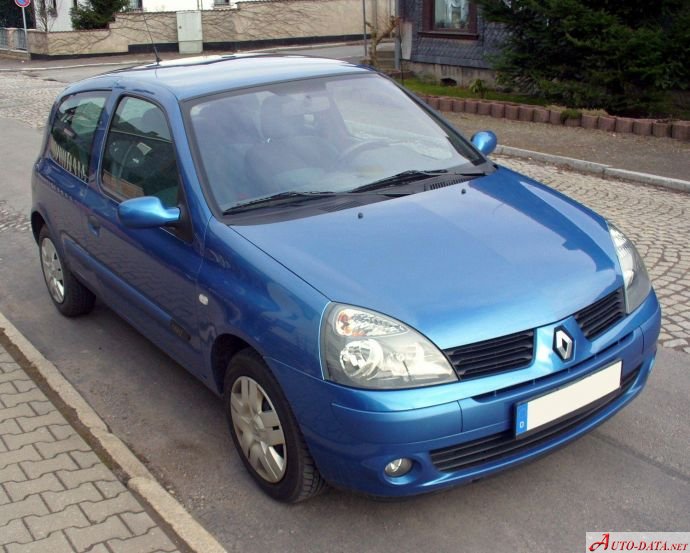
The Renault Clio II Phase III, produced from 2003 to 2006, represented a significant evolution of Renault’s popular supermini. Within this phase, the 3-door 2.0 16V Sport variant, boasting 179 horsepower, occupied the performance-oriented top tier of the Clio II lineup. This model aimed to deliver a more engaging driving experience than the standard Clio II, appealing to enthusiasts seeking a sporty and practical hatchback. It was positioned above the base models and the 1.2 and 1.4 liter engine options, offering a substantial power increase and corresponding performance enhancements. The Clio II platform (X65/B0) was a successful one for Renault, and the Phase III updates brought styling refinements and improvements to interior quality.
Renault Clio II Phase III 2.0 16V Sport: An Overview
The 2.0 16V Sport model was a key offering in the Phase III range, designed to compete with other hot hatches of the era, such as the Peugeot 206 GTI and the Volkswagen Polo GTI. It distinguished itself through its high-revving naturally aspirated engine, sporty suspension tuning, and distinctive styling cues. While not as overtly aggressive as some of its rivals, the Clio II 2.0 16V Sport offered a balanced blend of performance, practicality, and affordability. The three-door body style further emphasized its sporty intentions, offering a more focused driving experience compared to the five-door versions.
Powertrain & Engine Architecture
At the heart of the Clio II 2.0 16V Sport lies the F4R 770 engine, a 1998cc inline-four cylinder powerplant. This engine is a naturally aspirated unit, meaning it does not utilize a turbocharger or supercharger to force air into the cylinders. Instead, it relies on its displacement and efficient cylinder head design to produce power. The engine features multi-point fuel injection, delivering fuel directly into the intake ports, and a double overhead camshaft (DOHC) valvetrain with four valves per cylinder. This configuration allows for optimized airflow and efficient combustion. The compression ratio is set at 11:1, contributing to the engine’s responsive nature.
The F4R engine family is known for its robustness and relatively simple design, making it reasonably reliable and straightforward to maintain. The 16-valve cylinder head design, coupled with carefully tuned intake and exhaust systems, allows the engine to produce a peak power output of 179 hp at 6500 rpm and a torque figure of 200 Nm (147.51 lb-ft) at 5250 rpm. The engine’s power-to-litre ratio is an impressive 89.6 hp/l. The engine is transversely mounted in the front of the vehicle, driving the front wheels.
Driving Characteristics
The Clio II 2.0 16V Sport delivers a lively and engaging driving experience. The engine’s high-revving nature encourages drivers to explore the upper reaches of the tachometer, where peak power is delivered. While the 200 Nm of torque isn’t overwhelming by modern standards, it provides sufficient pull for brisk acceleration and confident overtaking. Acceleration from 0 to 100 km/h (0-62 mph) takes approximately 7.1 seconds, and 0 to 60 mph is achieved in around 6.7 seconds. The top speed is rated at 222 km/h (137.94 mph).
The five-speed manual transmission is well-matched to the engine’s characteristics, offering precise shifts and a satisfying mechanical feel. The gear ratios are tuned to maximize acceleration and maintain engine responsiveness. Compared to lower-powered Clio II variants, the 2.0 16V Sport feels significantly more agile and capable, particularly on winding roads. The suspension, featuring McPherson struts at the front and a semi-independent beam at the rear, provides a firm but controlled ride, minimizing body roll and enhancing handling precision.
Equipment & Trim Levels
The 2.0 16V Sport trim level came generously equipped, reflecting its position as the flagship model in the Clio II Phase III range. Standard features typically included alloy wheels, sports seats with enhanced bolstering, a leather-wrapped steering wheel, air conditioning, and electric front windows. The interior featured a sporty aesthetic, with aluminum pedals and unique upholstery patterns. Optional extras could include a sunroof, upgraded audio system, and rear parking sensors.
The dashboard layout was typical of the Clio II, with a functional and user-friendly design. The instrument cluster featured distinctive graphics and included a tachometer to emphasize the engine’s sporty character. Interior space was adequate for a supermini, offering comfortable seating for five passengers, although rear legroom could be limited for taller occupants.
Chassis & Braking
The Clio II 2.0 16V Sport’s chassis was designed to complement its sporty engine. The front suspension utilizes independent McPherson struts with a coil spring and anti-roll bar, providing responsive steering and good handling characteristics. The rear suspension employs a semi-dependent beam with a stabilizer bar, offering a balance between comfort and stability. The front brakes are ventilated discs measuring 280 mm, while the rear brakes are solid discs measuring 228 mm. An Anti-lock Braking System (ABS) was standard, enhancing braking performance and safety.
The steering is a hydraulic rack and pinion system, providing precise and responsive control. The tires are typically sized 185/55 R15, offering a good compromise between grip and ride comfort. The curb weight of the vehicle is 1110 kg (2447.13 lbs), contributing to its agile handling and respectable acceleration.
Market Reception & Comparison
The Renault Clio II 2.0 16V Sport was generally well-received by automotive critics, who praised its lively engine, engaging handling, and overall value for money. It was often compared favorably to rivals such as the Peugeot 206 GTI and the Volkswagen Polo GTI. While some critics noted that the interior lacked the refinement of some competitors, the Clio II Sport’s focus on driving enjoyment was widely appreciated.
In terms of fuel economy, the Clio II 2.0 16V Sport achieved approximately 8.1 l/100 km (29 US mpg) on a combined cycle, with urban consumption reaching 11.3 l/100 km (20.8 US mpg) and extra-urban consumption dropping to 6.2 l/100 km (37.9 US mpg). CO2 emissions were rated at 194 g/km. Reliability was generally good, although regular maintenance was essential to ensure optimal performance. The F4R engine is known to be durable, but issues such as oil leaks and sensor failures could occasionally occur.
Technical Specifications
| Brand | Renault |
| Model | Clio |
| Generation | Clio II (Phase III, 2003) |
| Engine Type | 2.0 16V Sport (179 Hp) |
| Engine Code | F4R 770 |
| Engine Displacement | 1998 cm3 (121.93 cu. in.) |
| Number of Cylinders | 4 |
| Engine Configuration | Inline |
| Power | 179 Hp @ 6500 rpm |
| Torque | 200 Nm @ 5250 rpm (147.51 lb.-ft.) |
| Fuel Type | Petrol (Gasoline) |
| Fuel Consumption (Urban) | 11.3 l/100 km (20.8 US mpg) |
| Fuel Consumption (Extra Urban) | 6.2 l/100 km (37.9 US mpg) |
| Fuel Consumption (Combined) | 8.1 l/100 km (29 US mpg) |
| CO2 Emissions | 194 g/km |
| Acceleration 0-100 km/h | 7.1 sec |
| Acceleration 0-62 mph | 7.1 sec |
| Maximum Speed | 222 km/h (137.94 mph) |
| Kerb Weight | 1110 kg (2447.13 lbs) |
| Fuel Tank Capacity | 50 l (13.21 US gal) |
Legacy
The Renault Clio II 2.0 16V Sport remains a popular choice among enthusiasts seeking an affordable and engaging hot hatch. Its robust engine, nimble handling, and distinctive styling have ensured its enduring appeal. While newer hot hatches offer significantly more power and performance, the Clio II Sport retains a certain charm and character that is often lacking in more modern vehicles. On the used car market, well-maintained examples command a reasonable price, reflecting their desirability and collectibility. The F4R engine, when properly maintained, is known for its longevity, making the Clio II 2.0 16V Sport a relatively reliable and enjoyable classic.