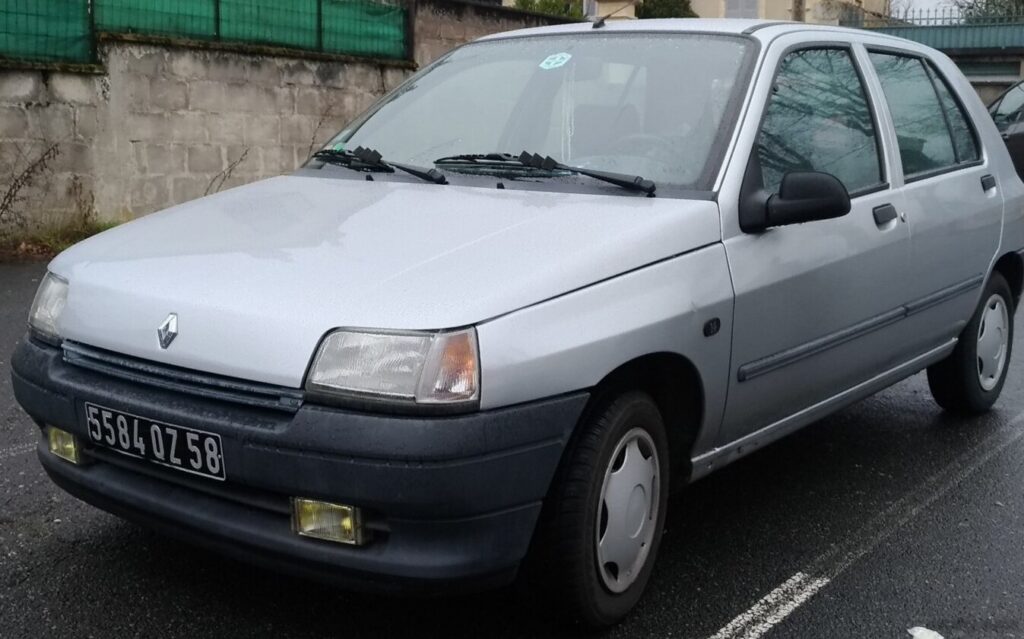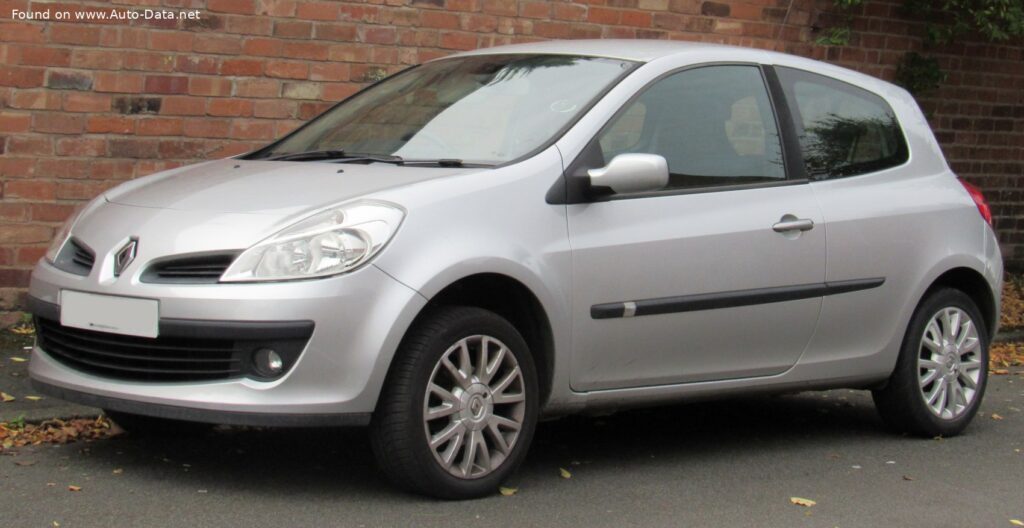
The Renault Clio III Phase I 3-door 1.2 16V (78 hp) Quickshift, produced between 2005 and 2009, represented an entry-level offering within the broader Clio III range. This variant was positioned as an economical and practical choice for urban drivers, prioritizing fuel efficiency and ease of use over outright performance. It was part of the X98 series, built on the Renault-Nissan B platform, also known as the 1HX0 platform for the Clio III. The “Quickshift” designation refers to the automated manual transmission, a unique feature for this segment at the time, offering a degree of convenience without the full complexity (and cost) of a traditional automatic.
Powertrain & Engine Architecture
The heart of the Clio III 1.2 16V Quickshift is the D4F 764 engine, a 1.149-liter (70.12 cubic inches) inline-four cylinder gasoline engine. This engine utilizes a multi-point fuel injection system, delivering fuel directly into the intake ports. The engine features a double overhead camshaft (DOHC) valvetrain with four valves per cylinder, contributing to its relatively efficient operation. The compression ratio is 10.6:1. The engine produces 78 horsepower at 5500 rpm and 108 Nm (79.66 lb-ft) of torque at 4250 rpm. Power per liter is rated at 67.9 hp/l.
The “Quickshift” transmission is a five-speed automated manual gearbox. Unlike a traditional automatic transmission with a torque converter, Quickshift uses actuators to mechanically shift gears. It operates similarly to a manual transmission but without the need for the driver to depress a clutch pedal or manually select gears. The system allows for both fully automatic operation and manual gear selection via a sequential shift pattern, typically controlled by a switch on the gear selector. This system aimed to provide the fuel efficiency of a manual transmission with the convenience of an automatic.
Engine Codes and Variations
While the D4F 764 engine code is specific to this 78 hp variant, the D4F engine family was used in various Renault and Nissan models with different power outputs. The 1.2 16V engine was chosen for the Clio III to provide a balance between affordability, fuel economy, and acceptable performance for its target market. Higher-spec Clio III models were offered with larger displacement engines, such as the 1.4 16V and the 2.0 16V, offering significantly more power but at a higher cost and with increased fuel consumption.
Driving Characteristics
The Clio III 1.2 16V Quickshift delivers modest performance. Acceleration from 0 to 100 km/h (0-62 mph) takes approximately 14.9 seconds, and top speed is limited to 163 km/h (101.28 mph). The Quickshift transmission, while convenient, can exhibit slightly slower and less smooth shifts compared to a conventional automatic. The gear ratios are optimized for fuel efficiency rather than rapid acceleration. In real-world driving, the engine feels adequate for city commuting and slower-speed roads, but can struggle when fully loaded or attempting to overtake at higher speeds. Compared to the manual transmission version of the 1.2 16V, the Quickshift variant typically exhibits a slight decrease in fuel economy due to the energy required to operate the actuators.
The driving experience is generally comfortable, with the suspension tuned for ride quality rather than sporty handling. The steering is light and easy to use, making it well-suited for urban environments. The Quickshift transmission’s automated nature can sometimes result in noticeable pauses during gear changes, particularly during kickdown maneuvers.
Equipment & Trim Levels
The 1.2 16V Quickshift trim typically served as the base model in many markets. Standard equipment generally included power steering, central locking, electric front windows, and an audio system. Safety features included ABS (Anti-lock Braking System) and driver and passenger airbags. Interior upholstery was typically cloth, with a relatively basic dashboard design.
Optional extras available for this trim level included air conditioning, alloy wheels, a CD player, and rear electric windows. Higher trim levels, such as the Campus, Expression, and Dynamique, added more features as standard, such as air conditioning, upgraded interior trim, and additional safety equipment. The 3-door configuration itself was often considered a more sporty and youthful option compared to the 5-door version.
Chassis & Braking
The Clio III 1.2 16V Quickshift utilizes an independent McPherson strut suspension system at the front, providing a comfortable ride and reasonable handling. The rear suspension employs a torsion beam setup, which is a cost-effective and space-efficient solution. Front brakes are ventilated discs measuring 260 mm, while rear brakes are drum brakes measuring 203 mm. This combination of disc and drum brakes was common for vehicles in this weight class and price range.
The steering system is a rack and pinion type with electric power assistance. The electric power steering provides lighter steering effort at low speeds, making it easier to maneuver in urban environments. Stabilizer bars are fitted to both the front and rear axles to reduce body roll during cornering.
Market Reception & Comparison
The Clio III 1.2 16V Quickshift was generally well-received as an affordable and practical city car. Critics praised its fuel efficiency and ease of use, but noted its lack of outright performance. The Quickshift transmission was seen as a novel feature, but some reviewers found it to be less refined than traditional automatic transmissions. Compared to other trims in the Clio III lineup, the 1.2 16V Quickshift offered the lowest purchase price and the best fuel economy. However, it lacked the performance and features of the higher-spec models.
Competitors in this segment included the Peugeot 206, the Ford Fiesta, and the Volkswagen Polo. The Clio III 1.2 16V Quickshift often compared favorably in terms of fuel economy and price, but lagged behind some competitors in terms of interior quality and driving dynamics.
Technical Specifications
| Engine Type | Inline-4, 16V |
| Engine Displacement | 1149 cc (70.12 cu in) |
| Maximum Power | 78 hp @ 5500 rpm |
| Maximum Torque | 108 Nm (79.66 lb-ft) @ 4250 rpm |
| Fuel System | Multi-point Fuel Injection |
| Compression Ratio | 10.6:1 |
| Transmission | 5-speed Automated Manual (Quickshift) |
| Drive Type | Front-Wheel Drive |
| Acceleration 0-100 km/h | 14.9 seconds |
| Top Speed | 163 km/h (101.28 mph) |
| Fuel Consumption (Urban) | 7.1 l/100 km (33.1 US mpg) |
| Fuel Consumption (Extra Urban) | 4.7 l/100 km (50 US mpg) |
| Fuel Consumption (Combined) | 5.6 l/100 km (42 US mpg) |
| CO2 Emissions | 133 g/km |
| Kerb Weight | 1090 kg (2403.04 lbs) |
| Fuel Tank Capacity | 55 liters (14.53 US gal) |
| Trunk Space (Minimum) | 288 liters (10.17 cu ft) |
| Trunk Space (Maximum) | 1028 liters (36.3 cu ft) |
Legacy
The Renault Clio III 1.2 16V Quickshift, while not the most powerful or refined version of the Clio III, remains a popular choice in the used car market due to its affordability and fuel efficiency. The D4F 764 engine is generally considered to be reliable, although regular maintenance is essential to prevent issues such as oil leaks and timing chain wear. The Quickshift transmission can be prone to occasional malfunctions, and finding qualified technicians to repair it can sometimes be challenging.
Today, these Clios are often sought after as economical runabouts for city driving or as first cars for young drivers. Their relatively low running costs and simple mechanical design make them an attractive option for those on a budget. While not a performance icon, the Clio III 1.2 16V Quickshift played a significant role in making the Clio III one of Renault’s best-selling models.