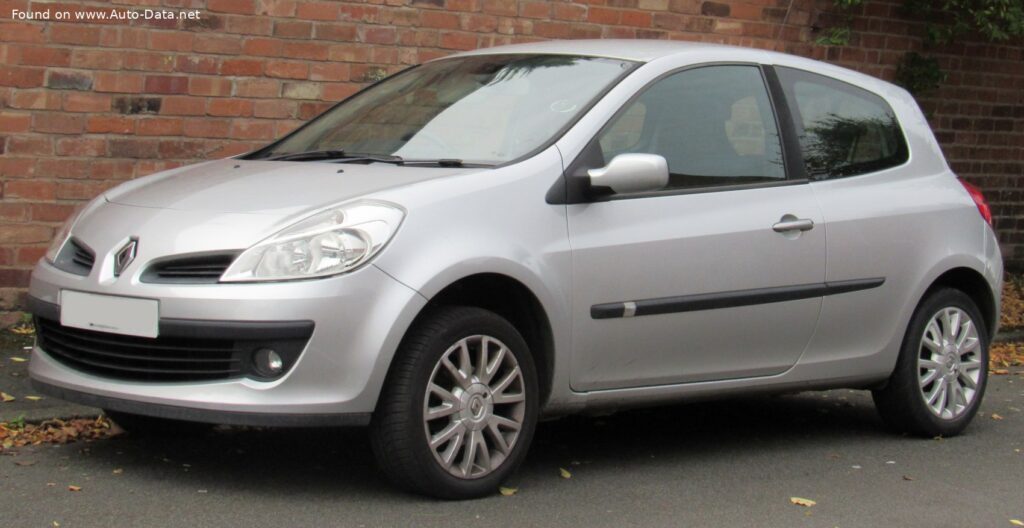
The Renault Clio III Phase I 3-door 1.4 16V, producing 98 horsepower, was a key variant in the third generation of Renault’s popular supermini. Introduced in 2005 and continuing through 2009, this model represented a significant step forward in design, technology, and refinement for the Clio line. Positioned as an entry-level to mid-range offering, it aimed to provide affordable and efficient transportation for a broad customer base. The Clio III, built on the 1HX0/A3 platform, offered a more spacious and comfortable interior than its predecessor, along with improved safety features and a more modern aesthetic.
The 1.4 16V Engine and Transmission
The heart of this Clio variant was the Renault K4J 780 engine, a 1.390-liter (84.82 cubic inches) inline-four cylinder gasoline engine. This engine featured a 16-valve cylinder head, contributing to its relatively high output for its displacement. The K4J engine utilized multi-port fuel injection, a common setup for the time, delivering fuel directly into the intake ports. The engine’s 79.5 mm bore and 70 mm stroke resulted in a compression ratio of 10:1. It produced 98 hp at 6000 rpm and 127 Nm (93.67 lb-ft) of torque at 3750 rpm. This engine was known for its reasonable reliability and relatively low running costs.
Paired with the 1.4 16V engine was a five-speed manual transmission. While an automatic transmission was offered in some Clio III models, the 1.4 16V was primarily sold with the manual gearbox. This configuration prioritized fuel efficiency and driver engagement over outright performance. The transmission was a standard, cable-operated unit, known for its light and precise shift action.
Powertrain Variations and Comparisons
The Clio III range offered a variety of engine and transmission options. The 1.4 16V 98 hp model sat below the more powerful 1.6 16V and 2.0 16V variants, as well as the diesel-powered 1.5 dCi and 1.9 dCi engines. Compared to the 1.6L, the 1.4L offered lower running costs but significantly less performance. The diesel models, while offering superior fuel economy, were generally more expensive to purchase and maintain. The 1.4 16V was targeted towards buyers who prioritized affordability, fuel efficiency, and ease of driving over sporty performance. The 1.6L was aimed at drivers wanting a bit more pep, while the diesels appealed to those covering high annual mileages.
Driving Characteristics
The Clio III 1.4 16V offered a comfortable and predictable driving experience. Acceleration from 0 to 100 km/h (0-62 mph) took approximately 10.5 seconds, and it reached a top speed of 185 km/h (114.95 mph). While not particularly quick, the engine provided sufficient power for everyday driving situations. The five-speed manual transmission allowed for efficient cruising on the highway, while the relatively light weight of the vehicle (1020 kg / 2248.72 lbs) contributed to its nimble handling. The gear ratios were tuned for fuel economy, meaning the engine needed to be revved to access its full potential. Compared to the higher-output engines, the 1.4 16V felt less strained at higher speeds, but also less responsive during overtaking maneuvers.
Equipment & Trim Levels
The Clio III Phase I 1.4 16V typically came equipped with a reasonable level of standard features. These included power steering, central locking, electric front windows, and an adjustable steering column. Safety features included ABS brakes, driver and passenger airbags, and seatbelt pretensioners. Interior upholstery was typically cloth, with a simple and functional dashboard layout. Optional extras included air conditioning, alloy wheels, a CD player, and rear electric windows. Higher trim levels, such as the “Expression” and “Dynamique” variants, added more features as standard, such as automatic headlights, rain-sensing wipers, and upgraded interior trim.
Chassis & Braking
The Clio III utilized a front-wheel-drive layout with a MacPherson strut front suspension and a coil spring rear suspension. This setup provided a good balance between ride comfort and handling. The front brakes were ventilated discs, offering good stopping power, while the rear brakes were drums. This configuration was typical for vehicles in this weight class and price range. The electric power steering provided light and easy steering, making it ideal for urban driving. The 175/65 R14 tires offered a good compromise between grip and rolling resistance. The Clio III’s chassis was relatively lightweight, contributing to its agile handling characteristics.
Market Reception & Comparison
The Renault Clio III was generally well-received by automotive critics. It was praised for its stylish design, spacious interior, and comfortable ride. The 1.4 16V engine was considered a good all-rounder, offering a balance between performance and fuel economy. However, some critics noted that it lacked the punch of the higher-output engines. Fuel economy figures were respectable, with combined consumption averaging around 7.2 l/100 km (32.7 US mpg). Reliability was generally good, although some owners reported minor issues with the electrical system. Compared to rivals such as the Ford Fiesta and Volkswagen Polo, the Clio III offered a more distinctive design and a more comfortable interior, but the Fiesta often provided a more engaging driving experience.
Technical Specifications
| Engine Type | Inline-4, Petrol |
| Engine Displacement | 1390 cm3 (84.82 cu in) |
| Engine Code | K4J 780 |
| Power Output | 98 hp @ 6000 rpm |
| Torque Output | 127 Nm (93.67 lb-ft) @ 3750 rpm |
| Compression Ratio | 10:1 |
| Fuel Injection | Multi-port Fuel Injection |
| Transmission | 5-speed Manual |
| Drive Wheels | Front Wheel Drive |
| Kerb Weight | 1020 kg (2248.72 lbs) |
| Maximum Weight | 1525 kg (3362.05 lbs) |
| Fuel Tank Capacity | 55 liters (14.53 US gal) |
| 0-100 km/h | 10.5 seconds |
| Top Speed | 185 km/h (114.95 mph) |
| Fuel Consumption (Urban) | 9.2 l/100 km (25.6 US mpg) |
| Fuel Consumption (Extra Urban) | 5.3 l/100 km (44.4 US mpg) |
| Fuel Consumption (Combined) | 7.2 l/100 km (32.7 US mpg) |
| Length | 3986 mm (156.93 in) |
| Width | 1719 mm (67.68 in) |
| Height | 1495 mm (58.86 in) |
Legacy
The Renault Clio III 1.4 16V has proven to be a relatively reliable and durable vehicle. The K4J engine is known for its longevity, and with regular maintenance, it can cover high mileages without major issues. In the used car market, these Clios are often sought after for their affordability and low running costs. While not the most exciting variant in the range, the 1.4 16V offers a practical and economical option for those seeking a small, reliable hatchback. Parts availability remains good, and maintenance costs are generally reasonable. The Clio III, in general, helped solidify Renault’s reputation for building well-rounded and stylish superminis, and the 1.4 16V played a significant role in making the model accessible to a wider range of buyers.