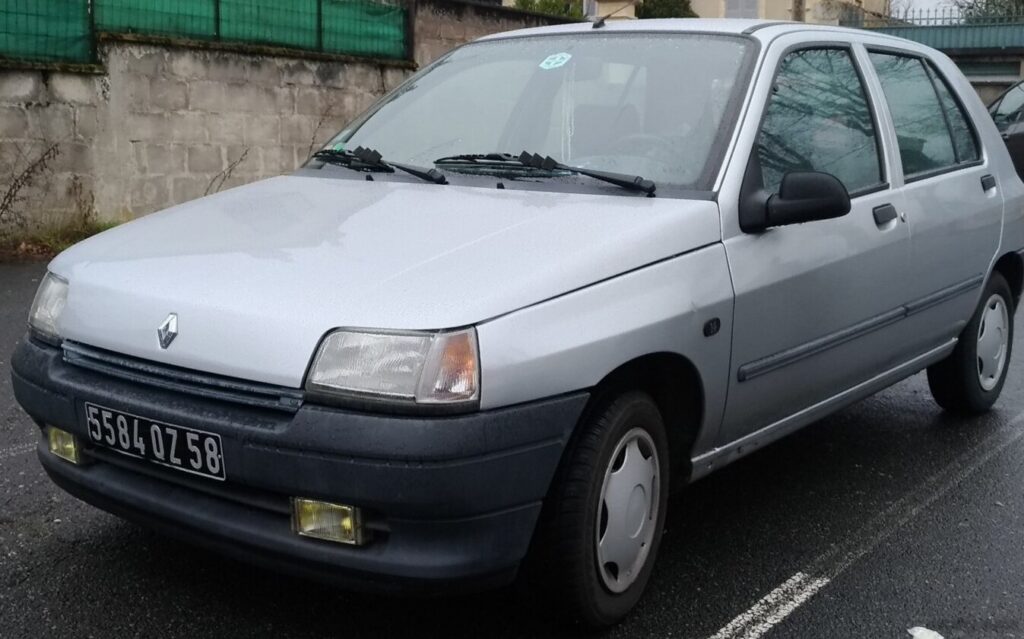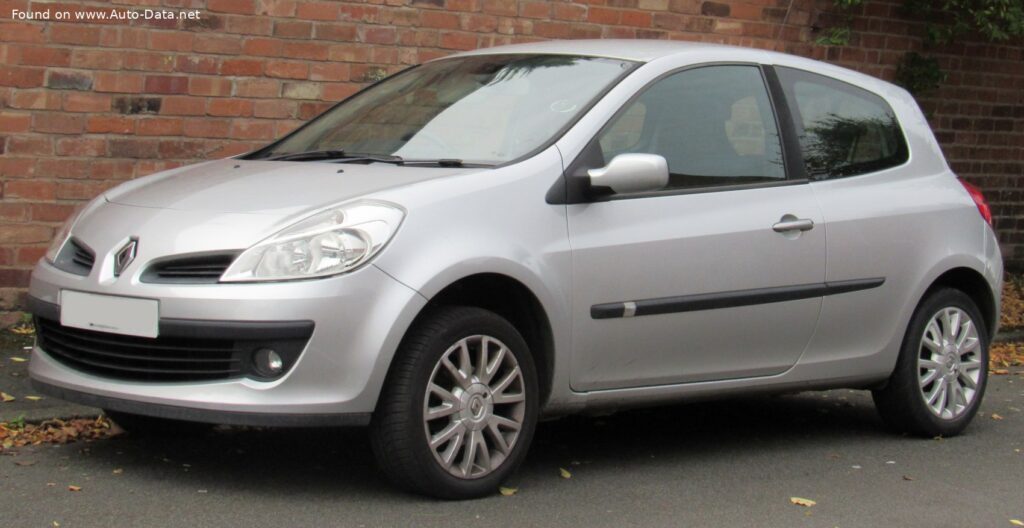
The Renault Clio III (Phase I) 3-door 2.0 16V (139 Hp) represents a compelling entry in the highly competitive European subcompact, or “supermini,” segment. Produced by the French automaker Renault between 2006 and 2009, this particular variant of the third-generation Clio offered a potent blend of spirited performance, practical design, and advanced features for its class. While never officially sold in the United States, the Clio line has consistently been one of Europe’s best-selling vehicles, celebrated for its stylish design, comfortable ride, and engaging driving dynamics. This 2.0-liter, 3-door hatchback model positioned itself as a sportier, more upscale choice for drivers seeking more power than the typical economy car, without venturing into the full-throttle hot hatch territory of its RS brethren. It was a testament to Renault’s ability to inject a dose of driving pleasure into an otherwise utilitarian segment.
Engine and Performance: The Heart of the Renault Clio III (Phase I) 3-door 2.0 16V (139 Hp)
At the core of this particular Clio III model was a robust 2.0-liter (1997 cm³ or 121.86 cu. in.) naturally aspirated inline-four engine, designated by Renault as the M4R 700. This 16-valve unit, featuring a Double Overhead Camshaft (DOHC) valvetrain and multi-port manifold injection, delivered a respectable 139 horsepower at 6000 rpm. Torque output stood at 194 Nm, or 143.09 lb.-ft., available at a relatively accessible 3750 rpm, providing a broad powerband suitable for both city driving and highway cruising.
This powertrain, driving the front wheels through a precise 6-speed manual transmission, allowed the Clio to achieve impressive performance figures for its class. The 0 to 60 mph acceleration was clocked at a brisk 8.1 seconds, with the car capable of reaching a maximum speed of 124.27 mph (200 km/h). These numbers placed the 2.0 16V variant firmly among the sportier offerings in the subcompact segment, appealing to drivers who valued responsiveness and dynamic capability. Despite its performance aspirations, the engine also managed reasonable fuel economy for its displacement and era, with a combined NEDC cycle rating of 32.2 US mpg (7.3 l/100 km) and CO2 emissions of 173 g/km, meeting the Euro 4 emission standard. Its weight-to-power ratio of 8.5 kg/Hp (118.3 Hp/tonne) further underscored its agile character.
Design and Features: Practicality Meets European Flair
The Renault Clio III (Phase I) 3-door hatchback embodied a design philosophy that blended practicality with a distinctly European aesthetic. Measuring 156.93 inches (3986 mm) in length and 67.68 inches (1719 mm) in width, it presented a compact footprint ideal for navigating crowded urban environments. Despite its diminutive size, the Clio III offered a surprisingly spacious interior for five occupants, making it a versatile choice for small families or individuals. The 3-door configuration emphasized a sportier profile, appealing to younger buyers or those prioritizing style over rear-door convenience.
Inside, the Clio III was known for its comfortable cabin, featuring well-appointed materials and a logical control layout. Trunk space was practical, ranging from 10.17 cu. ft. (288 liters) with the rear seats up, expanding to a generous 36.3 cu. ft. (1028 liters) when folded, enhancing its utility for hauling cargo.
Chassis and Suspension
Underneath its stylish skin, the Clio III featured a sophisticated chassis for its segment. It employed an independent McPherson strut setup with coil springs and an anti-roll bar at the front, paired with a torsion beam and coil springs at the rear. This configuration provided a balanced ride, offering both comfort and agile handling. Braking duties were handled by ventilated discs measuring 280 mm at the front and solid discs measuring 240 mm at the rear, augmented by an Anti-lock Braking System (ABS) for enhanced safety. The electric power steering system offered light effort at low speeds for easy maneuvering and firmer feedback at higher speeds, contributing to a confident driving experience. Standard 195/60 R16 tires on 6.5J x 16 wheels completed the package, ensuring adequate grip and stability.
Renault Clio III 2.0 16V: Variant Positioning and Comparison
The 2.0 16V variant of the Clio III Phase I occupied a mid-range position within the broader lineup. It sat above the base 1.2 and 1.4-liter gasoline engines, as well as the 1.5 dCi diesel, offering a significant performance upgrade. Compared to the smaller-engined models, the 2.0 16V provided noticeably quicker acceleration and more relaxed highway cruising. However, it wasn’t intended to compete directly with the high-performance Clio Renault Sport (RS) models, which featured more powerful engines, sport-tuned suspensions, and aggressive styling. The RS models were aimed at enthusiasts seeking a true hot hatch experience, while the 2.0 16V catered to drivers who wanted a blend of practicality and performance.
Compared to the diesel options, the 2.0 16V offered a different driving character. While the diesel engines excelled in fuel economy, the 2.0 16V provided a more responsive and engaging driving experience thanks to its naturally aspirated engine and 6-speed manual transmission. Maintenance costs for the 2.0 16V were generally comparable to the other gasoline engines in the range, but potentially higher than the diesel variants due to the complexity of the fuel injection system.
Equipment & Trim Levels
The standard equipment level for the Clio III 2.0 16V was relatively generous for its class. Typical features included air conditioning, power windows, central locking, a CD player with steering wheel-mounted controls, and ABS brakes. Higher trim levels offered options such as alloy wheels, a panoramic sunroof, automatic climate control, and upgraded upholstery. Interior upholstery was typically cloth, with options for leather available on higher-spec models. The dashboard configuration was modern and functional, with a clear instrument cluster and logically placed controls. Optional extras included a navigation system, parking sensors, and a premium sound system.
Market Reception & Comparison
Critics generally viewed the Renault Clio III 2.0 16V favorably, praising its performance, handling, and stylish design. It was often lauded as one of the most enjoyable-to-drive cars in its segment. Fuel economy was considered reasonable for a 2.0-liter engine, although it didn’t match the efficiency of the diesel models. Reliability was generally good, although some owners reported minor issues with the electrical system. Compared to its rivals, the Clio III 2.0 16V offered a compelling package of performance, practicality, and style, making it a popular choice among European buyers.
Technical Specifications
| Brand | Renault |
| Model | Clio |
| Generation | Clio III (Phase I) 3-door |
| Type (Engine) | 2.0 16V (139 Hp) |
| Start of Production | 2006 year |
| End of Production | 2009 year |
| Powertrain Architecture | Internal Combustion engine |
| Body Type | Hatchback |
| Seats | 5 |
| Doors | 3 |
| Fuel Consumption (Urban, NEDC) | 9.9 l/100 km (23.8 US mpg) |
| Fuel Consumption (Extra Urban, NEDC) | 5.8 l/100 km (40.6 US mpg) |
| Fuel Consumption (Combined, NEDC) | 7.3 l/100 km (32.2 US mpg) |
| CO2 Emissions (NEDC) | 173 g/km |
| Fuel Type | Petrol (Gasoline) |
| Acceleration 0-62 mph | 8.5 sec |
| Acceleration 0-60 mph (Calculated) | 8.1 sec |
| Maximum Speed | 200 km/h (124.27 mph) |
| Emission Standard | Euro 4 |
| Weight-to-Power Ratio | 8.5 kg/Hp (118.3 Hp/tonne) |
| Weight-to-Torque Ratio | 6.1 kg/Nm (165.1 Nm/tonne) |
| Power | 139 Hp @ 6000 rpm |
| Power per Liter | 69.6 Hp/l |
| Torque | 194 Nm @ 3750 rpm (143.09 lb.-ft. @ 3750 rpm) |
| Engine Layout | Front, Transverse |
| Engine Model/Code | M4R 700 |
| Engine Displacement | 1997 cm³ (121.86 cu. in.) |
| Number of Cylinders | 4 |
| Engine Configuration | Inline |
| Cylinder Bore | 84 mm (3.31 in.) |
| Piston Stroke | 90.1 mm (3.55 in.) |
| Compression Ratio | 10:1 |
| Number of Valves per Cylinder | 4 |
| Fuel Injection System | Multi-port manifold injection |
| Engine Aspiration | Naturally aspirated engine |
| Valvetrain | DOHC |
| Engine Oil Capacity | 4.4 l (4.65 US qt) |
| Coolant Capacity | 5.9 l (6.23 US qt) |
| Kerb Weight | 1175 kg (2590.43 lbs) |
| Max. Weight | 1665 kg (3670.7 lbs) |
| Max Load | 490 kg (1080.27 lbs) |
| Trunk (boot) Space – Minimum | 288 l (10.17 cu. ft.) |
| Trunk (boot) Space – Maximum | 1028 l (36.3 cu. ft.) |
| Fuel Tank Capacity | 55 l (14.53 US gal) |
| Max. Roof Load | 80 kg (176.37 lbs) |
| Permitted Trailer Load with Brakes (12%) | 1200 kg (2645.55 lbs) |
| Permitted Trailer Load without Brakes | 535 kg (1179.47 lbs) |
| Permitted Towbar Download | 75 kg (165.35 lbs) |
| Length | 3986 mm (156.93 in.) |
| Width | 1719 mm (67.68 in.) |
| Width Including Mirrors | 2025 mm (79.72 in.) |
| Height | 1495 mm (58.86 in.) |
| Wheelbase | 2575 mm (101.38 in.) |
| Front Track | 1458-1472 mm (57.4 – 57.95 in.) |
| Rear (Back) Track | 1450-1470 mm (57.09 – 57.87 in.) |
| Front Overhang | 805 mm (31.69 in.) |
| Rear Overhang | 606 mm (23.86 in.) |
| Ride Height (Ground Clearance) | 120 mm (4.72 in.) |
| Minimum Turning Circle (Turning Diameter) | 11.3 m (37.07 ft.) |
| Drivetrain Architecture | Front-wheel drive, Internal Combustion engine |
| Drive Wheel | Front wheel drive |
| Number of Gears and Type of Gearbox | 6 gears, manual transmission |
| Front Suspension | Independent, McPherson with coil spring and anti-roll bar |
| Rear Suspension | Coil spring, Torsion beam |
| Front Brakes | Ventilated discs, 280 mm |
| Rear Brakes | Disc, 240 mm |
| Assisting Systems | ABS (Anti-lock braking system) |
| Steering Type | Steering rack and pinion |
| Power Steering | Electric Steering |
| Tires Size | 195/60 R16 |
| Wheel Rims Size | 6.5J x 16 |
Legacy
The Renault Clio III 2.0 16V powertrain has proven to be reasonably reliable over the long term, with the M4R 700 engine generally considered durable. Common issues, when they arise, often relate to the ignition system, fuel injectors, and the cooling system. On the used car market today, these Clios represent a relatively affordable and enjoyable option for those seeking a stylish and well-equipped subcompact. They are particularly appealing to buyers who prioritize driving dynamics and are willing to accept the slightly higher running costs associated with a naturally aspirated engine. While not as common as the diesel variants, the 2.0 16V models are sought after by enthusiasts who appreciate their spirited performance and engaging driving experience.