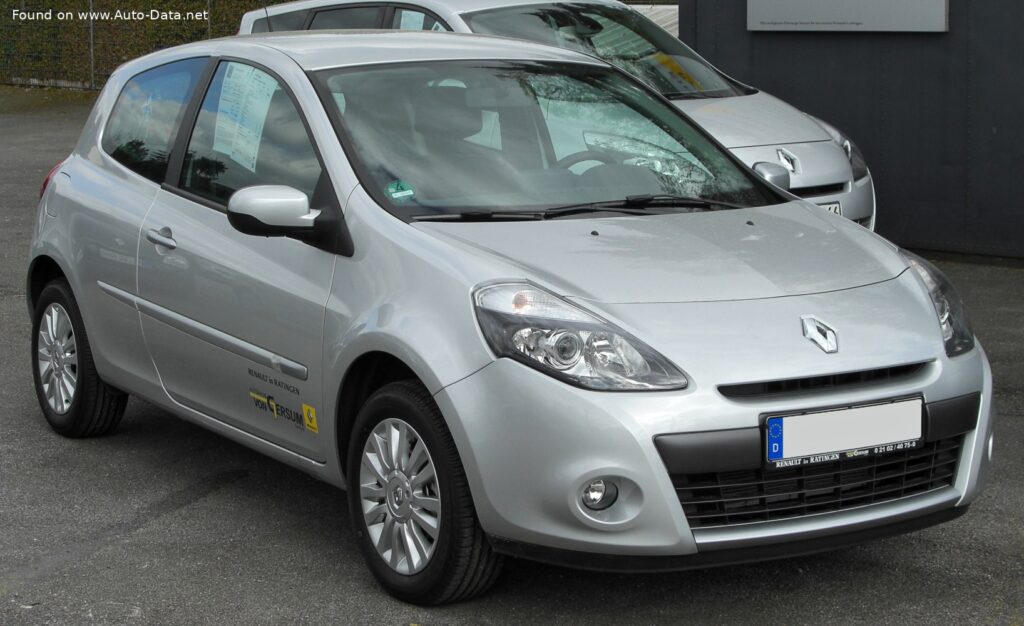
The Renault Clio III (Phase II, 2009) 3-door 1.2 16V represents a key iteration within the third generation of Renault’s popular Clio supermini. Introduced in 2009 as a mid-cycle refresh (Phase II), this model continued the Clio III’s reputation for safety, practicality, and driving dynamics in the competitive European B-segment. Though never officially sold in the United States, the Clio has been a cornerstone of Renault’s global strategy, particularly in Europe, since its debut in 1990. The Phase II updates included subtle styling revisions, improved interior materials, and minor mechanical refinements designed to maintain the model’s appeal against rivals. This specific variant, equipped with the 1.2-liter 16-valve engine producing 65 horsepower, was positioned as an economical and accessible entry point into the Clio lineup, ideally suited for urban driving and first-time car buyers.
Powertrain & Engine Architecture
The Renault Clio III (Phase II, 2009) 3-door 1.2 16V is powered by the D4F 740 1.2-liter (1149 cc or 70.12 cubic inches) naturally aspirated inline-four engine. This powertrain is well-known within Renault’s smaller vehicle range for its reliability and efficiency. The engine features a 16-valve cylinder head, delivering 65 horsepower at 5500 rpm and 77.44 lb-ft of torque at 4250 rpm. This output, combined with a curb weight of approximately 2403 pounds, results in a performance profile geared towards economical urban commuting rather than outright speed.
Power is transferred to the front wheels via a 5-speed manual transmission, a common and robust setup for vehicles in this class. The engine’s design incorporates a bore of 79.0 mm (3.11 inches) and a piston stroke of 80.5 mm (3.17 inches), along with a compression ratio of 9.8:1, contributing to its smooth operation and fuel-efficient characteristics. A multi-point fuel injection system ensures precise fuel delivery, optimizing combustion and minimizing emissions. The engine utilizes a timing belt for valve actuation, requiring periodic replacement as part of scheduled maintenance.
Driving Characteristics
The 1.2-liter, 65 hp engine in the Clio III (Phase II) provides adequate performance for city driving and shorter trips. Acceleration from 0 to 60 mph takes around 13.3 seconds, with a top speed of approximately 97.56 mph. Compared to higher-output versions of the Clio III, such as those equipped with the 1.6-liter engine, this variant feels noticeably less powerful, particularly when fully loaded or tackling inclines. The 5-speed manual transmission is well-matched to the engine’s characteristics, offering a reasonable spread of gear ratios. However, drivers may find themselves frequently shifting gears to maintain momentum, especially at highway speeds. The power delivery is linear, but the engine lacks the low-end torque of larger displacement engines or turbocharged alternatives. The overall driving experience is best described as comfortable and undemanding, prioritizing fuel efficiency and ease of use over sporty performance.
Equipment & Trim Levels
The 1.2 16V variant of the Clio III (Phase II) typically served as the entry-level trim, offering a basic but functional equipment list. Standard features generally included power steering, central locking, electric front windows, and an adjustable steering column. Safety features such as ABS (Anti-lock Braking System) and driver and passenger airbags were also standard. Interior upholstery was typically cloth, with a simple dashboard layout. Optional extras available for this trim level included air conditioning, a radio/CD player, alloy wheels, and rear electric windows. Higher trim levels, such as the Dynamique and Privilège, added features like automatic headlights and rain sensors, upgraded interior trim, and more sophisticated audio systems.
Chassis & Braking
The Clio III’s chassis utilizes a MacPherson strut front suspension and a torsion beam rear suspension. This setup provides a good balance between ride comfort and handling. The braking system consists of ventilated discs on the front wheels and drum brakes on the rear wheels. The steering is electric power-assisted, offering light and precise control, making it easy to maneuver in urban environments. The 1.2-liter variant typically rode on 15-inch steel wheels with wheel covers, or optional alloy wheels. Tire size was generally 165/65 R15. The suspension was tuned for comfort, prioritizing a smooth ride over sporty handling. Stabilizer bars were fitted to both the front and rear axles to reduce body roll during cornering.
Market Reception & Comparison
The 1.2-liter Clio III (Phase II) received generally positive reviews for its fuel economy, affordability, and ease of driving. Critics praised its comfortable ride and well-designed interior, but noted its lack of outright performance. Compared to other trims in the Clio lineup, such as the 1.6-liter versions, the 1.2-liter model offered significantly lower running costs but sacrificed acceleration and overall driving enjoyment. Against competitors like the Ford Fiesta, Volkswagen Polo, and Peugeot 207, the Clio III 1.2 16V held its own in terms of fuel efficiency and practicality, but often lagged behind in terms of performance and refinement. Its fuel economy was a key selling point, achieving around 39.9 US mpg on the combined cycle, making it an attractive option for budget-conscious buyers.
Technical Specifications
| Category | Specification |
| General Information | |
| Brand | Renault |
| Model | Clio |
| Generation | Clio III (Phase II, 2009) 3-door |
| Engine Type | 1.2 16V (65 Hp) |
| Production Start | 2009 |
| Production End | 2012 |
| Powertrain Architecture | Internal Combustion Engine |
| Body Type | Hatchback |
| Seats | 5 |
| Doors | 3 |
| Performance Specifications | |
| Fuel Consumption (Urban) | 7.6 l/100 km (30.9 US mpg) |
| Fuel Consumption (Extra Urban) | 4.9 l/100 km (48 US mpg) |
| Fuel Consumption (Combined) | 5.9 l/100 km (39.9 US mpg) |
| Fuel Type | Petrol (Gasoline) |
| Acceleration 0-60 mph | 13.3 sec |
| Maximum Speed | 157 km/h (97.56 mph) |
| Engine Specifications | |
| Power | 65 Hp @ 5500 rpm |
| Torque | 105 Nm @ 4250 rpm (77.44 lb.-ft. @ 4250 rpm) |
| Engine Displacement | 1149 cm3 (70.12 cu. in.) |
| Number of Cylinders | 4 |
| Cylinder Bore | 79.0 mm (3.11 in.) |
| Piston Stroke | 80.5 mm (3.17 in.) |
| Compression Ratio | 9.8:1 |
| Space, Volume, and Weights | |
| Kerb Weight | 1090 kg (2403.04 lbs.) |
| Trunk Space (Minimum) | 288 l (10.17 cu. ft.) |
| Trunk Space (Maximum) | 1038 l (36.66 cu. ft.) |
| Fuel Tank Capacity | 55 l (14.53 US gal) |
| Dimensions | |
| Length | 4032 mm (158.74 in.) |
| Width | 1720 mm (67.72 in.) |
Legacy
The Renault Clio III (Phase II) 1.2 16V has proven to be a reliable and durable vehicle in the used car market. The D4F 740 engine is known for its longevity, provided it receives regular maintenance, including timely timing belt replacements. While not particularly powerful, the engine is relatively simple and inexpensive to repair. Used examples of this Clio variant are often sought after by first-time car buyers or those looking for an affordable and economical city car. Its strong fuel economy and low running costs continue to make it an attractive option, even years after its production ended. The Clio III, in general, helped solidify Renault’s reputation for building well-rounded and practical superminis, and the 1.2-liter variant played a significant role in making the model accessible to a wider range of buyers.