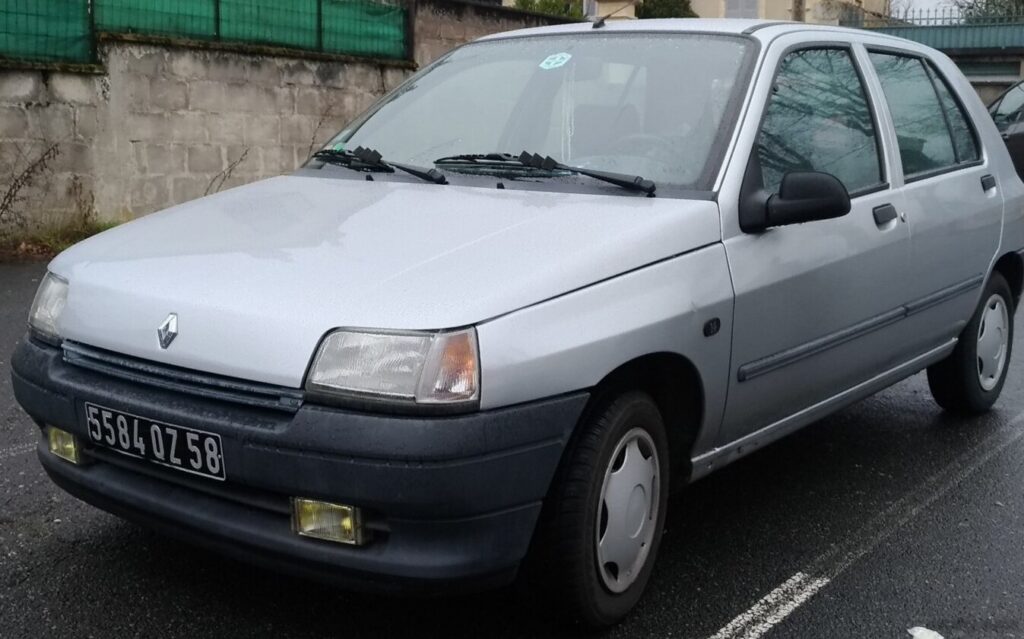
The Renault Clio IV Grandtour (Phase II, 2016) 0.9 TCe (75 Hp) represents a compelling entry in the highly competitive European B-segment, specifically catering to the subcompact estate market. Produced between 2018 and 2020, this particular variant of the fourth-generation Clio Grandtour, identifiable by its Phase II (facelift) designation, offered a practical and fuel-efficient solution for families and individuals seeking expanded cargo capacity without the footprint of a larger vehicle. As a model primarily sold in Europe and other international markets, the Clio Grandtour was never officially imported to the United States, where the preference for SUVs and larger sedans dominates. However, its engineering and market positioning provide valuable insight into the automotive landscape outside of North America, showcasing Renault’s commitment to delivering versatile and economical vehicles tailored for dense urban environments and varied European road conditions.
The Renault Clio IV Grandtour 0.9 TCe: Positioning and Overview
The Clio IV Grandtour, or “estate” as it’s known in Europe, built upon the success of the popular Clio hatchback, extending its rear profile to create a more capacious and flexible cargo area. The Phase II update, introduced for the 2016 model year and continuing through to this 2018-2020 production run, brought subtle yet significant revisions to the exterior styling, interior finishes, and available technology, ensuring the model remained fresh and competitive against its rivals. This specific 0.9 TCe (Turbo Control efficiency) variant, with its modest 75 horsepower output, was designed with a clear emphasis on fuel efficiency and low running costs, making it a popular choice for budget-conscious buyers and fleet operators across the continent. It occupied the entry-level position within the Grandtour lineup, offering a more affordable alternative to the higher-powered gasoline and diesel options.
Powertrain & Engine Architecture
At the heart of the Renault Clio IV Grandtour (Phase II, 2016) 0.9 TCe (75 Hp) lies a compact yet sophisticated powertrain. The engine is an 898 cm³, or approximately 0.9-liter, three-cylinder inline unit (engine code H4B 408), strategically positioned transversely at the front of the vehicle. This small displacement engine benefits significantly from forced induction, utilizing a turbocharger and intercooler to maximize power output and efficiency. Despite its diminutive size, the engine generates a respectable 75 horsepower at 5000 revolutions per minute, delivering a power-to-liter ratio of 83.5 horsepower per liter. More importantly for everyday driving, it produces 88.51 lb.-ft. of torque at a relatively low 2500 rpm, providing decent low-end grunt for city driving and highway cruising.
The engine utilizes multi-point fuel injection and a single overhead camshaft (SOHC) valvetrain with four valves per cylinder. The turbocharger is a wastegate-controlled unit, providing boost across a broad RPM range. The 0.9 TCe engine is paired with a 5-speed manual transmission, driving the front wheels. This drivetrain architecture is typical for B-segment vehicles in Europe, balancing cost-effectiveness with engaging driver control. The transmission features a conventional shift linkage and is known for its relatively light and precise feel.
Driving Characteristics
Performance figures for this variant are pragmatic rather than exhilarating, reflecting its primary role as an economical family hauler. The Clio IV Grandtour 0.9 TCe accelerates from 0 to 60 mph in approximately 11.7 seconds, reaching a maximum speed of 110.6 mph. While not a performance leader, these figures are entirely adequate for European roads and urban environments, where speed limits are often lower and traffic congestion more prevalent than in some parts of the US. The relatively low torque output means that overtaking maneuvers require careful planning, and the engine can feel strained when fully loaded or climbing steep hills.
Compared to other Clio IV Grandtour variants, such as the 1.2 TCe (90 hp) or the 1.5 dCi diesel, the 0.9 TCe offers less outright performance. The 1.2 TCe provides a noticeable increase in power and torque, resulting in quicker acceleration and more relaxed cruising. The 1.5 dCi, while offering similar torque figures, delivers them across a wider RPM range and typically achieves even better fuel economy. However, the 0.9 TCe’s lighter weight and smaller engine contribute to its superior fuel efficiency and lower emissions.
Equipment & Trim Levels
The Renault Clio IV Grandtour (Phase II, 2016) 0.9 TCe (75 Hp) typically came equipped with a reasonable level of standard features, designed to appeal to budget-conscious buyers. Standard equipment generally included air conditioning, power steering, electric front windows, a basic audio system with USB connectivity, and ABS brakes with Electronic Brakeforce Distribution (EBD). Safety features such as driver and passenger airbags, and stability control were also standard.
Interior upholstery was typically cloth, with a dark color scheme. The dashboard configuration was functional and straightforward, with a central infotainment screen (depending on the trim level) providing access to navigation and entertainment features. Optional extras available for this trim included alloy wheels, rear parking sensors, cruise control, a more advanced infotainment system with touchscreen display, and automatic climate control. Higher trim levels, such as the “Dynamique” or “Signature” offered more luxurious interior appointments and additional features.
Chassis & Braking
The Clio IV Grandtour features a front-wheel-drive architecture with a MacPherson strut front suspension and a torsion beam rear suspension. This setup provides a good balance between ride comfort and handling. The braking system comprises ventilated discs at the front for effective stopping power and drum brakes at the rear, a common setup for economical subcompacts. An Anti-lock Braking System (ABS) is standard, enhancing safety during emergency braking maneuvers. The steering system is a rack and pinion type with electric power steering, offering light and precise control, particularly beneficial in urban environments and for parking.
The suspension tuning is geared towards comfort, with a relatively soft setup that absorbs bumps and imperfections in the road surface. Stabilizer bars are fitted to both the front and rear axles to reduce body roll during cornering. The tires are typically sized 185/65 R15 or 195/55 R16, mounted on 15-inch or 16-inch wheel rims, respectively, providing a comfortable ride and adequate grip for daily driving.
Market Reception & Comparison
Critics generally viewed the Renault Clio IV Grandtour 0.9 TCe (75 Hp) as a sensible and practical choice for buyers seeking an economical and versatile subcompact estate. Its fuel efficiency and low running costs were consistently praised, making it an attractive option for budget-conscious consumers. However, some reviewers noted that the engine could feel underpowered, particularly when fully loaded or driving on hilly terrain.
Compared to other trims in the Clio Grandtour lineup, the 0.9 TCe offered the best fuel economy but the lowest performance. The 1.2 TCe provided a better balance between power and efficiency, while the 1.5 dCi offered superior fuel economy and torque but at a higher initial cost. Against competitors like the Skoda Fabia Combi and Dacia Logan MCV, the Clio Grandtour offered a more stylish design and a more refined interior, but often at a slightly higher price point.
Technical Specifications
| Category | Specification |
| General Information | |
| Brand | Renault |
| Model | Clio |
| Generation | Clio IV Grandtour (Phase II, 2016) |
| Type (Engine) | 0.9 TCe (75 Hp) |
| Start of Production | 2018 year |
| End of Production | 2020 year |
| Powertrain Architecture | Internal Combustion engine |
| Body Type | Station wagon (estate) |
| Seats | 5 |
| Doors | 5 |
| Performance Specs | |
| Fuel Consumption (Economy) – Urban | 6.3 l/100 km (37.3 US mpg) |
| Fuel Consumption (Economy) – Extra Urban | 4.2 l/100 km (56 US mpg) |
| Fuel Consumption (Economy) – Combined | 5 l/100 km (47 US mpg) |
| CO2 Emissions | 113 g/km |
| Fuel Type | Petrol (Gasoline) |
| Acceleration 0 – 60 mph | 11.7 sec |
| Acceleration 0 – 100 km/h | 12.3 sec |
| Maximum Speed | 178 km/h (110.6 mph) |
| Emission Standard | Euro 6 |
| Engine Specs | |
| Power | 75 Hp @ 5000 rpm |
| Power per Liter | 83.5 Hp/l |
| Torque | 120 Nm @ 2500 rpm (88.51 lb.-ft. @ 2500 rpm) |
| Engine Layout | Front, Transverse |
| Engine Model/Code | H4B 408 |
| Engine Displacement | 898 cm³ (0.9 liters / 54.8 cu. in.) |
| Number of Cylinders | 3 |
| Engine Configuration | Inline |
| Cylinder Bore | 72.2 mm (2.84 in.) |
| Piston Stroke | 73.1 mm (2.88 in.) |
| Number of Valves per Cylinder | 4 |
| Fuel Injection System | Multi-port manifold injection |
| Engine Aspiration | Turbocharger, Intercooler |
| Engine Oil Capacity | 4.1 l (4.33 US qt) |
| Coolant | 5 l (5.28 US qt) |
| Space, Volume and Weights | |
| Trunk (Boot) Space – Maximum | 445 l (15.72 cu. ft.) |
| Fuel Tank Capacity | 45 l (11.89 US gal) |
| Permitted Trailer Load with Brakes (12%) | 1200 kg (2645.55 lbs.) |
| Permitted Trailer Load without Brakes | 580 kg (1278.68 lbs.) |
| Dimensions | |
| Length | 4267 mm (167.99 in.) |
| Width | 1732 mm (68.19 in.) |
| Width Including Mirrors | 1945 mm (76.57 in.) |
| Height | 1475 mm (58.07 in.) |
| Wheelbase | 2589 mm (101.93 in.) |
| Front Track | 1506 mm (59.29 in.) |
| Rear Track | 1506 mm (59.29 in.) |
| Front Overhang | 853 mm (33.58 in.) |
| Rear Overhang | 825 mm (32.48 in.) |
| Ride Height (Ground Clearance) | 120 mm (4.72 in.) |
| Minimum Turning Circle (Turning Diameter) | 11.0 m (36.09 ft.) |
| Drivetrain, Brakes and Suspension Specs | |
| Drivetrain Architecture | The Internal combustion engine (ICE) drives the front wheels of the vehicle. |
| Drive Wheel | Front wheel drive |
| Number of Gears and Type of Gearbox | 5 gears, manual transmission |
| Front Brakes | Ventilated discs |
| Rear Brakes | Drum |
| Assisting Systems | ABS (Anti-lock braking system) |
| Steering Type | Steering rack and pinion |
| Power Steering | Electric Steering |
| Tires Size | 185/65 R15; 195/55 R16 |
| Wheel Rims Size | 15; 16 |
Legacy
The Renault Clio IV Grandtour, particularly variants like the 0.9 TCe (75 Hp), carved out a significant niche in the European automotive market. The Clio nameplate itself has a long and storied history, consistently ranking among Europe’s best-selling subcompact cars. The Grandtour variant extended this success by offering a practical alternative to traditional hatchbacks, appealing to a demographic that needed more cargo space but still desired the maneuverability and efficiency of a B-segment vehicle.
The 0.9 TCe engine, while not known for its longevity or high-performance capabilities, generally proves reliable with regular maintenance. Common issues include turbocharger wear and potential problems with the fuel injectors. However, these are typically addressed with routine servicing. In the used car market today, the Clio IV Grandtour 0.9 TCe represents an affordable and economical option for buyers seeking a practical and fuel-efficient estate car. Its low running costs and relatively simple mechanicals make it an attractive choice for first-time car owners or those on a tight budget. Its production run from 2018 to 2020 for this specific variant marked the final years of the fourth-generation Grandtour before the introduction of the fifth-generation Clio, which, notably, did not continue with a dedicated Grandtour estate body style, making the Clio IV Grandtour a significant chapter in the model’s history for its unique combination of size, versatility, and efficiency in the European market.