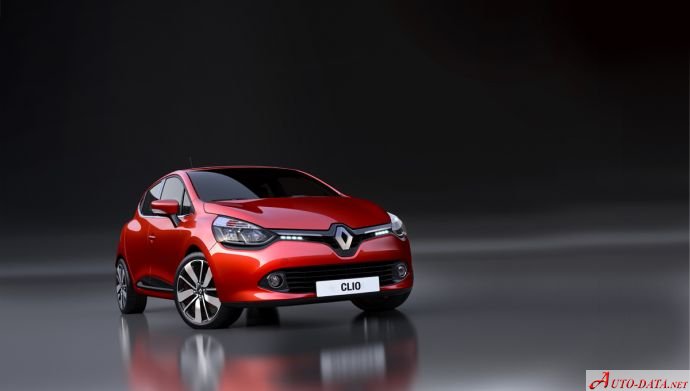
The Renault Clio IV (Phase I) 1.5 dCi (75 Hp) represents a significant iteration in the long and successful history of Renault’s popular supermini, or B-segment, vehicle. Launched in 2012, this fourth-generation Clio, in its initial “Phase I” guise, brought a fresh design language and a strong emphasis on fuel efficiency, particularly with its diesel powertrain options. As a model not officially sold in the United States, the Clio IV carved out its niche primarily across European and other international markets, where its blend of compact dimensions, practical five-door hatchback body style, and economical operation made it a formidable competitor in one of the continent’s most fiercely contested segments. This particular variant, powered by the ubiquitous 1.5-liter dCi turbodiesel engine producing 75 horsepower, was positioned as an accessible and highly economical choice for urban commuters and those seeking impressive mileage without sacrificing modern features and a stylish aesthetic.
Powertrain & Engine Architecture
At the core of the Renault Clio IV (Phase I) 1.5 dCi (75 Hp) lies Renault’s well-regarded K9K 628 diesel engine. This 1.5-liter (1461 cm³ or 89.16 cu. in.) inline four-cylinder powerplant is a testament to the engineering focus on efficiency and durability that has characterized Renault’s diesel offerings for decades. Employing a Diesel Commonrail fuel injection system, a turbocharger, and an intercooler, the engine is designed to deliver a balance of usable power and exceptional fuel economy. The Commonrail system, specifically a Delphi system, operates at very high pressures (up to 1600 bar) to ensure fine atomization of the fuel, leading to more complete combustion and reduced emissions.
The engine produces 75 horsepower at 4000 rpm, which, while not designed for outright speed, is more than adequate for its intended role. More notably, it generates a robust 200 Nm (approximately 147.51 lb.-ft.) of torque at a low 1750 rpm. This low-end torque is crucial for nimble city driving, allowing for confident acceleration from a standstill and smooth overtakes in traffic, even with a modest horsepower figure. Power is sent to the front wheels via a five-speed manual transmission, a setup optimized for efficiency and driver engagement typical of European subcompacts. The transmission utilizes a conventional cable shift mechanism and is known for its relatively light and precise action.
Driving Characteristics
The Renault Clio IV (Phase I) 1.5 dCi (75 Hp) offers a driving experience geared towards practicality and economy rather than outright performance. The 75 horsepower output, coupled with the five-speed manual transmission, results in a relaxed and unhurried driving style. Acceleration is adequate for urban and suburban driving, but highway overtaking requires careful planning. The engine’s strong low-end torque compensates for the modest horsepower, providing sufficient pulling power for everyday driving situations. Compared to higher-output versions of the Clio IV, such as the 90 hp dCi or the petrol-powered 1.2 TCe, the 75 hp variant feels noticeably slower, particularly when fully loaded or climbing hills. However, the trade-off is significantly improved fuel economy.
The gear ratios are optimized for fuel efficiency, with a relatively tall fifth gear designed for comfortable cruising on motorways. The clutch pedal is light and easy to operate, making it suitable for novice drivers. The steering is light and precise, providing good maneuverability in tight spaces. Overall, the driving experience is comfortable and predictable, prioritizing ease of use and low running costs over sporty handling.
Equipment & Trim Levels
The 1.5 dCi (75 Hp) variant of the Renault Clio IV (Phase I) typically served as the entry-level diesel offering, and as such, came with a reasonable level of standard equipment. Base models generally included features such as power steering, electric front windows, a basic audio system with USB connectivity, ABS brakes, and driver and passenger airbags. Air conditioning was often an optional extra, as were features like alloy wheels, rear parking sensors, and a more advanced infotainment system. Interior upholstery was typically cloth, with a simple and durable design.
Higher trim levels, such as the “Dynamique” or “Expression” variants, added features like air conditioning, alloy wheels, cruise control, and a more comprehensive infotainment system with Bluetooth connectivity. Optional extras could include a panoramic sunroof, leather upholstery, and a navigation system. The dashboard configuration was generally consistent across all trim levels, featuring a centrally mounted touchscreen display (on higher trims) and a simple, ergonomic layout.
Chassis & Braking
The Renault Clio IV (Phase I) utilizes a McPherson strut front suspension with a transverse stabilizer bar, providing a comfortable and controlled ride. The rear suspension employs a torsion beam setup, which is a cost-effective and space-efficient solution for a vehicle in this segment. The torsion beam provides adequate stability and ride comfort for everyday driving, although it doesn’t offer the same level of sophistication as a fully independent rear suspension.
Braking is handled by ventilated discs at the front and drum brakes at the rear. While the drum brakes at the rear are a cost-saving measure, they provide adequate stopping power for the vehicle’s weight and performance. ABS (Anti-lock Braking System) is standard on all models, enhancing safety by preventing wheel lock-up during emergency braking. The steering is electric power-assisted, providing light and precise steering feel with reduced energy consumption compared to hydraulic power steering.
Market Reception & Comparison
The Renault Clio IV (Phase I) 1.5 dCi (75 Hp) was generally well-received by automotive critics for its fuel efficiency, stylish design, and practicality. However, some critics noted that the 75 horsepower engine felt underpowered, particularly when compared to higher-output versions of the Clio or its competitors. Fuel economy was consistently praised, with the Clio IV 1.5 dCi achieving some of the best figures in its class.
Compared to the 90 hp dCi variant, the 75 hp version offered slightly better fuel economy but noticeably slower acceleration. The petrol-powered 1.2 TCe offered a more refined driving experience and quicker acceleration, but at the expense of fuel economy. Against rivals like the Ford Fiesta and Volkswagen Polo, the Clio IV 1.5 dCi (75 Hp) offered a competitive package, with a strong emphasis on value for money and low running costs. Reliability was generally good, with the K9K engine proving to be a durable and dependable unit.
Technical Specifications
| Category | Specification |
| General Information | |
| Brand | Renault |
| Model | Clio IV (Phase I) |
| Type (Engine) | 1.5 dCi (75 Hp) |
| Start of Production | 2012 year |
| End of Production | 2016 year |
| Powertrain Architecture | Internal Combustion engine |
| Body Type | Hatchback, 5 Doors, 5 Seats |
| Performance Specs | |
| Fuel Consumption (Urban) | 4.3 l/100 km (54.7 US mpg) |
| Fuel Consumption (Extra Urban) | 3.2 l/100 km (73.5 US mpg) |
| Fuel Consumption (Combined) | 3.6 l/100 km (65.3 US mpg) |
| CO2 Emissions | 95 g/km (Euro 5 Standard) |
| Fuel Type | Diesel |
| Acceleration 0-60 mph | 13.6 sec |
| Maximum Speed | 168 km/h (104.39 mph) |
| Engine Specs | |
| Power | 75 Hp @ 4000 rpm |
| Torque | 200 Nm @ 1750 rpm (147.51 lb.-ft. @ 1750 rpm) |
| Engine Displacement | 1461 cm3 (1.5 Liters / 89.16 cu. in.) |
| Number of Cylinders | 4 (Inline configuration) |
| Fuel Injection System | Diesel Commonrail |
| Engine Aspiration | Turbocharger, Intercooler |
| Weight-to-Power Ratio | 14.3 kg/Hp |
Legacy
The Renault Clio IV (Phase I) 1.5 dCi (75 Hp) has proven to be a reliable and economical vehicle in the used car market. The K9K engine is known for its durability and relatively low maintenance costs. While not the most exciting or powerful variant of the Clio IV, the 75 hp dCi offers a compelling combination of fuel efficiency, practicality, and affordability. Common issues are generally limited to wear and tear items such as clutch components, suspension bushings, and turbocharger seals. The diesel particulate filter (DPF) can require attention if the vehicle is primarily used for short trips, as it needs to be regularly regenerated. Overall, the Clio IV 1.5 dCi (75 Hp) remains a popular choice for budget-conscious buyers seeking a dependable and economical small car.